
What Is Upselling and Cross Selling Explained

You've probably heard the terms upselling and cross-selling thrown around, but what do they actually mean for your store? In short, they’re two of the most effective ways to boost your revenue without having to find new customers.
Think of it like this: upselling is all about encouraging a customer to buy a slightly better, more expensive version of the item they're already considering. Cross-selling, on the other hand, is about suggesting related items that go well with their purchase. It's the classic difference between upgrading and accessorizing.
Demystifying Upselling vs Cross Selling
At the end of the day, the difference is pretty simple. One makes the core purchase better, and the other adds to it.
Let's ditch the jargon and think about a trip to your favorite burger spot.
- Upselling: The person at the counter asks, "Want to make that a double patty for just $2 more?" They're offering you a more premium version of the burger you already decided on.
- Cross-selling: Then they ask, "How about some fries and a drink with that?" Now they're suggesting complementary items to round out your meal.
This is exactly how it works in e-commerce. An upsell might be offering a larger size, a premium material, or an extended warranty. A cross-sell is suggesting the batteries for the toy, the matching scarf for the sweater, or the case for the new phone. Both get you a bigger sale, but they tap into different buying motives.
This visual helps drive the burger analogy home, showing how one strategy upgrades an item while the other builds out the entire order.
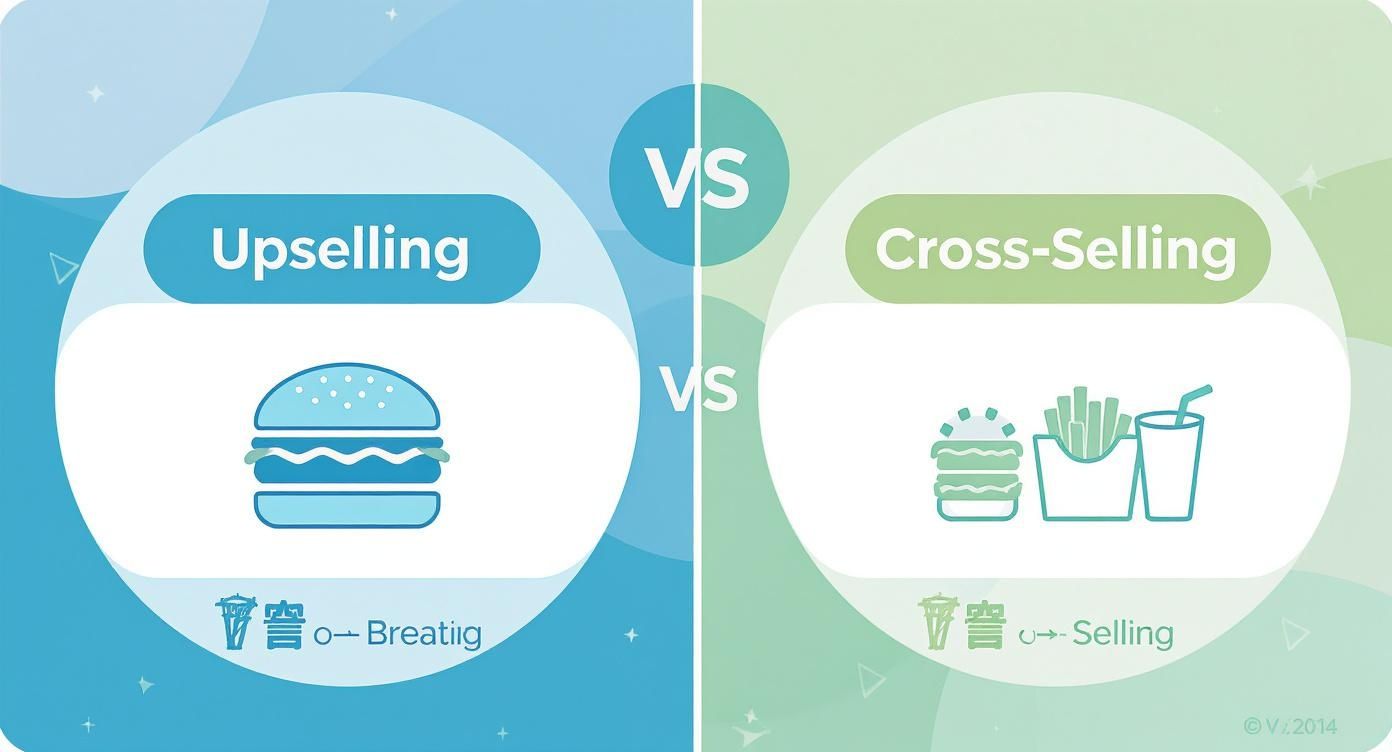
The real takeaway here is that each tactic has its place. One deepens the value of what the customer came for, and the other broadens it.
The Power Behind the Purchase
Don't mistake these for pushy sales tricks—they’re genuine revenue engines. For so many successful businesses, the real money isn't made on the first sale but on what comes next. In fact, some companies now see 70% to 95% of their revenue from renewals and upsells alone. You can dig into more of these fascinating upselling stats in this in-depth analysis of sales strategies.
To make this even clearer, let's break down the core differences in a simple table.
Upselling vs Cross-Selling At a Glance
Here’s a quick comparison to help you see how these two powerful strategies differ and where they shine.
As you can see, while both aim to increase your average order value, they approach the customer's mindset from slightly different angles.
An upsell offers a better version of what a customer already wants. A cross-sell provides complementary products that enhance their original purchase.
Getting this distinction right is your first step toward building a smarter, more profitable store. When you learn to use both strategies thoughtfully, you can significantly grow your revenue from the customers you already have.
Why These Strategies Boost More Than Just Sales

Sure, the immediate goal of upselling and cross-selling is a bigger shopping cart at checkout. But their real magic? It’s in building smarter, more profitable relationships with your customers. These aren't just quick cash grabs; they're foundational tools for long-term, sustainable growth.
When you start thinking beyond a single transaction, everything changes. Offering a relevant, genuinely helpful suggestion shifts your role from a simple seller to a trusted guide. This small change in perspective can have a massive impact on the numbers that truly matter to your business.
Elevating Your Key Growth Metrics
The most obvious win is an immediate jump in your Average Order Value (AOV). By encouraging a slightly higher spend—whether it's an upgrade or a handy add-on—you squeeze more value out of the traffic you already have. It’s one of the simplest ways to increase revenue without spending more on ads.
But the real power of these strategies plays out over the long haul, directly impacting your Customer Lifetime Value (CLV). This metric tracks the total amount of money a customer is likely to spend with you over their entire relationship with your brand.
Here’s how upselling and cross-selling feed into a higher CLV:
- More Repeat Purchases: When customers feel like you "get" them and offer things they actually need, they're far more likely to come back. That positive experience builds trust and keeps you top-of-mind.
- Higher Future Spending: A customer who loves the battery pack you recommended for their new gadget is going to be way more open to your suggestions next time.
- Stronger Brand Loyalty: Thoughtful recommendations show you care about their experience, not just the sale. It turns a simple purchase into a personalized interaction that makes people feel good about your brand.
By focusing on upselling and cross-selling, you're not just closing bigger deals today. You're building a base of loyal customers who will spend more with you tomorrow.
Creating a Win-Win Shopping Experience
Let’s be clear: the best selling strategies are never one-sided. When you get this right, both you and your customer walk away feeling great about the deal. They get a product that perfectly suits their needs or a more complete solution, saving them the headache of having to search for it later. You, in turn, get a bigger sale and a happier customer.
This creates a powerful cycle of trust. A customer who buys a suggested accessory and finds it super useful will be much more receptive to your recommendations in the future.
In fact, one study found that increasing customer retention by just 5% can boost profits anywhere from 25% to 95%. It's a stark reminder that keeping your existing customers happy is one of the most profitable things you can do. By offering genuine value through smart, timely recommendations, you create the kind of personalized, convenient experience that keeps people coming back for more.
See Upselling and Cross-Selling in Action
Theory is great, but seeing these strategies in the wild is where the lightbulbs really start to go off. Let's look at a few everyday examples to get the gears turning for your own store.
The golden rule here is simple: your offer has to feel like a genuine, helpful suggestion. If it comes across as a pushy sales pitch, you've lost. But when a customer feels like you're truly trying to make their purchase better, they'll be all ears.
The Classic Upsell Example
Picture this: someone is on your site, checking out a new laptop. They've landed on a solid base model and are about to pull the trigger. That’s your cue.
Right there on the product page, you could feature a simple, eye-catching comparison chart. Something with a headline like, “Want a Little More Power?”
- Standard Model: 8GB RAM, 256GB Storage, Standard Processor.
- Pro Model (just $150 more): 16GB RAM, 512GB Storage, Faster Processor, Backlit Keyboard.
This isn't about just asking for more money. You're visually laying out exactly what they get for the upgrade. The focus shifts from the cost to the benefit—a faster, more capable machine that will make their life easier. Suddenly, the extra spend feels like a smart investment.
An Effective Cross-Sell Scenario
Okay, now let's switch gears. A photography lover just added a brand-new camera body to their cart. This person is clearly serious about their craft, which makes them a prime candidate for a thoughtful cross-sell.
When they go to their cart, a new section pops up: “Complete Your Kit.”
Here, you’re not just throwing random accessories at them. You’re offering the things they’ll actually need to start shooting right away.
Key Takeaway: The best cross-sells are all about anticipating the customer's next move. You're saving them a future headache by offering the whole solution right now.
Your suggestions could include:
- A high-speed memory card (a must-have for high-res photos).
- A protective camera bag to keep their new gear safe.
- An extra battery so they don't run out of juice on a day-long shoot.
This approach turns a simple checkout into a genuinely helpful experience. It shows you get it—you understand their hobby and you’re helping them get the most out of their big purchase. You can even see how smart, automated tools can make these interactions feel personal; for more on that, check out these 12 Best Chatbots for Ecommerce to Boost Sales.
Where to Place Your Offers for Maximum Impact
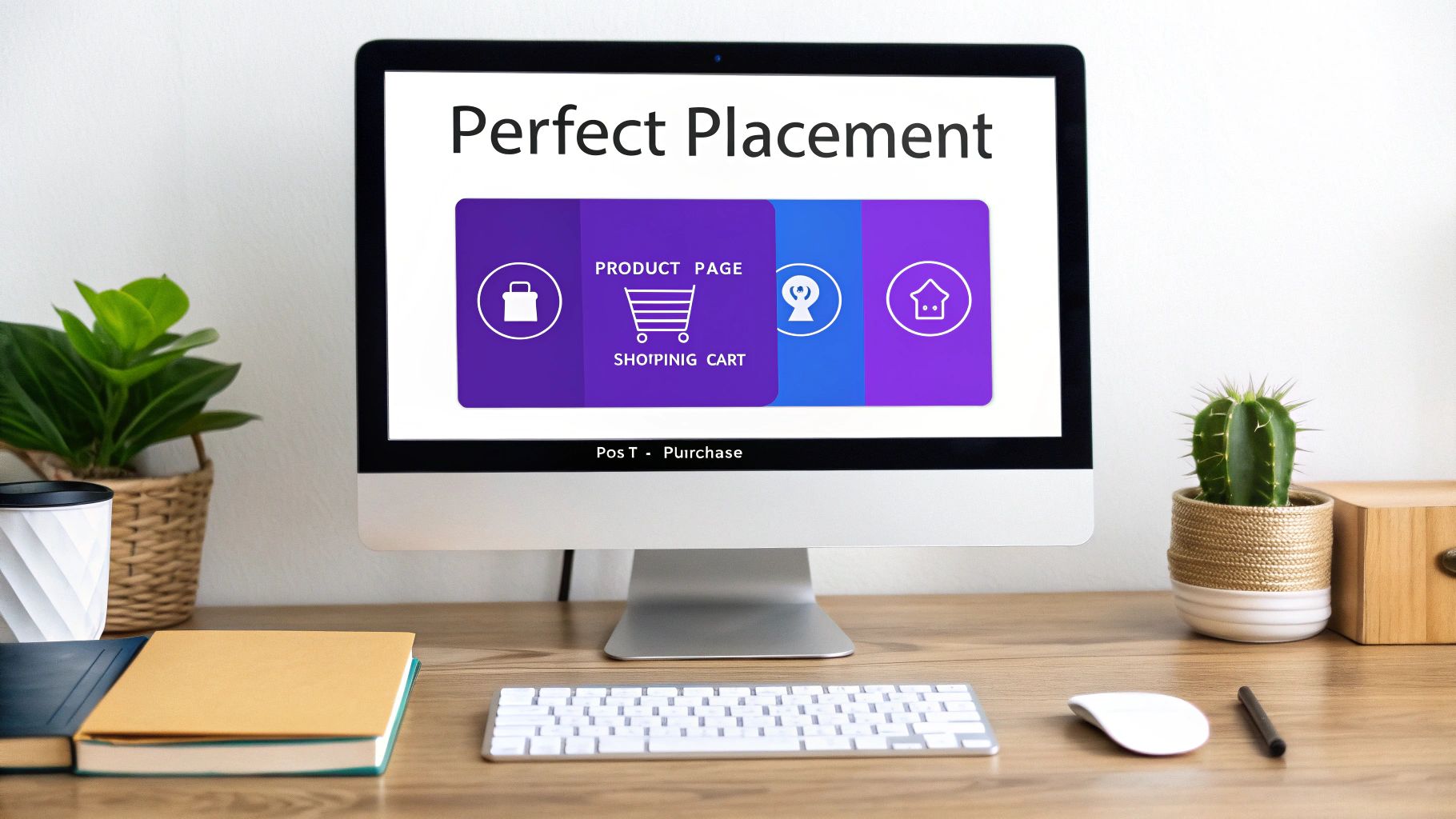
Knowing what upselling and cross-selling are is one thing. But the real magic happens when you know exactly when and where to pop the question. Get the timing wrong, and it feels pushy. Get it right, and you come across as a genuinely helpful guide.
Think about your customer's journey through your store. There are specific moments when they're most open to a suggestion. By placing thoughtful offers at these key touchpoints, you can make a huge difference in your average order value without ever feeling like you're hard-selling.
On the Product Page
The product page is prime real estate for an upsell. This is your first—and often best—shot. Right now, your customer is in research mode, weighing their options and trying to find the best fit. They haven't committed to anything yet, which makes it the perfect time to introduce a better alternative.
Let's say they're looking at a standard 10-piece cookware set. This is your chance to feature the 15-piece deluxe version right beside it. Make the benefits crystal clear: maybe it comes with more pans, a lifetime warranty, or a superior non-stick coating.
Your goal isn't just to show off a higher price but to frame the upgrade as a smarter, more valuable choice in the long run.
Key Takeaway: Use the product page to present a premium version as the "smarter choice." Focus on the tangible benefits of the upgrade to make the slightly higher cost a no-brainer.
This approach speaks directly to a shopper's desire to get the best bang for their buck before they even click "Add to Cart."
In the Shopping Cart
Once an item is in the cart, the customer has pretty much made up their mind. Trying to switch them to a more expensive product now can create hesitation and might even cause them to rethink their entire purchase. So, instead of upselling, this is the perfect moment for a low-cost, high-value cross-sell.
Think of it as the online version of the candy and magazines at the grocery store checkout. These offers should be simple, directly related to what's already in the cart, and easy to add with a single click.
- Buying a beautiful leather journal? Offer a set of premium pens to go with it.
- Purchasing a new summer dress? Suggest a matching belt or scarf.
- Adding a coffee maker? Recommend a bag of your best-selling coffee beans.
The trick is to keep these suggestions relevant and affordable compared to the main purchase. You want it to feel like a helpful "Oh yeah, I'll need that too!" moment, not another big decision.
On the Post-Purchase Page
What happens the second after a customer hits "Buy"? For most stores, it's just a bland "Thank You" page. This is a massive missed opportunity! At this moment, your customer is feeling great about their purchase and their trust in your brand is at an all-time high.
The post-purchase or order confirmation page is a golden opportunity for one more cross-sell. Since the main transaction is already complete, this feels like a zero-risk bonus offer. Try presenting a one-time-only discount on a related product. Something like, “Add this protective case to your new phone order for 50% off—right now only!”
In Follow-Up Emails
The relationship doesn't end when the package is delivered. Follow-up emails are an incredible tool for building loyalty and encouraging repeat business. A couple of weeks after their purchase, send a personalized email with relevant cross-sell ideas based on what they bought. This strategy works so well because it's based on how they're actually using your products.
And the data backs this up. A huge 80% of U.S. e-commerce businesses use cross-selling to drive more sales. Personalization is the secret sauce here—custom-tailored recommendations have been shown to boost customer spending by an average of 34%. You can discover more insights about cross-selling effectiveness on Data Axle's blog.
By being strategic about where you place your offers, you can turn a simple sale into a guided, value-packed experience that your customers will appreciate.
Smart Tactics and Common Mistakes to Avoid
Knowing what upselling and cross-selling are is just the first step. Actually pulling them off in a way that feels helpful—not pushy—is where the real art lies. A great offer builds trust and genuinely improves your customer's experience, while a clumsy one can feel like a cheap trick and cost you the sale entirely.
The secret is to make your suggestions feel like you're reading the customer's mind. When an offer solves a problem they didn't even know they had or perfectly complements their purchase, it becomes a welcome part of their shopping journey. It's all about being a helpful guide, not a high-pressure salesperson.
Best Practices for Smart Selling
So, how do you make sure your strategy actually helps? A few core principles can make your offers feel natural and genuinely compelling, strengthening your customer relationships while bumping up that average order value.
- Make it Genuinely Relevant: This is the golden rule. If you suggest something completely out of left field, it just screams "sales pitch." A cross-sell should be a natural companion, like offering premium laces with a new pair of leather boots. Irrelevant suggestions don't just fail; they can damage the trust you've built.
- Stick to the 'Rule of 25': When you're upselling, try to keep the upgrade from costing more than 25% of the original item's price. If someone is looking at a $100 jacket, a great upsell might be a premium version for $125, not a $300 one. This keeps the price jump from feeling like a huge leap, making it a much easier "yes."
- Use Data and a Little Social Proof: Don't just guess what people want. Dive into your sales data to see what your customers are actually buying together. Then, frame your suggestion with phrases like, "Customers who bought this also loved..." This turns a sales pitch into a friendly tip from fellow shoppers.
Remember, you're aiming to be a helpful expert. Your recommendations should anticipate a customer's needs and help them find a more complete, satisfying solution.
Common Pitfalls to Sidestep
It's just as important to know what not to do. I've seen so many businesses get excited about these strategies only to fall into a few simple traps that completely derail their efforts. Knowing these common mistakes is the first step to avoiding them.
- Don't Overwhelm Them: Throwing a dozen different options at a customer is a classic recipe for "analysis paralysis." They get confused, frustrated, and often just give up. Research has shown that simplifying choices can boost revenue by 5-40%. Stick to one or two of your most relevant suggestions to keep things simple and clear.
- Watch Out for Annoying Pop-Ups: We've all been there—an aggressive pop-up interrupts your flow and you immediately want to close the tab. Timing is everything. Instead of disruptive pop-ups, weave your offers smoothly into the product page, the shopping cart, or even after the purchase is complete.
- Never Be Sneaky: This one is a deal-breaker. Never, ever pre-select add-ons or try to hide extra costs in the checkout. Transparency is everything when it comes to building a loyal customer base. Tricking someone into a bigger purchase might work once, but you'll lose that customer for good.
To make this crystal clear, I've put together a quick cheat sheet. Think of it as your go-to guide for keeping your upselling and cross-selling strategies on the right track.
Dos and Don'ts of Upselling and Cross-Selling
At the end of the day, success comes down to respect. When you make your customers feel smart and understood, they'll not only buy more, but they'll keep coming back.
Let AI-Powered Tools Do the Heavy Lifting
Let's be honest, manually figuring out which products to recommend to every single customer is a recipe for a headache. It's a massive job that just doesn't scale as your business grows. This is exactly where automation and AI step in to become your new best friend.
Modern e-commerce platforms, including Wand Websites, use smart AI to watch how customers shop in real-time. The system quietly learns which products are often bought together and which upgrades customers are most likely to say "yes" to. It then automatically shows the most tempting offers, all without you having to do a thing.
This kind of tech is a huge time-saver, but more importantly, it creates a genuinely personal shopping experience for your customers. And the results speak for themselves. Companies that have embraced AI for their sales strategies are seeing some incredible numbers, like a 25% jump in upsell rates and a 30% boost in cross-selling success.
Think of it this way: AI lets your store work smarter, not harder. Automation makes sure every customer sees the perfect offer at just the right moment, which is key to boosting your AOV and keeping them coming back.
If you're serious about taking this to the next level, it's worth checking out some of the best AI marketing tools for DTC brands that can put personalized recommendations and entire campaigns on autopilot.
Frequently Asked Questions
Even with a solid game plan, you're bound to have some questions about how upselling and cross-selling actually work in the real world. Let's tackle some of the most common ones we hear from fellow store owners.
Can I Use Upselling and Cross-Selling at the Same Time?
You can, but it's all about strategic timing. Trying to do both at once is a recipe for overwhelming your customer. A better approach is to use them at different stages of the buying journey.
For instance, you could show an upsell on the product page (“Go bigger with our deluxe version!”) and then, once they've added it to their cart, offer a cross-sell (“Don’t forget the matching protective case!”). The key is to make each offer feel like a single, helpful nudge at just the right moment.
How Much Should an Upsell Offer Cost?
A good rule of thumb is what I call the "Rule of 25." Your upsell offer shouldn't increase the total price by more than 25%. So, if a customer is eyeing a $100 pair of headphones, an upsell to a model with noise-canceling features should probably be around $125 or less.
This keeps the price difference from feeling like a huge leap. It’s an easy "yes" for the customer because it feels like a smart upgrade, not a budget-busting decision.
Key Takeaway: A great upsell feels like a no-brainer upgrade, not a major financial commitment. Keeping it within that 25% sweet spot makes the offer hard to resist.
Which Is Better for a New Store?
If you're just getting started, cross-selling is almost always the easier and more effective strategy. It's a fantastic way to introduce shoppers to more of your products with simple, low-pressure suggestions like, “Customers who bought this also loved…”
Upselling, on the other hand, works best when you have a well-defined product ladder with clear "good, better, best" options. It also helps to have a good feel for what your customers truly value and are willing to pay extra for. Start with cross-selling to build trust and show off your catalog, then layer in upselling as you get to know your audience better.
Ready to stop leaving money on the table and start building these strategies into your store? The team at Wand Websites lives and breathes this stuff. We build and fine-tune e-commerce sites that are geared for growth from day one, handling all the tech so you can focus on what you do best. Discover how we can help you scale your business today.
