
What Is SEO Content and How Does It Work


Ever wonder what "SEO content" actually is? Let's break it down.
At its core, SEO content is any piece of writing or media on your site—whether it's a product description, a blog post, or a how-to guide—that’s created for two very specific reasons. First, to get found on search engines like Google. Second, to be genuinely useful to the person who finds it.
It's not about stuffing keywords or trying to outsmart a machine. It's about becoming the best, most helpful answer to a real person's question.
What's Really at the Heart of SEO Content?

Think of your new Shopify store as a fantastic little boutique tucked away on a side street. It could be filled with amazing products, but if there's no sign out front, nobody will ever find it. SEO content is your digital sign, your welcoming storefront, and your expert guide all rolled into one. It’s what connects people searching for something online directly to the products you’re selling.
So how does it work? This type of content is thoughtfully built around the specific keywords and phrases your ideal customers are typing into Google. When you create something valuable that directly speaks to those searches, you’re basically telling Google, "Hey, I have the answer over here!" and your site starts to show up more often.
It's So Much More Than Just Keywords
Now, keywords are a huge part of the puzzle, but they aren't the whole picture. Truly effective SEO content puts the person reading it first, always. Google’s entire mission is to give its users the most helpful and relevant results. If your content does that job well, Google will reward you by showing your site to more people.
This means your content needs to be:
- Genuinely Helpful: Does it actually answer the searcher's question or solve their problem?
- High-Quality: Is it well-written, accurate, and easy to understand? Does it offer a unique perspective?
- Engaging: Does it hold their attention and encourage them to stick around? When people stay on your page, it sends a strong signal to Google that you’re a great result.
The big secret is that there is no secret. If you make content that real people love to read, search engines will naturally love it too. It’s all about building trust and creating a real connection.
To give you a clearer picture, let's look at the essential ingredients that make any piece of content 'SEO-friendly'.
Core Components of SEO Content
This table breaks down the key elements that turn a simple page into a magnet for search engines and customers alike.
Mastering these components is the first step toward creating content that truly performs.
The Purpose Behind Every Word
At the end of the day, every piece of SEO content you create should have a job to do. For your e-commerce store, that job is usually to guide a potential customer from curious browser to happy buyer.
A helpful blog post might attract someone who's just starting their research. A detailed category page might help them narrow down their options. And a compelling product page seals the deal. To get this right, it helps to first understand the foundational principles of content creation.
By creating a genuinely helpful resource, you attract the right kind of traffic—people who are actually interested in what you sell. This turns your website from a simple online catalog into a powerful engine for growing your brand.
Why SEO Content Is a Game Changer for Your Store
Making the leap from Etsy to your own Shopify store is a huge step. It’s like moving out of a stall in a giant, bustling bazaar and opening your very own flagship boutique on the main street. On Etsy, you get whatever foot traffic the market provides. But with your own store, you’re the one responsible for getting people in the door. This is where SEO content becomes your most valuable employee, hands down.
Think of it as your digital grand opening sign, your most knowledgeable salesperson, and a stunning window display all rolled into one. It works for you 24/7, attracting people who are literally typing into Google the exact things you sell. We're not just talking about getting more traffic; we're talking about getting the right traffic.
Build Authority and Own Your Audience
On a marketplace, you're one seller among thousands, all blending together. With your own store, every single piece of content you create—from a beautifully detailed product description to a genuinely helpful blog post—carves out your brand's unique voice and authority. You stop being just another option in a long list and start becoming the go-to expert in your niche.
This direct line to your audience is incredibly powerful. You own the email list. You control the entire brand experience. And you're no longer at the mercy of some other platform's random algorithm changes or sudden fee hikes. SEO content is the foundation of that freedom, creating a real asset that grows in value over time.
SEO content isn't just a marketing tactic; it's an investment in a long-term, sustainable business that you truly own. It’s the difference between renting space and building your own empire.
Drive Traffic Without Breaking the Bank
So many new store owners get caught in a trap. They think the only way to get noticed is to pour a ton of money into social media ads. And while ads can give you a quick boost, relying on them completely is like running on a hamster wheel—the second you stop paying, the traffic vanishes. SEO content is the way off that wheel.
Imagine your new Shopify site, freshly launched with Wand Websites, starting to bring in customers all on its own. The potential here is massive. For example, the click-through rate (CTR) for the very first organic spot on Google desktop searches is a staggering 34%. That means if your product page can climb to number one, you'll get over a third of all the clicks from people actively looking for what you offer. You can discover more insights on how search rankings impact traffic, and you'll quickly see why SEO is non-negotiable for growth.
This approach dramatically cuts down how much you have to depend on paid ads, which lowers your customer acquisition costs and makes your business far more profitable. Every blog post, every guide, every well-written page acts like a little magnet, pulling in new customers for months—and sometimes even years—to come. It creates a powerful, cost-effective growth engine for your store.
Exploring the Main Types of Ecommerce SEO Content
Alright, let's get down to brass tacks. What does this "SEO content" actually look like on a real online store? It's time to move from theory to practice.
Not all content is created equal. Different types of pages on your site have different jobs, and they're all designed to meet your customers at specific moments. For a growing Shopify brand, three key content types are the absolute bedrock of a solid SEO strategy.
Think of each one as a different kind of salesperson, ready to help a customer at a particular stage of their shopping journey. Let's break down the big three.
Product Pages: The Closer
Your product pages are your star salespeople—they're the closers. When a shopper lands here, they’re usually very close to buying something. They’re using specific search terms like “handmade ceramic coffee mug” or “linen throw pillow cover.”
The goal here isn't just to list features. Great product pages focus on benefits. You want to paint a picture of how this item will make their life better. Use persuasive, descriptive language, add stunning photos, and sprinkle in customer reviews to build that crucial trust. From an SEO standpoint, these pages must be optimized for the exact phrases people type when they've got their wallets out.
Category Pages: The Navigator
Next up are your category pages. These are like the well-organized aisles in your shop, grouping similar items together—think "All Throw Pillows" or "Kitchen & Dining." Someone landing on a category page knows what they want generally but is still browsing the options.
So many stores drop the ball here, leaving these pages as just a grid of products. But you have a massive SEO opportunity! Adding a short, helpful introduction at the top of the page is a game-changer. This little block of text guides both shoppers and Google, explaining what they'll find in the collection.
For instance, you could write a quick paragraph about your throw pillows, mentioning the different materials, styles, and what makes your collection special. This lets you naturally weave in keywords like "modern living room throw pillows" and helps you rank for those broader, high-traffic search terms.
A well-rounded content strategy brings a whole host of benefits that ultimately drive profitability for your store.
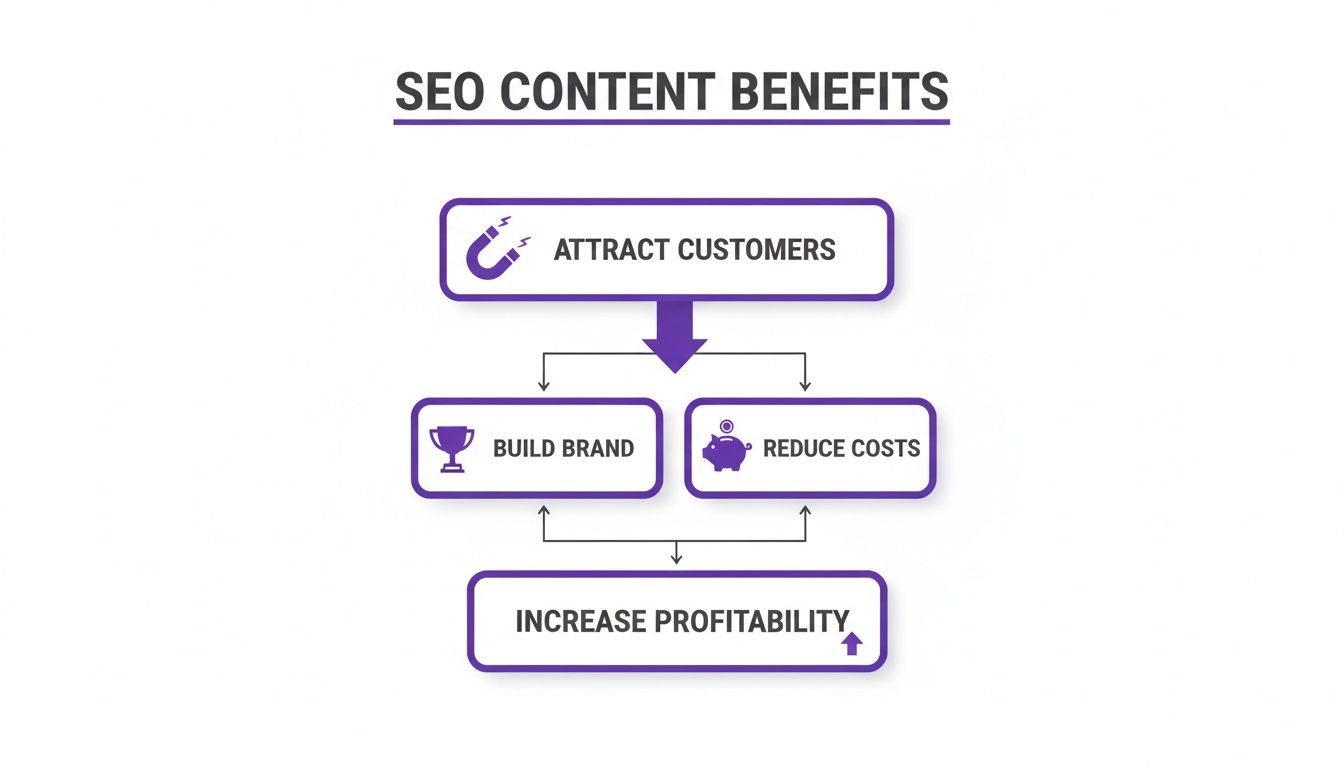
As you can see, a good plan attracts new folks, builds your brand's authority, and can even lower your marketing spend over time.
Blog Posts: The Greeter
Finally, let's talk about blog posts. These are your friendly greeters at the front door, welcoming people into your world long before they’re even thinking about buying. Blog content is all about attracting customers at the very beginning of their journey—when they’re just looking for ideas, inspiration, or answers.
Strategic blogging is one of the most powerful ways to expand your reach. You'll appear in search results for queries that your product pages could never rank for, establishing your brand as a helpful expert.
Instead of targeting "buy now" keywords, blog posts go after "how-to" and "what is" type questions. For a home decor brand, a killer topic would be "How to Choose the Perfect Throw Pillows for a Modern Living Room." This article solves a real problem for a potential customer, builds trust, and subtly introduces your products as the ideal solution. It’s how you get on their radar early and turn casual browsers into loyal fans.
To pull this all together, here’s a quick breakdown of how these content types compare and what their specific jobs are.
Ecommerce Content Type Comparison
Each type plays a unique and vital role. A great e-commerce SEO strategy doesn't just focus on one—it makes sure all three are working together to bring people to your site and guide them toward a purchase.
The Essential Ingredients of High-Ranking Content
So, you're creating content. That's great! But just making something isn't enough—you need to create content that actually climbs the search rankings and gets seen. This is a whole different ballgame.
Think of it like baking a cake. If you miss a key ingredient, the whole thing just falls flat. To get that perfect rise, you need the right mix of elements working together. It’s not about secret formulas or weird tricks; it’s about strategically combining a few powerful ingredients that tell both search engines and your customers that you've got the good stuff.
Getting this right is what turns a simple product page or blog post into a magnet for free, organic traffic.
Find What Your Customers Are Actually Searching For
The entire foundation of great SEO content is keyword research. This is just a fancy way of saying you need to figure out the exact words and phrases your ideal customers are typing into Google. It's less about guessing and more about listening.
Instead of a super broad term like "handmade jewelry," you might discover people are actually looking for "dainty gold stacking rings" or "boho beaded necklaces." When you build your content around these specific, long-tail keywords, you’re not just getting random visitors. You're attracting shoppers who are much, much closer to pulling out their credit cards.
It’s the difference between shouting into a crowded room and having a direct, meaningful conversation with someone who is ready to buy.
Match Your Content to Their Goal
Once you know what people are searching for, you have to figure out why. This is called user intent.
Are they just looking for information ("how to clean silver jewelry")? Maybe they're comparing options ("best minimalist earrings"). Or are they ready to buy right now ("buy sterling silver hoops")?
Your content has to be a direct answer to their goal. A helpful blog post is perfect for an informational search, while your product page is built for someone ready to buy. When you align your content with what the user wants, you create a much better experience, and Google absolutely rewards that with higher rankings. If you want to really dig into this, learning how to write SEO articles that consistently rank is the key to unlocking that steady stream of organic traffic.
Prove You're the Real Deal with E-E-A-T
Google wants to send its users to websites they can trust. This is where E-E-A-T comes into play, which stands for Experience, Expertise, Authoritativeness, and Trustworthiness. For your shop, this simply means proving you're a legitimate and credible expert in your little corner of the world.
You can show off your E-E-A-T by:
- Sharing Your Experience: Talk about your personal story and show the hands-on process behind your amazing products. People love a good story.
- Demonstrating Expertise: Write detailed blog posts and guides that genuinely solve your customers' problems. Be the go-to resource.
- Building Authority: Get those positive reviews and mentions from other credible sites or influencers.
- Establishing Trust: Make sure you have a clear "About Us" page, easy-to-find contact info, and a secure, trustworthy checkout process.
E-E-A-T isn't just another SEO buzzword. It's a blueprint for building a brand that both customers and search engines learn to respect and trust. It’s about being authentic.
The impact of getting this right is huge, especially for a small business. Organic search often delivers the best return on your time and money. With the very top search result gobbling up nearly 40% of all clicks, a high ranking isn't just nice to have—it's everything.
Your Actionable SEO Content Starter Checklist

Feeling a little overwhelmed? It happens. All this theory is great, but it doesn't mean much until you actually put it into practice.
Let’s turn these concepts into a simple, practical roadmap. This checklist is built for busy store owners who just need to know what to do right now. Think of it as your first few steps to get the ball rolling. The goal here is progress, not perfection.
First Quick Wins
Start with these high-impact tasks to build a solid foundation and see some early results on your new Shopify store.
Find Your Top 5 "Money" Keywords
Before you write a single word, you have to know what your ideal customers are actually typing into Google. Brainstorm five specific, product-focused phrases someone would use when they’re ready to buy. Don't just think "handmade decor." Get specific: "rustic wooden serving tray" or "minimalist ceramic plant pot." These are your starting line.Optimize Your Homepage Title and Description
Your homepage is your digital storefront, plain and simple. Head into your Shopify settings and make sure its SEO title and meta description clearly say what you sell and who you are. This is often the very first thing a customer sees on Google. Make it count.Rewrite Descriptions for Your Top 3 Products
Pick your three best-sellers. Now, give their product descriptions an SEO makeover using what we've talked about. Weave in one of your "money" keywords naturally, but focus on telling a story about the benefits. Answer the questions a shopper would have right there on the page.
Remember, every single page on your website is another fishing line in the water—another chance to show up in search results. By optimizing just these few key pages, you're creating multiple new opportunities to get discovered.
Building Your Content Engine
Once you've handled the basics, it's time to start expanding your reach. These next steps are all about creating new content that pulls in shoppers who aren't quite ready to buy yet.
Create an Optimized Category Page
Pick your most popular product line—for instance, "All Necklaces." Go to that category page and add a short, helpful paragraph right at the top. Describe what makes the collection special, mention the materials or styles, and use a relevant keyword like "gold pendant necklaces for women." This little intro tells Google exactly what that page is all about.Brainstorm 5 Helpful Blog Post Ideas
Last but not least, put yourself in your customers' shoes. What are their biggest frustrations or questions related to your products? Jot down five blog post titles that offer a genuine solution. If you sell handmade candles, you could write about "5 Ways to Make Your Scented Candles Last Longer." This is the secret to attracting people before they even know they need your product.
Tackling these five steps will give you a massive head start. You'll have built a solid SEO base you can keep adding to, slowly but surely turning your store into a place that both customers and search engines love.
Frequently Asked Questions About SEO Content
Jumping into SEO can feel like learning a new language, so it's totally normal to have a ton of questions. Let's tackle some of the big ones I hear all the time from business owners just like you.
How Long Does It Take for SEO Content to Work?
Ah, the million-dollar question! The honest-to-goodness answer is: it depends, but it's a marathon, not a sprint. Think of it like planting a tree. You won't get a shady spot to relax under overnight.
In most cases, you'll start to see some flickers of life—a little nudge up in the rankings, a bit more traffic—within about 3 to 6 months of consistently creating and publishing great content. For super competitive niches, it might take longer. The magic is in the consistency. Keep at it, and you'll build a powerful, sustainable source of traffic that you own, unlike the rented space of paid ads.
Do I Need to Be a Professional Writer?
Not at all. In fact, please don't try to be! Your biggest asset is that you live and breathe your products. You know your customers inside and out. That passion and firsthand knowledge are way more valuable than perfect prose.
Just focus on being yourself and genuinely helping people solve a problem. Your authentic voice is what will make people connect with your brand. Search engines are getting incredibly good at spotting content written by someone who actually knows their stuff. Your expertise is your edge.
Authenticity is your superpower. Your customers want to hear from you—the person behind the products—not a faceless corporation. Write with your true brand voice, and you'll build a much stronger connection.
Can I Just Use AI to Write All My Content?
AI is an amazing co-pilot. It's fantastic for busting through writer's block, brainstorming topics, or even drafting an outline. But letting it fly the plane solo? That's a risky bet.
AI-generated text often misses the heart and soul of your brand—the personal stories, the quirky insights, and the real-world experience that makes people trust you. Google wants content made for humans, by humans. So, by all means, use AI to speed things up, but always, always be the final editor. Infuse your personality and expertise into every piece to create SEO content that actually works and sounds like you.
How Is SEO Content Different from a Regular Blog Post?
Think of it this way: a regular blog post can be like a personal journal entry—you're writing about what's on your mind. SEO content is more like a helpful guide you’d find at the library, strategically placed so people looking for it can find it easily.
SEO content is built from the ground up with a clear purpose. It targets specific keywords people are actually typing into Google. Every piece of it—the title, the headings, the images, the links—is intentionally crafted to help search engines understand what it's about and show it to the right audience. It's the difference between talking into the void and having a meaningful conversation with a potential customer.
Ready to stop relying on Etsy's traffic and build your own e-commerce powerhouse? At Wand Websites, we build high-performing Shopify stores that turn your passion into a thriving, independent brand. Let’s build your future together. Learn more about our services at Wand Websites.
