
What Is Product Bundling Explained Simply


Ever ordered a value meal at a fast-food joint? You know, the burger, fries, and drink all packaged together for one price? That’s pretty much the core idea behind product bundling in e-commerce.
It's a strategy where you group several items together and sell them as a single package, usually at a price that’s a little sweeter than buying each item on its own. It’s all about creating a convenient, high-value deal for your customers.
So, What Exactly Is Product Bundling?
At its heart, product bundling is the art of creating a complete solution instead of just selling separate parts. Think about it from a customer's perspective. Instead of having to hunt down a camera, then a memory card, and finally a carrying case, you could offer them a "Photographer's Starter Kit" with everything included.
This isn't just a sneaky way to discount products. It's a smart move that benefits everyone. For your business, it’s a fantastic way to increase the average amount each customer spends, often called Average Order Value (AOV). For your customer, it takes the guesswork out of shopping, introduces them to products they might not have found otherwise, and makes them feel like they got a great deal.
A great bundle doesn't just sell more stuff; it solves a customer's problem with a single click. It changes their mindset from "What do I need to buy?" to "Ah, this is the perfect solution."
This strategy turns a bunch of small, hesitant decisions into one easy "yes." For example, a skincare brand might bundle a cleanser, toner, and moisturizer into a "Daily Glow Routine." This not only simplifies the purchase but also shows the customer exactly how to use the products together for the best results, leading to a much better experience.
It really is a win-win, creating value for both you and your shoppers. Let’s break down exactly how.
Product Bundling a Win-Win Overview
This quick look shows the core benefits product bundling offers to both businesses and their customers.
As you can see, this simple concept sets the stage for a much smarter way to sell. It’s a powerful tool that helps you sell more while making your customers happier.
Exploring Different Product Bundling Strategies
Product bundling isn't a one-size-fits-all kind of deal. It’s more like a Swiss Army knife for your sales strategy, with different tools for different jobs. Getting a handle on the various approaches is your first step to making them work for you. Each type has a unique purpose, whether you're trying to clear out slow-moving stock or just make life easier for your customers.
The right strategy really boils down to what you’re trying to accomplish. Want to give a new product a big launch? Boost the perceived value of an offer? Or maybe just streamline the shopping experience? Let's dive into the most popular and effective bundling methods out there.
This infographic paints a clear picture of how product bundling creates a win-win for everyone involved.
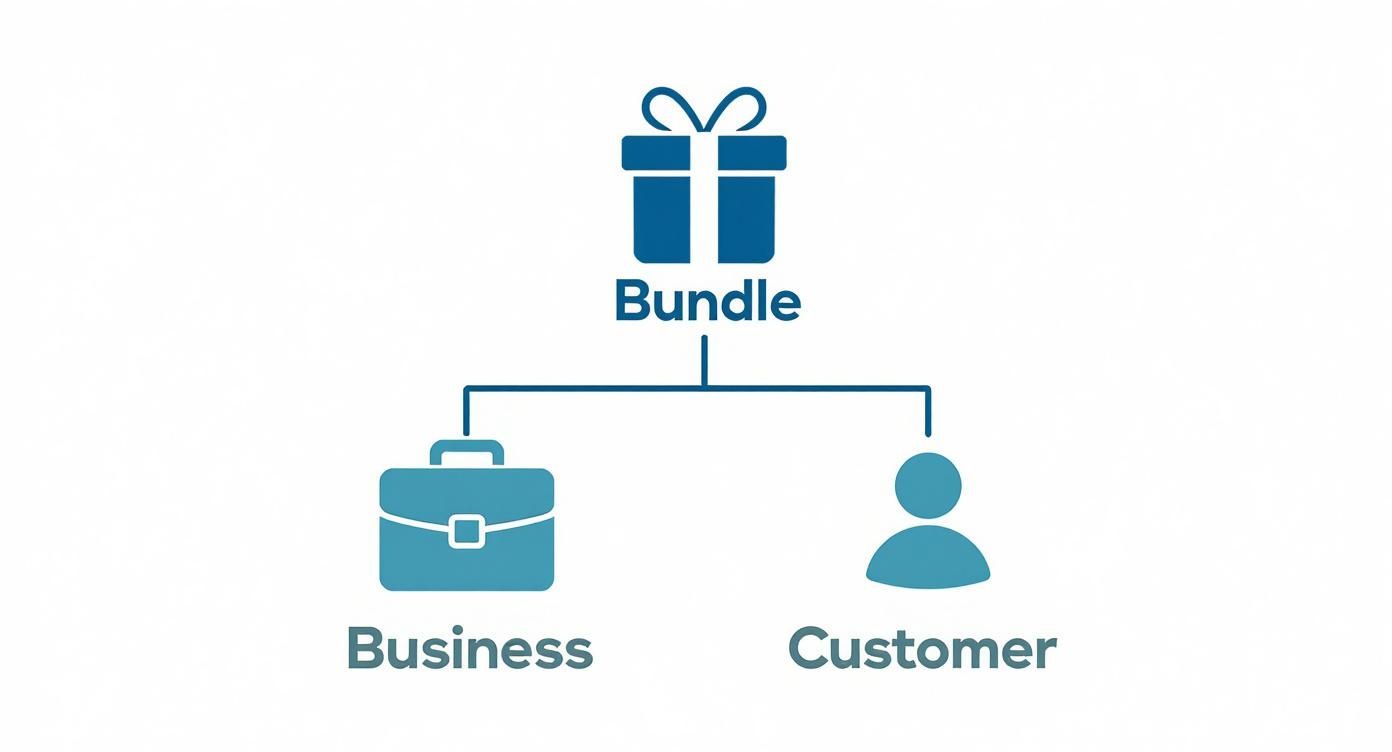
As you can see, the strategy perfectly aligns business goals (like more revenue) with what customers crave (great value and convenience). This powerful synergy is why up to 30% of global e-commerce revenue now comes from product bundles. It’s a huge shift from basic discounts to truly curated shopping. You can find more great stats in this article on product bundling trends on pushbundle.com.
To help you decide which approach is best for your store, let's compare the main strategies side-by-side.
Comparing Product Bundling Strategies
Each of these strategies has its place, and the best one for you will depend on your products, customers, and overall business goals. Now, let's explore each one in a bit more detail.
Pure Bundling
Think of pure bundling as the "all-or-nothing" deal. The items in the bundle are exclusive to that package—you simply can't buy them on their own. This approach creates an irresistible sense of exclusivity and is a fantastic way to sell a complete solution.
A classic example is a software suite like Microsoft Office. You don't just buy a single premium feature; you get the entire set of tools. In e-commerce, this could be a "Complete Skincare Starter Kit" where the high-potency serum included is only available in that bundle, pushing customers to buy the whole routine.
Key Takeaway: Pure bundling is your go-to when the combined value of the items is much more compelling than any single product. It encourages customers to commit to the full experience you've designed for them.
Mixed Bundling
The most popular and flexible approach by far is mixed bundling. This is where customers get to choose: buy the products individually at their regular price, or snag them together as a bundle for a sweet discount. It’s the best of both worlds, offering great value without forcing anyone's hand.
This is basically the "combo meal" of the e-commerce world. Sure, you can buy the burger, fries, and a drink separately, but grabbing them all together saves you a few bucks. For an online store, this might look like offering a camera for $500, a lens for $200, or the "Photographer's Essential Bundle" with both for $650. The savings are obvious, making the bundle a very tempting offer.
Build-Your-Own-Bundle
Finally, we have the build-your-own-bundle strategy, which puts the customer in the driver's seat. You define the rules—like "pick any 3 for $50"—and they get to create their own personalized package from a list of eligible products. This method is a game-changer for boosting engagement and making customers feel valued.
Imagine a gourmet food shop that lets shoppers "Build a Custom Gift Basket" by choosing any five items from their collection of cheeses, crackers, and jams for a flat price. This interactive experience makes shopping fun and ensures the customer gets exactly what they want. A happy customer is far more likely to come back for more.
So, What's the Big Deal with Product Bundling?
https://www.youtube.com/embed/XjhDvF6nu6o
Why do so many smart brands lean on product bundling? It’s pretty simple, really. When done right, it’s a win-win for everyone involved—you get a healthier business, and your customers get more value. It’s one of those rare strategies that genuinely benefits both sides of the checkout counter.
For your business, bundling is a fantastic way to bump up your most important numbers. Instead of crossing your fingers and hoping a shopper adds a few different items to their cart, a bundle gets them to commit to a bigger purchase all at once. This directly boosts your Average Order Value (AOV), a key sign of a healthy, efficient sales process.
And it's not just about the immediate sale. Think about your marketing. It’s so much easier and more effective to promote a single, compelling package—like a "New Dad Survival Kit"—than it is to market five separate baby products.
A Healthier Bottom Line
Let's talk about one of the sneakiest, smartest uses for bundling: clearing out inventory. We all have them—those products that just sit on the shelf a little too long. By pairing a slow-moving item with a rockstar bestseller, you can move that stagnant inventory without having to slash prices and kill your margins.
This isn't just an accounting trick, either. It cleverly introduces customers to products they might have skipped over otherwise, which can easily lead to them buying that item on its own down the road. When you get bundling right, it can have a huge impact on your average order value and customer loyalty, which are critical factors when you calculate customer lifetime value.
Bundling is more than a sales tactic; it's a value-creation engine. It shifts the focus from "selling a product" to "solving a problem," which builds stronger, more loyal customer relationships.
This graph from Wikipedia does a great job of showing how offering a bundle alongside individual products helps you make more money.
As you can see, this approach lets you capture different types of shoppers—those who just want one thing and those who are looking for the value of the full package. By serving both, you end up with higher profits overall.
Making Customers Happier
Now, let's flip the coin and look at it from the customer's side. The appeal is just as strong. They get real savings, a more convenient shopping trip, and a much better experience from start to finish.
The most obvious win for them is saving money. A good bundle just feels like a smart purchase, and that positive feeling sticks. It’s also incredibly convenient. Getting a complete, hand-picked solution in one click saves them the time and brainpower of having to hunt down each item themselves.
- Real Savings: It's simple math. Customers pay less for the bundle than they would for each item separately. It’s an instant, clear-cut value.
- Ultimate Convenience: Bundles take the guesswork out of shopping. A "Complete Morning Coffee Kit" is way easier to grab than hunting for a grinder, beans, and the right mug.
- Fun Discoveries: Bundles are also a great way for customers to try new or related products they might not have picked up otherwise. It turns a boring transaction into a moment of discovery.
Real-World Product Bundling Examples to Inspire You
Theory is great, but let's be honest—seeing how the pros do it is where the real lightbulb moments happen. The most successful brands have turned product bundling into an art form, creating offers that just feel right. They're intuitive, packed with value, and frankly, hard to resist.
By digging into their methods, you can steal some proven ideas and put them to work in your own e-commerce store. Let's break down a few classic examples to see the psychology and strategy behind them.

The Fast Food Icon: The McDonald's Happy Meal
The Happy Meal is probably the most famous product bundle on the planet. It’s a masterclass in mixed bundling that does so much more than just sell food; it sells an experience. It neatly packages a main, a side, a drink, and a toy all in one iconic box.
- The Strategy: They bundle popular core items (like a burger or nuggets) with high-margin sides (fries and a soda) and then add an inexpensive, high-desire kicker—the toy.
- The Psychology: For parents, it's a simple, no-fuss meal solution. Done. For kids, the toy is everything. It creates an emotional pull that turns a regular meal into a genuine event.
- The Result: This simple bundle makes ordering a breeze, bumps up the average order value, and builds incredible brand loyalty from a very young age.
The Beauty Kit: Sephora's Curated Sets
Beauty giant Sephora is brilliant at creating "routine" kits that solve a complete problem for their customers. Instead of just selling you a cleanser, they’ll offer something like a "5-Step Skincare Routine for Glowing Skin," bundling the cleanser, toner, serum, moisturizer, and sunscreen together.
This works so well because it cuts through the noise and simplifies a potentially overwhelming decision. Customers who aren't sure where to begin are handed an expert-approved solution on a silver platter. That builds trust and gets them to try multiple products from a single brand all at once.
When you frame a bundle as a solution rather than just a pile of products, you guide the customer’s journey and position your brand as a trusted authority.
This approach isn't just a short-term sales boost, either. Research shows that customers who purchase bundles tend to have 40% higher lifetime values than those who only buy single items. Why? Because you’re introducing them to more of your product line right away, making it far more likely they’ll come back to repurchase those items individually. You can dive deeper into how this works with these AI-driven sales insights on articsledge.com.
The Tech Package: A New Smartphone Bundle
Think about the last time you bought a smartphone. You rarely just buy the phone, right? Tech companies know this. They often bundle the device with the essentials you're going to need anyway, like a charger, a protective case, and a screen protector.
This is a perfect example of bundling based on complementary products. The customer is already mentally prepared to buy these accessories, so offering them all together at a slight discount is a no-brainer. It saves them the hassle of hunting down compatible gear. For the business, it's a win-win: the average order value on a flagship product skyrockets, and they move accessory inventory like clockwork.
Each of these examples hammers home the same point: the secret to a great bundle is truly understanding what your customer is trying to achieve.
Alright, let's turn that theory into practice. So, how do you actually put together a product bundle that flies off the virtual shelves? It’s less about guesswork and more about smart strategy, starting with the data you already have.
Follow these steps, and you'll be on your way to creating an offer your customers simply can't pass up.

The best bundles don't feel forced—they feel like they were made just for the customer. That’s because they’re built on real buying habits. By following a clear plan, you can craft a deal that not only bumps up your sales but also shows your customers you get them. Let’s dive in.
Step 1: Dig Into Your Sales Data
Think of your sales history as a goldmine of ideas. Before you start pairing things up, you need to see what your customers are already doing. Their past purchases will tell you exactly what they want.
Here are a few patterns to hunt for:
- Frequently Bought Together: This is the low-hanging fruit. Check your order history for items people consistently buy in the same transaction. If customers are already grabbing a specific coffee maker and filters together, you've got a ready-made, proven bundle.
- Pair a Bestseller with a Helper: Take a look at your top-selling product. What’s a smaller, less expensive item that makes it even better? Think of pairing a premium leather journal with a great-quality pen. It’s a classic for a reason.
- Mix a Star with a Slow-Mover: Have a product that’s gathering a little dust? Bundling it with one of your most popular items is a fantastic way to get it in front of more people. This can move stagnant inventory without you having to slash prices.
Step 2: Get Strategic With Your Pricing
Pricing a bundle is a delicate dance between making it a steal for your customer and keeping your profits healthy. You want to hit that sweet spot where shoppers feel like they’re getting an amazing deal, and you're still protecting your margins.
As a general rule, aim for a bundle discount that’s between 10% and 20% off the total price of buying the items separately. This creates a clear, motivating saving for the customer without you giving away the farm.
For example, say you sell a shampoo for $20 and a conditioner for $20. Individually, that's a $40 purchase. By bundling them for $34 to $36, you're offering a compelling discount that still keeps your numbers in the green.
Step 3: Show Off Your New Bundle
You’ve built the perfect bundle and priced it to sell—now you just have to make sure people see it. A fantastic deal won't do you any good if it's hidden away on your site. It’s time to put it in the spotlight.
Here’s how to create some buzz:
- Give It a Dedicated Product Page: Don't just list it as an option. Treat your bundle like a standalone hero product. Come up with a catchy name, use high-quality photos, and write a description that sells the combined value.
- Feature It on Your Homepage: Slap a banner right on your homepage. It’s the first thing many visitors see, so make it impossible to miss.
- Spread the Word on Email and Social: Announce your new bundle to your email subscribers and social media followers. Play up the convenience and the savings to get people excited and drive them back to your store.
As more businesses adopt these strategies, the demand for the tools to create physical bundles is also on the rise. In fact, the global bundling machine market, which was valued at around USD 2.8 billion in 2025, is projected to climb to USD 5.3 billion by 2035. You can get a closer look at this industry growth over at Future Market Insights.
Got Questions About Product Bundling? Let's Unpack Them.
Diving into product bundling is exciting, but let's be real—it brings up a lot of questions. Getting the details right is what separates a wildly successful bundle from a flop, so it's smart to think things through.
Let's tackle some of the most common questions that pop up for store owners. Think of this as your go-to guide for building a bundling strategy that actually works, so you can move forward with total confidence.
How Do I Price My Product Bundles?
Pricing is where the magic happens. You need to hit that perfect balance between offering a deal your customers can't resist and protecting your own profit margins. Price it too high, and no one buys. Price it too low, and you could actually lose money.
The simplest and most effective way to start is with a straightforward discount.
- First, add up the total price of every item in the bundle if they were all bought separately.
- Then, slice a percentage off that total. A discount between 10% and 20% is usually the sweet spot. It feels like a genuine win for the shopper without wrecking your bottom line.
For instance, say you're bundling three products that sell for $15, $20, and $25. Individually, that’s $60. A 15% discount brings the bundle price down to $51, giving your customer a clear $9 saving. Don't be afraid to experiment with different price points—what works is whatever resonates with your audience and your financial goals.
Will Bundles Cannibalize My Individual Product Sales?
This is a big one, and it's a totally valid fear. You worry that if your bundle is too good, customers will stop buying the individual items at full price. This is what's known as sales cannibalization, but the good news is, you can manage it.
The secret is to think of bundles as unique, value-added experiences, not just discount packs for your greatest hits.
A bundle shouldn't just make your bestsellers cheaper. It should solve a specific problem or create a complete solution. That shift in thinking is what stops cannibalization in its tracks.
To dodge this issue, stick with mixed bundling, which lets customers buy items separately if they want. Even better, create bundles that tell a story, like a "New Mom Survival Kit" or a "Perfect Morning Coffee Ritual." Keep a close eye on your sales data. As long as the lift in revenue from your bundles outweighs any slight dip in single-item sales, you’re on the right track.
What Are the Best Products to Bundle Together?
Forget guesswork. The best bundle ideas are already hiding in plain sight—right in your sales data. Your customers' past purchases are a goldmine for figuring out what combinations will fly off the shelves.
Start by digging into your order history and looking for these three powerful patterns:
- The Bestseller + The Sidekick: Pair your top-selling product with a lower-cost item that complements it. If you sell a fancy French press, bundling it with a bag of signature-blend coffee beans and a milk frother is a no-brainer.
- The "Bought Together" Buddies: Sift through your orders and see what people are already buying in the same checkout. If customers consistently grab a specific face wash and moisturizer together, you’ve found a proven winner. Package them up!
- The Perfect Starter Kit: Assemble a bundle that gives new customers everything they need to fall in love with your brand. A skincare line could offer a "Discovery Kit" with travel-sized versions of the core products, making it an easy and low-risk "yes" for first-time buyers.
Ready to put these powerful bundling strategies to work on your own ecommerce site? At Wand Websites, we build conversion-focused stores with features designed to boost your average order value and grow your business. Let us handle the tech, so you can focus on creating amazing products.
