
What Is Affiliate Marketing Program? A Complete Guide

Think of an affiliate marketing program as a company's official referral system. Businesses pay outside partners—we call them affiliates—a commission when those partners send new customers or sales their way. Simply put, affiliates get paid to recommend products they genuinely like and use. For businesses, it's a fantastic, low-risk way to broaden their customer base.
What Is an Affiliate Marketing Program, Really?
Let's use a real-world example. Imagine you're a passionate local tour guide, and you absolutely love a small, hidden-gem coffee shop downtown. You can't help but tell every tourist on your tour about their incredible espresso.
One day, the coffee shop owner notices all the new faces you're sending over. To show her appreciation, she offers you a small kickback for every person you send who actually buys a coffee. That, in a nutshell, is the heart of an affiliate marketing program—just brought into the digital world.
This whole setup is built on a straightforward yet powerful partnership. At its core, affiliate marketing is a type of performance-based advertising. This means businesses only pay for tangible results, like a finalized sale or a qualified lead. It's a true win-win that depends on three key players working in harmony.
The Key Players in an Affiliate Marketing Program
To get the full picture, you need to know who's involved. Each person (or company) has a distinct role that keeps the gears of the system turning.
Here’s a quick breakdown of who does what in the affiliate world.
As you can see, each player has a clear and important job to do.
This three-way relationship creates a powerful, self-sustaining cycle. The merchant makes a sale, the affiliate earns a commission for their hard work, and the customer discovers a product that solves their problem. It’s a marketing model built entirely on trust and tangible results.
How Affiliate Marketing Programs Actually Work
Ever wondered how a simple click on a blog post or in a YouTube video description magically translates into a commission for the creator? It’s not magic, but a really smart system working behind the scenes. It all boils down to a unique, trackable link.
Let's say a popular tech YouTuber reviews a new camera. When she signs up for the camera company’s affiliate program, she's given a special link. This isn't your average URL; it has her personal affiliate ID embedded right in it, acting like her digital signature.
Now, when a viewer watches her in-depth review, trusts her opinion, and clicks that link, the whole process kicks into gear.
The Journey of a Click
That special affiliate link does two things the moment it's clicked. First, it sends the potential customer straight to the camera's product page. Second—and this is the clever part—it drops a tiny file called a cookie onto the person's web browser.
Think of this cookie as a little sticky note that says, "Hey, this person came from that awesome YouTuber's recommendation." It's not collecting personal data, just remembering who sent the traffic.
This is the technology that makes the whole system work. The cookie also has a "lifespan," which can be anything from 24 hours to 90 days or even longer. This means if someone clicks the link but wants to sleep on it before buying, the YouTuber can still get credit for the sale as long as the purchase is made before that cookie expires.
Getting this tracking right is absolutely key to making sure partners are paid fairly. This whole flow, from the first click to the final payout, is what makes the system tick.
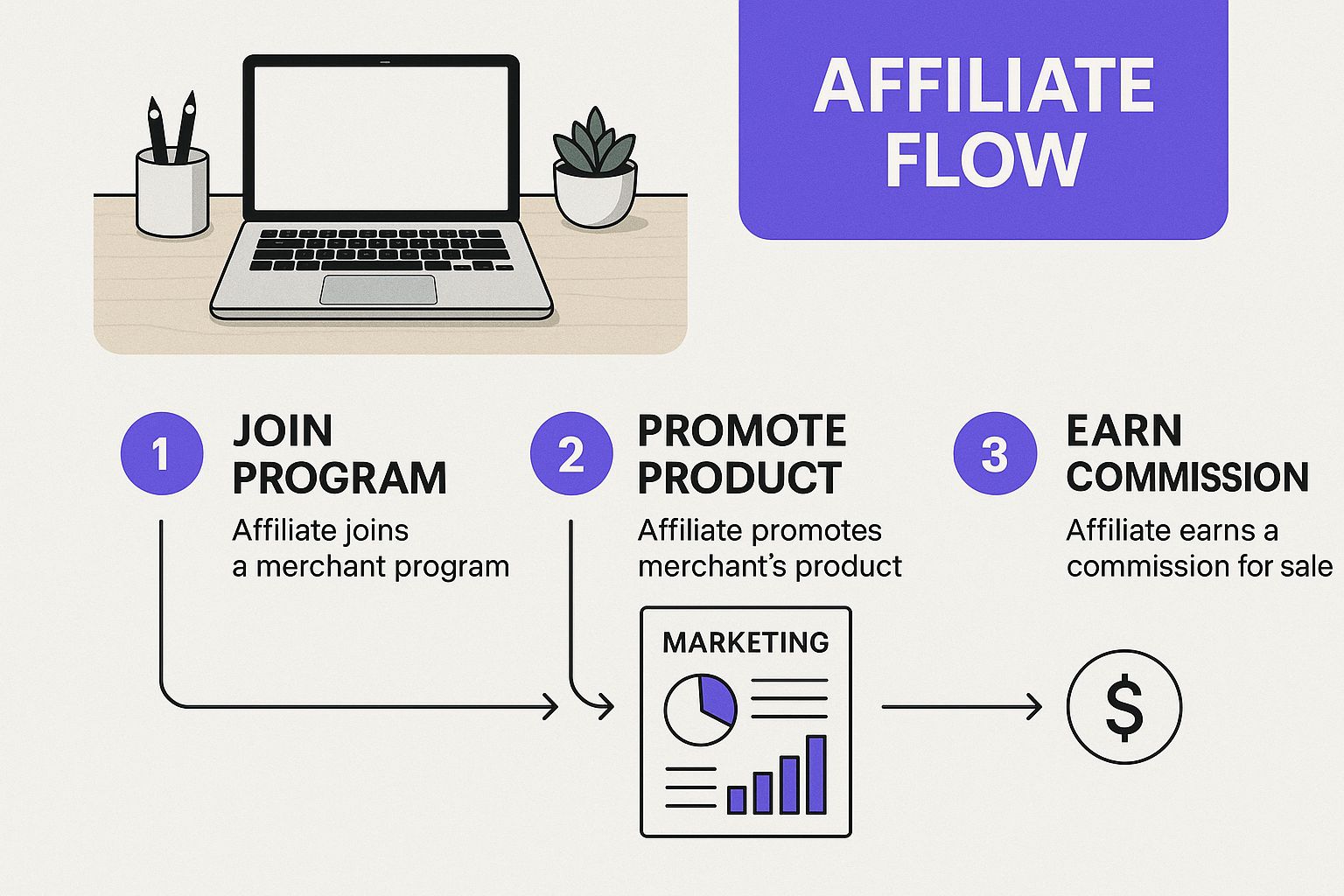
As you can see, each step flows logically into the next, building a reliable system that tracks every sale back to the person who drove it.
Completing the Sale and Getting Paid
So, the customer decides they have to have that camera. When they go through checkout, the store's system looks for that affiliate cookie. It finds the "sticky note" from the YouTuber's link, reads her affiliate ID, and automatically attributes the sale to her.
The affiliate program's software then logs the transaction, calculates her commission based on their agreement, and adds it to her account. Most programs pay their partners on a set schedule, like once a month, after they've hit a minimum earnings amount.
The beauty of this system is that it's automated and transparent. It makes sure credit goes where it's due, building a foundation of trust between a business and its affiliates.
This reliability is a huge reason why 81% of brands have jumped on the affiliate marketing train. It’s not just popular; it’s effective. Many businesses see an average of $15 in revenue for every $1 spent on their programs. It’s a serious growth engine, especially for consumer-focused brands. If you're curious, you can find more stats on the impact of affiliate marketing on Wix.com.
The Different Kinds of Affiliate Programs
So, you're ready to jump in, but you should know that not all affiliate programs are built the same. Just as you have different kinds of partners, the programs themselves have different structures. The biggest difference usually comes down to one simple thing: how and when you get paid. Getting a handle on these payment models is the first step to finding a program that actually works for you.
By far, the most common setup is Pay-Per-Sale (PPS). You might also see it called Cost-Per-Sale (CPS). It’s simple: you earn a commission only when someone you refer actually buys something. This is the bread and butter for most e-commerce brands because it’s so straightforward. They only pay out when they make money, making it a low-risk, high-reward deal for them.
This model is so foundational that it now drives about 16% of all online sales. It’s the engine behind giants like Amazon Associates, which has used this very approach to gobble up a massive 46% share of the entire affiliate market. You can dig into more stats about the power of affiliate marketing over at Hostinger.com.
Beyond Pay-Per-Sale Models
While making a sale is usually the main goal, it isn't the only game in town. Some companies have different objectives, so they structure their programs a little differently.
Pay-Per-Lead (PPL): Forget the sale for a moment. With PPL, you get paid when your referral completes a specific action. This could be signing up for a newsletter, filling out a "contact us" form, or starting a free trial. It's a go-to for service businesses or companies selling high-ticket items where the sales cycle is much longer. Their first goal is just to get a foot in the door with a potential customer.
Pay-Per-Click (PPC): This one is a bit rarer these days, but it's still out there. Here, affiliates earn a small fee for every single click they send to the merchant's site. It doesn't matter if that click leads to a sale or not. Because it can be open to fraud (think bots clicking links), most merchants shy away from it unless their primary goal is just getting eyeballs on their brand.
Key Takeaway: The payment model is a dead giveaway for what a business truly values. For most stores selling products, it’s the sale (PPS). For a high-end consultant, it might just be getting your email address (PPL).
The Diverse World of Affiliate Partners
Just as the programs vary, so do the people who promote them. A smart merchant knows that you can't rely on just one type of partner. The real magic happens when you build an ecosystem of different promoters, each reaching a unique audience.
Here are a few of the most common types of affiliates you’ll run into:
Content Creators & Niche Bloggers: These are the experts—the folks who live and breathe a specific topic, whether it's sous-vide cooking, gaming PCs, or personal finance. They build deep trust with their audience through amazing articles and videos, so when they recommend a product, people listen.
Social Media Influencers: These are the masters of creating buzz on platforms like Instagram, TikTok, and YouTube. They are visual storytellers who can make a product feel personal and exciting, driving huge waves of traffic with a single post or video.
Coupon and Deal Sites: We all love a good bargain. These sites specialize in attracting shoppers who are laser-focused on finding the best price. They tend to catch customers at the very end of their buying journey, right when they're about to pull out their credit card.
Getting to know these different models and partner types is crucial. If you’re an affiliate, it helps you pick a program that fits your voice and your audience. If you’re a business, it’s about assembling a well-rounded team of partners who can connect with customers at every single stage of their journey.
Why Businesses and Affiliates Love This Model
So, what’s the secret sauce that makes affiliate marketing programs so popular year after year? It all comes down to a simple, powerful idea: it's a true win-win partnership. Both the business selling the product and the creator promoting it get something incredibly valuable out of the deal.
For businesses, especially those just starting out or running an e-commerce store, affiliate marketing is a dream. It's one of the most cost-effective ways to get the word out. Instead of gambling a huge chunk of your budget on ads and just hoping for the best, you only pay when you get a real result—usually, a sale. This performance-based model takes a ton of the risk off the table and ensures your marketing dollars are actually making you money.
Think about it. Say you've just launched a store selling unique, handmade leather goods. You probably don't have a giant advertising budget. By starting an affiliate program, you can team up with fashion bloggers and style influencers who are already talking to your ideal customers. Suddenly, you have a passionate, authentic sales force driving targeted traffic to your site, and you didn't have to pay them a dime upfront.
The Affiliate Advantage
For the affiliates themselves, the appeal is just as strong. It's all about flexibility and turning your passion into a paycheck. If you're a blogger, a YouTuber, or have a following on social media, affiliate marketing gives you a straightforward way to earn an income without ever having to create, stock, or ship your own products.
It lets creators monetize content effectively by simply recommending products they genuinely use and believe in. Over time, this can even become a source of semi-passive income. A single, well-written blog post or an evergreen YouTube video can keep earning commissions for months, or even years, after it goes live. That's a powerful way to build financial freedom.
This symbiotic relationship is the engine of affiliate marketing. Businesses acquire customers at a predictable cost, while affiliates build a business around their audience’s trust and their own expertise.
A True Partnership for Growth
At the end of the day, a great affiliate program works because it lines up everyone's goals. The merchant and the promoter are both shooting for the exact same thing: getting a fantastic product into the hands of the right customer.
Here’s a quick look at what makes this such a great deal for both sides:
For Businesses:
- Low Financial Risk: You only pay for performance. No more wasted ad spend.
- Targeted Traffic: Affiliates bring you visitors who are already interested in what you sell.
- Increased Social Proof: A recommendation from a trusted voice is pure gold for your brand's credibility.
- Scalable Marketing: Growing your reach is as simple as bringing on more great partners.
For Affiliates:
- Flexible Work: You call the shots. Create content on your own schedule, from anywhere you want.
- No Product Hassle: Forget about inventory, shipping, or customer support. Just focus on creating.
- Passive Income Potential: Your best content can become an asset that earns money 24/7.
- Builds Authority: Recommending quality products shows your audience you know your stuff, building even more trust.
This isn't just another marketing channel. It's a genuine strategy for building sustainable, long-term growth for everyone involved.
Real-World Examples of Successful Programs

It’s one thing to talk about affiliate marketing in theory, but seeing it in action is where things really click. By looking at how the pros do it, you can borrow from their playbooks to build your own successful program or find the right one to join.
When you think of affiliate marketing, one name probably comes to mind: Amazon Associates. It’s the undisputed giant in the space, and its success comes down to two things: its massive product catalog and how easy it is to get started. Just about any blogger or content creator can find relevant products to promote, from books to high-end electronics.
The commission rates might seem small, often ranging from 1% to 10%, but here's the magic trick: Amazon's "sitewide" commission. If someone clicks your link for a coffee maker but ends up buying a new TV and a set of patio furniture, you get a cut of the whole cart. That, plus the fact that everyone already trusts Amazon, makes it a fantastic starting point for newcomers.
Beyond the Retail Giants
But affiliate marketing isn't just for retail titans. The Shopify Affiliate Program is a perfect example of a different, high-value approach that’s incredibly popular in the B2B world. Instead of giving affiliates a small slice of a monthly subscription, Shopify offers a huge one-time payment for every new merchant who signs up for a paid plan through their link.
This is a masterclass in aligning your affiliate payouts with a customer's lifetime value. Shopify can afford to be generous with upfront commissions because they know that a new merchant is incredibly valuable to their business over the long haul.
You see this model all the time with smaller, more specialized software companies, too. Imagine a new productivity app for freelance writers. They might offer a recurring 20% commission. This means for as long as that referred customer keeps their subscription active, the affiliate who brought them in keeps earning money, month after month.
This recurring model is brilliant because it turns affiliates into true partners. They aren't just looking for a quick sale; they're incentivized to find loyal, high-quality customers who will stick around. It creates a win-win where everyone is invested in long-term growth. Each of these examples highlights just how flexible and powerful this marketing model can be.
Getting Started with Your Own Affiliate Program
Thinking about launching your own affiliate program? It might feel like a huge, complicated project, but it's more manageable than you might imagine. The best way to approach it is by starting with a simple, solid foundation that you can scale up later.
Think of it this way: you're essentially building a dedicated sales team that you only pay when they deliver actual, measurable results.
First, Nail Down Your Goals
Before you do anything else, you need to know what you're trying to achieve. What's the main goal here? Are you laser-focused on driving more sales? Or is your priority to get your brand name out there and boost awareness? Maybe you need to generate high-quality leads for a service you offer.
Whatever it is, get crystal clear on that primary objective. It will be your guiding star for every other decision, from the commissions you set to the kind of partners you want to bring on board.
Next, Pick a Commission Structure
This part is crucial. Your commission structure is the engine of your affiliate program—it’s what will truly motivate your partners to promote what you’re selling.
You have a few solid options, and the right one really depends on your products, price points, and profit margins. The sweet spot is a rate that’s enticing enough to attract top-notch partners but doesn't sink your own business.
Percentage of Sale: This is the go-to model for most e-commerce stores. You simply give your affiliates a cut, like 10-20%, of every sale they send your way. It's easy to understand and directly connects their reward to the revenue they generate.
Flat-Rate Commission: This model is perfect if you sell a single product or a service with a set price. For instance, you could offer a flat $50 commission for every new customer who signs up. No complicated math needed.
Tiered Commissions: Want to light a fire under your best affiliates? A tiered structure is the way to go. You can offer higher commission rates as they reach specific sales targets, which gives them a powerful incentive to keep sending more business your way.
Get Your Terms and Tech in Order
Once you've landed on a commission plan, it's time to lay down the law with clear terms and conditions. These are the official rules of engagement for your program.
This document should spell everything out: how and when you'll pay affiliates, how long their tracking cookie lasts, and what promotional methods are fair game (and which aren't). Being totally transparent from the start builds trust and heads off any potential headaches down the road.
Think of your program's terms as its constitution. A well-defined set of rules protects both you and your partners, creating a fair and predictable environment for everyone involved.
Finally, you’ll need the right tools for the job. An affiliate management software is an absolute must-have. This is the technology that does all the heavy lifting, like creating unique tracking links for each partner, watching clicks and conversions, and handling all the commission payments. It keeps everything organized and running smoothly.
Many e-commerce platforms like Shopify have fantastic apps or built-in features that make this setup surprisingly easy. As you get going, remember that your tracking accuracy is everything. It's critical to improve data quality so you can trust your numbers and make smart decisions.
With these key pieces in place—your goals, commission plan, fair terms, and the right software—you're ready to start recruiting your first affiliates. A great place to start is with your most passionate customers, bloggers in your niche, or influencers who already speak to the audience you want to reach.
Got Questions About Affiliate Marketing? Let's Get Them Answered
As you start wrapping your head around what an affiliate marketing program really is, a few practical questions almost always pop up. Let's dive into some of the most common ones to clear things up.
Probably the biggest question on everyone's mind is: “How fast can I actually start making money?” The honest answer? It really depends. Some folks might see their first commission within a few months, but for most people, building up a reliable income stream can take a year or even longer. It all comes down to how well you can attract an audience and earn their trust.
Another popular question is whether or not you absolutely need a website. While having a blog is a fantastic and proven strategy, it's not the only way to get started.
A YouTube channel is one of the easiest ways to jump into affiliate marketing without a website. It's totally free, you can start creating videos right away, and you can drop your affiliate links right into your video descriptions for people to click.
Can a Complete Beginner Actually Succeed?
Yes, absolutely! Newcomers find success all the time, usually by zeroing in on a niche they're genuinely passionate about. For example, a lot of beginners start by creating "how-to" content, like a guide on starting a blog. From there, they can recommend web hosting services or graphic design tools, which often have some pretty generous affiliate programs.
So, is affiliate marketing truly "passive income"? Not entirely. Your content can definitely earn you money while you're sleeping, but it's not a set-it-and-forget-it deal. It requires real work. You'll constantly need to:
- Create new content to keep your audience coming back.
- Update old posts and videos to make sure your info is still accurate.
- Keep an eye on your sales and adjust your game plan based on what's working and what's not.
It’s better to think of it as building a valuable asset that generates semi-passive income over the long haul. All that upfront work is an investment that can really pay off down the road.
Ready to turn your successful e-commerce hustle into a powerhouse brand? At Wand Websites, we build conversion-focused Shopify stores that give you the freedom and control to grow. Let's build your future, together. Learn more about our Shopify design services.
