
A Guide to the Process of Website Development for E-Commerce

So, what exactly is the website development process? Think of it as a structured path from a simple idea to a fully functioning website. It's the blueprint that translates your business goals into a digital storefront designed to find and delight your customers. This isn't just a technical checklist; it's the strategic heart of your online brand.
Your Blueprint for E-Commerce Independence
Hello, ambitious Etsy seller. You've honed your craft and are consistently hitting those five-figure months—fantastic! But you're starting to feel the constraints. You're ready to break free from Etsy's rules, fees, and the feeling that you don't truly own your business. This guide is your roadmap to building an independent e-commerce brand that's all yours.
We’re going to pull back the curtain on the entire website development process, transforming what seems like a huge, complicated project into a series of clear, manageable steps. From the first strategy session to launching a high-converting Shopify store, we've got you covered. No jargon, just straight talk and insider tips.
From Etsy Seller to Brand Owner
Making the jump from a marketplace to your own platform is all about taking back the reins. It’s the difference between renting a booth at a crowded fair and owning the entire marketplace.
This shift puts you in the driver's seat, allowing you to:
- Build Direct Customer Relationships: Stop letting a platform own your customer list. On your own site, you can run targeted email campaigns, create loyalty programs, and get feedback straight from the source.
- Escape the Fee Trap: Those listing fees, transaction fees, and offsite ad fees really add up. Imagine reinvesting that money into your own marketing for a much better return.
- Unlock New Ways to Sell: Want to offer product bundles, subscriptions for recurring revenue, or an affiliate program? These are tough or impossible on Etsy but are standard features on a platform like Shopify.
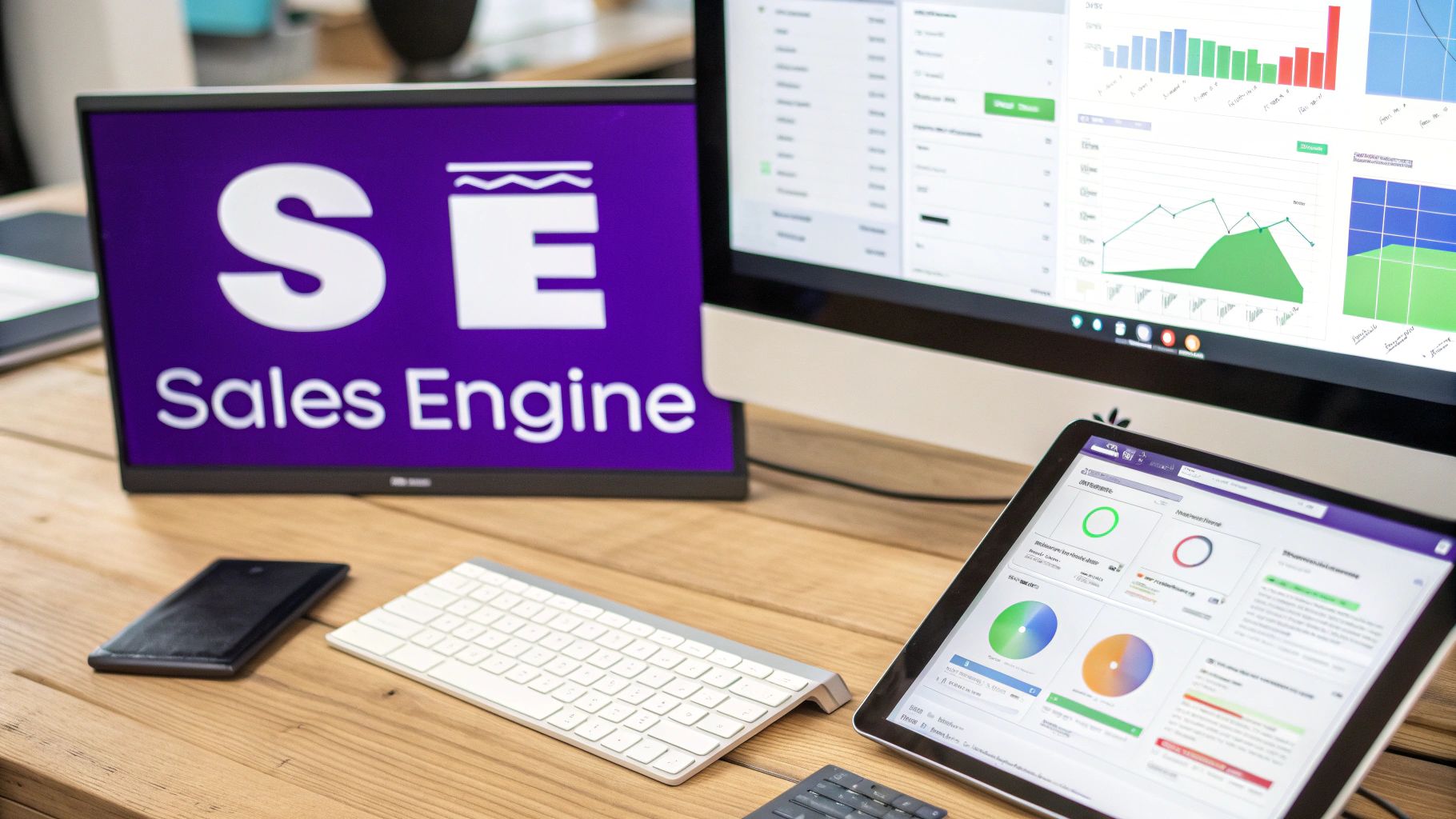
The goal here isn't just to build a website. It's to build a scalable sales engine. Your new site should be your hardest-working employee, selling for you 24/7 to grow your brand and your bottom line.
This journey generally follows a three-part flow—strategy, design, and launch. Each phase lays the groundwork for the next, ensuring the final site is not only beautiful but also built to meet your specific business goals.
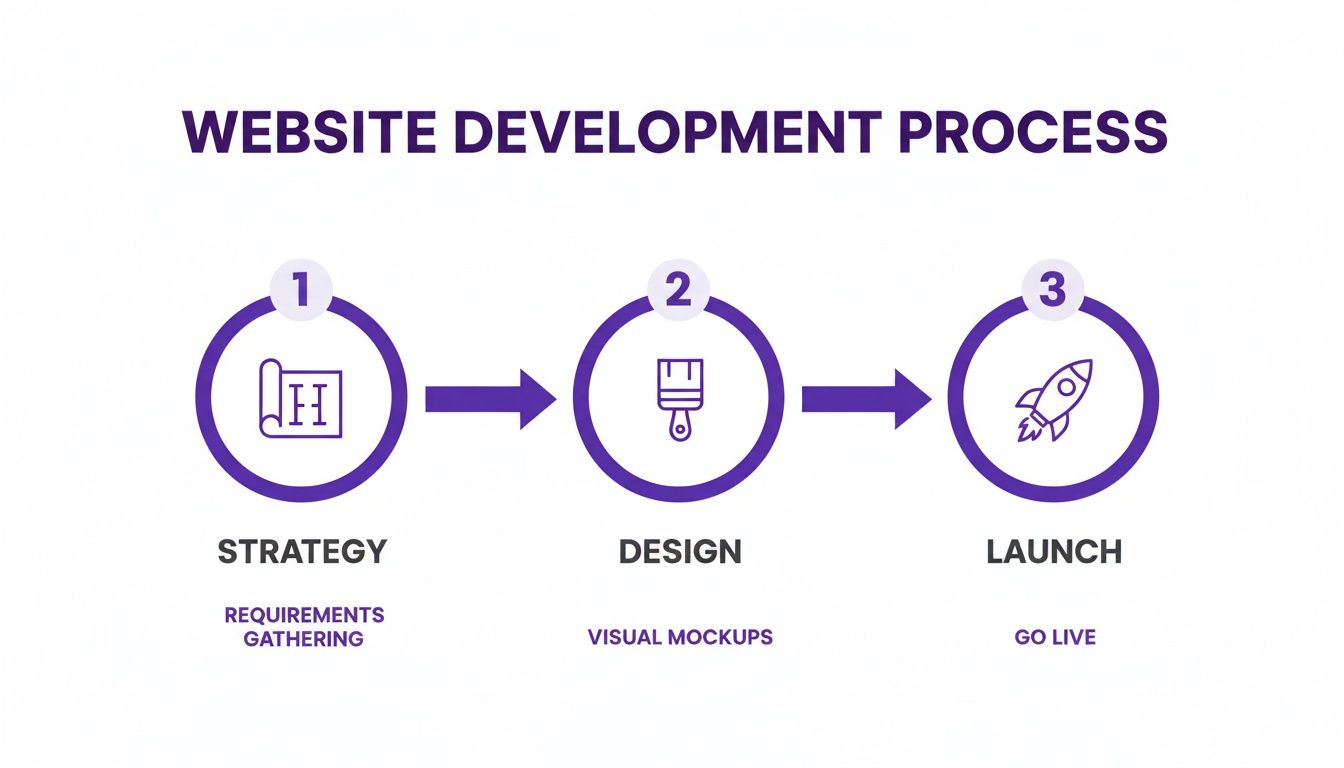
A methodical approach is everything. It’s how you grow your revenue and build a loyal customer base, all on your own terms. Let’s get started.
Phase 1: Nailing Down Your Strategy & Discovery
Before we even whisper the words "color palette" or "font," we need to pump the brakes. The e-commerce sites that truly thrive are built on a rock-solid strategy, not just a pretty homepage. This is where it all begins—turning your business dreams into an actual, functional roadmap for a website designed to make you money.
This isn't just about jotting down a list of features you think are cool. We're talking about a deep dive into your business goals, your unique brand story, and most critically, the person you're trying to sell to. Honestly, rushing this part is the single biggest mistake I see growing brands make. It's a one-way ticket to costly redesigns and missed sales down the road.
Getting Inside Your Customer’s Head
First things first: you need to know exactly who you're selling to. When you move off Etsy, you lose that built-in marketplace traffic. Suddenly, you have to find and attract your own people. This means shifting your thinking from just listing products to creating a destination for a very specific type of customer.
Start by sketching out a detailed customer avatar. Go way beyond the basics like age and location. Ask the real questions:
- What's a major frustration in their life that your product actually solves?
- What core values do they have that overlap with your brand's mission?
- Where are they hanging out online when they’re not scrolling Etsy? Think blogs, forums, or specific Instagram accounts.
- What kind of content—YouTube reviews, TikToks, blog posts—actually gets them to pull out their wallet?
Next up, it’s time to do some detective work on your competition. Pick 3-5 other brands in your space, including a big-name player and a smaller brand that’s clearly crushing it. Don't just glance at their sites. Scrutinize them. How do they structure their product pages? Is their checkout process a breeze or a nightmare? Where are the obvious gaps in their customer experience that you can swoop in and fill? The goal here isn't to copy them, but to find your unique angle and serve your audience even better.
As you build this strategic foundation, a powerful ecommerce content marketing strategy will be crucial for attracting and converting those ideal customers.
Charting Your Course for Growth
Once you have a crystal-clear picture of your customer and the competitive field, you can start mapping out the specific features your site needs—not just for launch day, but for where you want to be in a year or two. Think of this as your technical wish list, but one that’s directly tied to your business goals.
For an Etsy seller already pulling in $10k+ a month, your needs go far beyond a simple "add to cart" button. You should be thinking about systems that drive revenue and build loyalty on autopilot.
Let’s talk about some real growth-focused features:
- Subscription Models: Can you offer your products on a recurring basis? This is the holy grail for e-commerce—predictable, stable monthly revenue.
- Product Bundling: How can you group products to nudge up that average order value? Think "New Mom Survival Kits" or "The Complete Skincare Set."
- Affiliate Programs: Do you already have fans who rave about your products? An affiliate system can turn those loyal customers into a commission-driven sales team.
This whole strategic phase is about future-proofing your business. When you define your goals and must-have features upfront, you keep the development process tight, focused, and on-budget. It’s the best defense against the scope creep and spiraling costs that sink so many poorly planned projects.
The digital world is packed. There are now over 1.13 billion websites, with another 252,000 new sites popping up every single day. Sure, platforms like Shopify have made it easier than ever to get online, but a successful launch still comes down to a methodical process. For a brand at your level, investing in a professional setup isn't a luxury—it’s how you boost traffic, increase sales, and finally say goodbye to those marketplace fees for good. If you're a data nerd, you can dig into more of these wild website statistics from DiviFlash. Getting this planning stage right is what separates the brands that take off from those that never quite leave the ground.
Designing an Experience That Converts
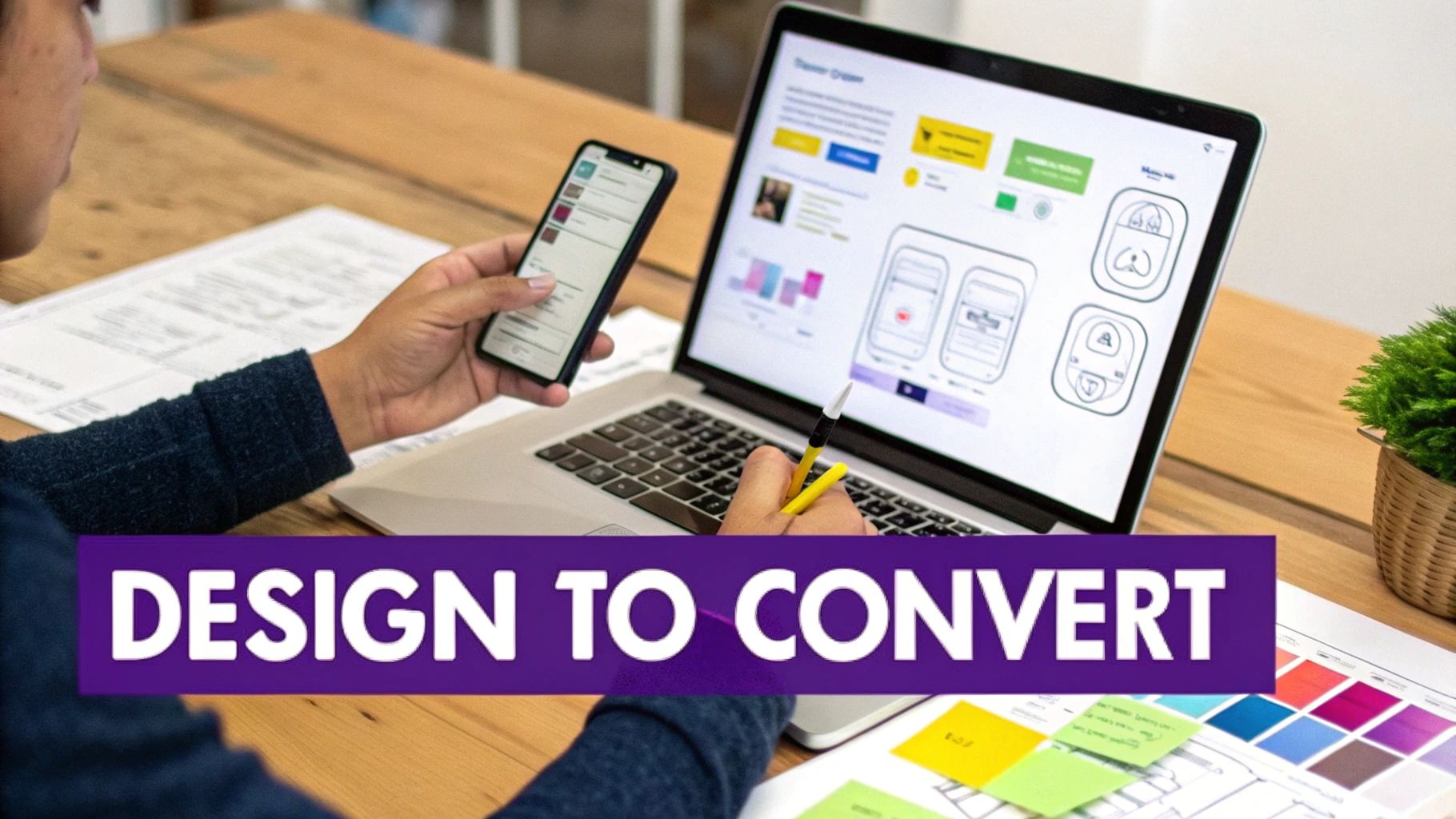
Alright, with our strategy locked in, we get to the fun part: bringing your brand to life online. But let's be clear—this isn't just about making things pretty. A gorgeous website that doesn't make sales is nothing more than a very expensive digital business card. Our one and only goal here is to design an experience that turns curious visitors into paying customers.
This is where two key disciplines, User Experience (UX) and User Interface (UI), come together. Think of UX as the invisible blueprint that makes your site a breeze to use. UI, on the other hand, is the visual flair—the colors, fonts, and buttons that forge an emotional connection and make your brand memorable.
The Science of Intuitive Navigation
Picture this: a brand-new visitor lands on your site. Can they find exactly what they're looking for without a second thought? That's the million-dollar question UX design answers. For an e-commerce store, this means paving a smooth, almost effortless path from your homepage all the way to that "Thank you for your order!" page.
We kick things off by mapping out the entire site structure, making sure your product categories make sense and your navigation menu is dead simple. A visitor should never have to wonder where to click next. For instance, if someone is searching for handmade ceramic mugs, they shouldn't have to dig through three different "Home Goods" submenus to find them.
The best e-commerce designs don't make users think. They anticipate what a visitor needs and gently guide them down a path that feels natural, leading them straight to products they'll love. This seamless journey is the secret sauce of a high-converting site.
To nail this, we focus on a few key things:
- A Clear Visual Hierarchy: We use size, color, and placement to draw the eye to the most important elements on a page, like your "Shop Now" button or best-selling collections.
- Logical Product Categories: Your products need to be organized in a way that mirrors how your customers actually think about and shop for them.
- A Frictionless Checkout Process: We strip down the checkout to the bare essentials. Every extra click or form field is another opportunity for a potential customer to walk away.
Crafting High-Converting Product Pages
Your product pages are your digital sales floor. This is where the magic happens, and every single element must work together to build trust and encourage a purchase. It's a careful blend of artistry and sales psychology.
A great product page tells a story; it's so much more than just a title and a price tag. We're talking stunning, high-resolution photos and videos that show your product from every angle, in use, and in a real-life context. Your product descriptions need to speak directly to your ideal customer's problems and dreams, focusing on the benefits they'll get, not just a dry list of features.
Ultimately, a well-designed site is an active tool for improving ecommerce conversion rates through smart visuals and user-friendly journeys. We'll weave in trust-building elements like customer reviews, crystal-clear shipping info, and a no-fuss return policy to erase any doubt a buyer might have.
Mobile-First Design Is Non-Negotiable
In this day and age, designing for a desktop computer first is a recipe for disaster. More than 61% of all website traffic now comes from mobile devices, so a mobile-first approach isn't just a good idea—it's essential.
This means we design the experience for the smallest screen first, then scale it up for tablets and desktops. It forces us to be ruthless with our priorities, ensuring the mobile experience is fast, clean, and easy to use with just a thumb. This helps us avoid the classic mistake of creating a cluttered desktop design that becomes an unusable mess on a phone.
Think about it: 75% of users admit to judging a business's credibility based on its website design, and a clunky mobile site is a huge red flag. By putting mobile at the forefront, we build a persuasive and seamless experience for the vast majority of your customers, right where they are.
Building Your High-Performance Sales Engine
Alright, this is where the magic really happens. We've got our strategy nailed down and a design that’s built to convert. Now, it's time to roll up our sleeves and move into the development phase—turning those beautiful designs into a living, breathing Shopify store that works as good as it looks.
Think of this stage as building the engine for your sales machine. We'll start by setting up your Shopify environment and customizing a theme that perfectly captures your brand. But this is so much more than just picking a pretty template. We're building the entire technical foundation of your business, making sure it’s fast, reliable, and ready to handle whatever you throw at it. A clean, well-written codebase is the secret sauce here; it’s what keeps your site speedy and stable, even when you get that massive surge of traffic you’ve been dreaming of.
Implementing Your Growth-Focused Features
Remember all those smart features we talked about during planning? Now we bring them to life. As a successful Etsy seller, you know that a simple product grid just won't cut it. You need powerful tools built right into your site to maximize every single visitor.
This is a critical part of the process of website development where we implement the features that will actually drive revenue and turn your store into an e-commerce powerhouse.
Here’s a glimpse of what that often looks like:
- Secure Payment Gateway Integration: We’ll hook up trusted payment options like Shopify Payments, PayPal, and Apple Pay. The goal is to make checking out so smooth and easy that your customers don't even have to think about it.
- Sophisticated Subscription Models: Have products people buy over and over? We can integrate apps like ReCharge or Bold Subscriptions to build a predictable, recurring revenue stream. This is an absolute game-changer for scaling your business.
- Strategic Product Bundling: We’ll set up features that let you create irresistible product bundles. Think "The Complete Skincare Set" or a "Build Your Own Gift Box" option. These are proven tactics for bumping up your average order value (AOV) in a big way.
The development phase isn’t just about writing code; it’s about strategically building the features that will make you money. Every app, integration, and custom touch is chosen with one purpose: to grow your sales and make your life easier.
Connecting Your Essential Business Tools
Your website can't be an island. It needs to talk to all the other tools you use to run your business day-to-day. A huge part of the development process is integrating your new store with the platforms you rely on for marketing, analytics, and getting orders out the door.
For most growing brands, a typical integration stack includes:
- Email Marketing: Connecting your store to a platform like Klaviyo is non-negotiable. This is how you’ll set up automated emails for abandoned carts, welcome new subscribers, and follow up with customers after a purchase.
- Analytics and Reporting: We’ll make sure Google Analytics is installed and configured correctly from day one. This gives you invaluable insight into who your visitors are, where they're coming from, and how they behave on your site.
- Shipping and Fulfillment: We'll connect your store to your shipping providers to automate everything from printing labels to tracking orders, saving you hours of tedious manual work.
Keeping Pace with a Changing E-Commerce World
In the modern website development process, speed and the right tech choices are everything, especially as new platforms and tools change how Shopify stores are built. The market for custom software, which is what makes unique websites possible, was valued at $43.16 billion in 2025 and is projected to hit $109.5 billion by 2034. This explosive growth signals a huge shift.
For Etsy sellers, this means you can now get a powerful, conversion-focused store built quickly without waiting months for custom coding. By using modern methods, we focus on implementing sales-driving features like bundling and subscriptions right away, so you can get back to what you do best—running your business. You can discover more software development statistics and trends and see how we stay ahead of the curve. With 6.04 billion people online, an efficient development process is crucial to grabbing their attention.
Preparing for a Flawless Launch and Beyond
You’re in the home stretch! All the planning, designing, and building have led to this moment. The finish line is just ahead, and it's an exciting time. But honestly, this last phase is where the magic really happens—or where things can go sideways if you rush.
Getting this part right ensures your new store makes a stellar first impression. This isn’t just about flipping a switch; it's about a meticulous pre-flight check before your e-commerce rocket takes off. We’re talking rigorous testing, a seamless data migration from your Etsy shop, and a solid plan for what comes after you go live.
Rigorous Testing for a Perfect Launch
Before a single customer lays eyes on your new site, it needs to be put through its paces. The entire point of the testing and QA phase is to find and squash every bug, glitch, or broken link before it costs you a sale. A single broken "Add to Cart" button can completely tank your conversions for the day. Trust me, I've seen it happen.
This isn't a quick once-over. It’s a detailed, methodical process where we test every single piece of your website's functionality across different browsers and devices.
Our pre-launch process typically covers:
- Cross-Browser and Device Testing: Does the site look and work perfectly on Chrome, Safari, and Firefox? What about on an iPhone, an Android tablet, and a widescreen desktop? We check them all.
- Functionality Checks: Every link, button, form, and menu item gets clicked. We run test orders using different payment methods to ensure the entire checkout flow is butter-smooth.
- Performance and Speed Optimization: We all know site speed is a massive deal for both user experience and SEO. We run tests to make sure your pages load in a snap, compressing images and optimizing code to shave off precious milliseconds.
A website launch is more a service than a product delivery. You don’t just hand it over. The most critical part is ensuring everything works perfectly, everyone is happy, and you're ready to fix any issues that pop up immediately.
Seamlessly Migrating Your Etsy Legacy
As a successful Etsy seller, you've built up a treasure trove of products, customer relationships, and reviews. Leaving that behind is simply not an option. A huge part of preparing for launch is carefully migrating this data over to your new Shopify store.
This has to be handled with incredible precision. One wrong move and you could lose valuable data or create a clunky experience for your loyal customers. We use specialized tools and a proven, methodical approach to move everything over smoothly.
This includes migrating your product listings with all their variations, importing your customer list for future email marketing, and—crucially—bringing over your hard-earned product reviews to build instant trust on your brand-new site.
Before we hit the final "go live" button, we run through an exhaustive checklist. It's the only way to ensure nothing falls through the cracks.
Essential Pre-Launch Checklist
This table breaks down the final checks we perform to guarantee a smooth and error-free launch. It’s our safety net.
Going through each item meticulously provides peace of mind and sets the stage for a successful debut.
Life After Launch: Ongoing Optimization
Going live isn't the end of the road; it's the beginning of a new, more exciting one. Your website is now a living, breathing asset, ready to be fine-tuned and improved based on real-world data. The post-launch phase is all about listening, learning, and optimizing.
This is where you start tapping into the true power of owning your own platform. We'll help you dive into your analytics to see how customers are actually using your site. Are they dropping off at a specific point in the checkout? Are certain products getting tons of views but few sales? This data is pure gold.
Your ongoing strategy should include:
- A/B Testing: Experiment with different headlines, product photos, or button colors to see what actually drives more sales. Small tweaks can lead to significant boosts in your conversion rate over time.
- SEO Monitoring: We’ll keep an eye on your search engine rankings, identify new keyword opportunities, and make sure your site stays visible to potential customers.
- Customer Feedback Loops: Encourage reviews and feedback. Use surveys or follow-up emails to ask customers about their experience. This direct insight is invaluable for making improvements your audience will absolutely love.
This continuous cycle of testing, learning, and improving is what separates the good e-commerce stores from the great ones. It ensures your investment pays off for years to come, making your store more profitable every single month.
From Etsy Seller to E-Commerce Owner
And there you have it—the full roadmap for taking your business from Etsy to its very own e-commerce home. We've gone through everything from the initial discovery and planning, to designing for conversions, building out the tech, and sticking the landing with a smooth launch.
But this journey is about so much more than just swapping one platform for another. It's about taking the reins of your business and steering it exactly where you want it to go. You're building direct lines to your customers and finally breaking free from the endless cycle of marketplace fees and algorithm changes.
Building Your Most Valuable Asset
Once you have your own website, you can start exploring revenue streams that just aren't possible on a platform like Etsy. Think about setting up subscriptions for your best-selling items to create predictable monthly income. Or what about creating curated product bundles that your customers will love, bumping up that average order value?
These aren't just fancy features—they are serious, sustainable growth strategies.
Your website is, without a doubt, the single most powerful asset you can build for your business. It’s your 24/7 salesperson, your central marketing hub, and the one piece of online real estate you truly own.
Investing in a smart, professional development process isn't just about getting a website live. You're building a long-term asset that will become the foundation for your brand's future growth and independence.
The steps we've laid out are more than a technical checklist; they represent a real shift in how you operate. You're transitioning from a seller in someone else's marketplace to the founder of your own brand. This is how you build a resilient, profitable business that connects with people on your own terms.
Got Questions? We've Got Answers.
Moving from a marketplace like Etsy, where you've built your business, to your very own Shopify store is a huge step. It's totally normal to have a million questions running through your head.
Let's walk through some of the most common ones we hear from sellers just like you. We'll get straight to the point on timelines, data, and what this kind of investment really looks like.
How Long Does It Take to Build a Shopify Store?
Every project has its own unique quirks, but a solid, well-built Shopify store generally takes about 4 to 8 weeks from our first conversation to launch day. This gives us the right amount of time to do things properly—no rushing, just thoughtful strategy, design, and testing.
Here’s a rough breakdown of how that time is spent:
- Discovery & Planning (1-2 weeks): This is the foundational stage where we dig into your goals and map out the entire project.
- Design (2-3 weeks): We'll craft the look, feel, and user experience that will get your customers clicking "add to cart."
- Development (2-4 weeks): Our team gets to work building the site and hooking up all the features you need to run your business smoothly.
- Testing & Launch (1 week): Before we go live, we put the site through its paces to make sure everything works perfectly.
If you have some seriously custom features in mind or need complex integrations, it might take a bit longer. But don't worry, we'll establish a clear timeline with you right from the start.
Will I Lose All My Etsy Sales History and Reviews?
Nope, not a chance. We know how hard you've worked to build that credibility, and we're not about to let it disappear. While there isn't a magic button to transfer everything instantly, we have a reliable process to bring your most important assets over.
Think about it: your sales history and all those five-star reviews are gold. They’re what give a new visitor the confidence to buy from you. We use specific tools and a careful migration strategy to make sure that social proof is front and center on your new Shopify store from day one.
We can migrate your product listings, customer information, and even pull in your existing reviews. Your brand's reputation comes with you, ready to impress a whole new audience.
Is It Super Expensive to Build and Maintain a Shopify Site?
It’s helpful to think of this as a strategic investment in your business, not just another bill to pay. For a shop already pulling in $10k+ per month, the cost of building a Shopify site is often covered pretty quickly by what you save on Etsy’s transaction and listing fees alone.
Yes, Shopify has a monthly subscription, but the real value comes from what you gain: more sales, higher average order values, and the power to build a loyal customer base that comes back again and again. Our goal is to build you a site that pays for itself and then some.
Ready to stop building someone else's platform and start building your own brand? At Wand Websites, we help successful Etsy sellers make the jump to Shopify a smooth and wildly profitable one. Let's build your new sales engine together. Learn more about our stress-free Shopify setups.
