
Boost Your Business: Increase Customer Lifetime Value Effectively

Understanding CLV and Why It’s Your Growth Game-Changer
Customer Lifetime Value (CLV) is so much more than a simple metric. It's the lifeblood of your e-commerce business. Think of it as building a lasting partnership, not a fleeting transaction. While those quick sales might seem appealing in the moment, nurturing customer relationships over time is what truly fuels significant revenue growth. This is especially true for businesses transitioning from platforms like Etsy to their own dedicated Shopify stores.
Why CLV Trumps Quick Wins
Traditional sales strategies often chase immediate gains. However, this short-sighted approach often misses the incredible potential of loyal, returning customers. Acquiring new customers takes serious investment in marketing and advertising. Imagine spending $50 to acquire a customer who makes a one-time purchase of $75. Profitable on the surface, right?
But consider this: what if that same customer, nurtured effectively, could have spent $500 over the following year? That's the untapped potential of CLV. By prioritizing CLV, you shift your focus from individual transactions to the total value a customer brings throughout their relationship with your brand. This long-term perspective cultivates loyalty and encourages repeat purchases, leading to maximized profitability.
Calculating CLV: A Practical Approach
Calculating CLV doesn't have to be a headache. A simplified approach involves multiplying the average purchase value by the average purchase frequency, and then multiplying that result by the average customer lifespan.
For example:
- A customer spends an average of $50 per purchase
- They buy twice a month
- They remain a customer for two years
Their CLV would be $2400 ( $50 x 2 x 12 x 2).
It's important to remember that CLV is not static. Factors like customer segmentation, loyalty programs, and the quality of customer service can all significantly impact this metric.
The Long-Term Benefits of a CLV-Focused Strategy
Centering your business strategy around CLV offers numerous advantages:
Invest Wisely: Understanding your CLV empowers you to allocate resources strategically, focusing on initiatives that drive long-term customer engagement.
Boost Profitability: Repeat customers are demonstrably more profitable than one-time buyers. This boosts your overall revenue and reduces your dependence on expensive acquisition campaigns.
Build a Strong Brand: Prioritizing customer satisfaction fosters loyalty, creating brand advocates who organically promote your business through word-of-mouth referrals. Companies like Sephora have seen great success with this approach. For more insights and case studies, check out this resource: Maximizing Customer Lifetime Value: Real-World Case Studies That Drive Success.
By understanding and actively working to increase CLV, you transform your e-commerce business from a simple transactional platform into a thriving community of loyal customers. This approach fosters sustainable growth and builds a brand that resonates with customers for years to come. Think of companies like Netflix with their 220 million subscribers, generating substantial revenue from repeat customers. Remember, acquiring a new customer can cost five to seven times more than retaining an existing one. Focus on CLV, and watch your business flourish.
Finding Your Most Valuable Customers (They're Not Who You Think)
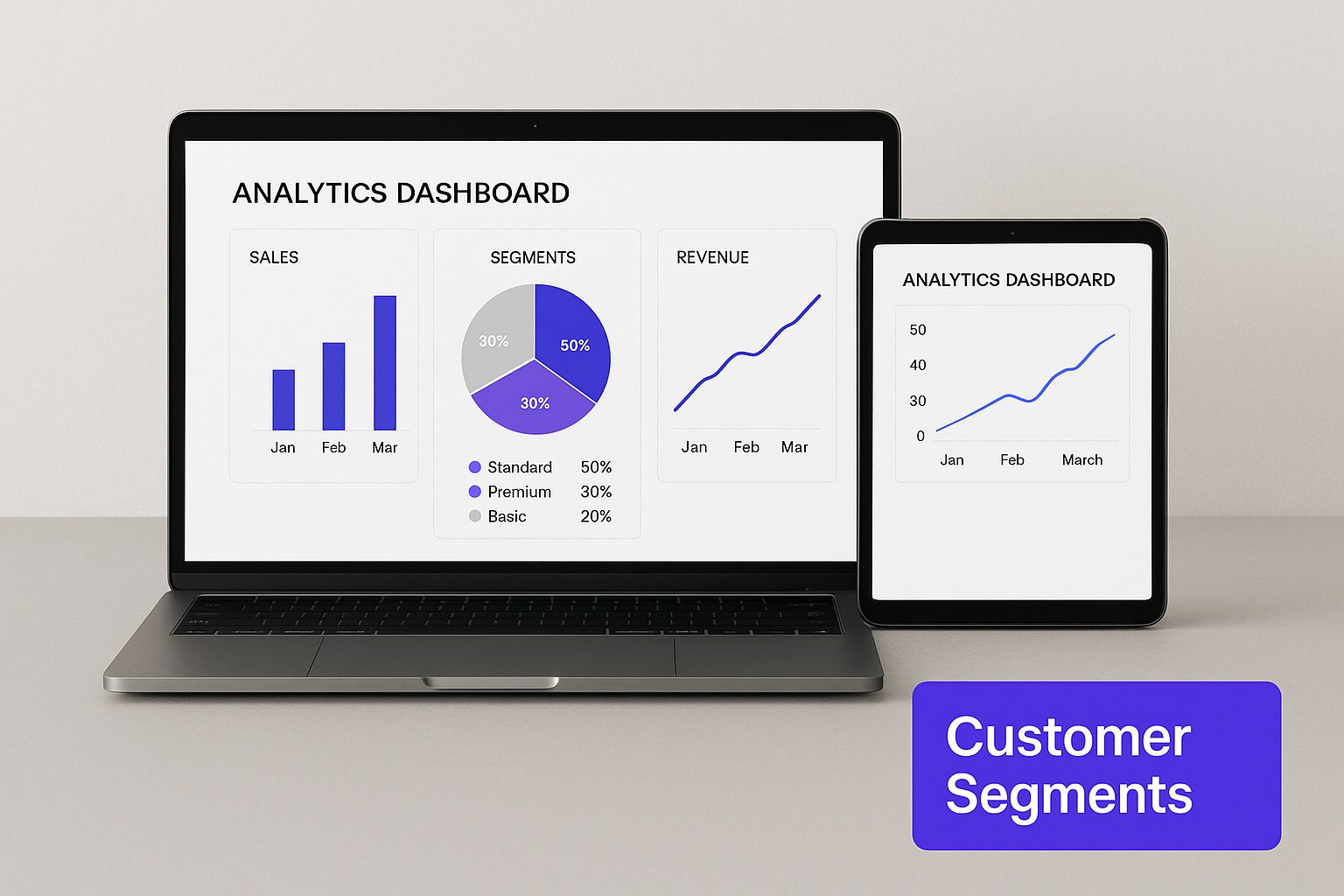
The infographic above shows a modern analytics dashboard visualizing customer segments. This visual really highlights how important data analysis is for identifying key customer groups. By looking at metrics like purchase frequency, average order value, and customer lifetime value, businesses can get a much better understanding of their customer base and adjust their strategies accordingly. This helps them use their resources more effectively and, ultimately, boost their customer lifetime value.
Often, businesses make the mistake of thinking their big spenders are their most valuable customers. However, customer lifetime value (CLV) paints a more detailed picture. CLV looks at not just current spending habits, but also the predicted future value of each customer.
This means a customer who makes regular, smaller purchases over a long time can actually be more valuable than a customer who makes one big purchase and disappears. For example, imagine two customers: one who buys a basic website package and uses a monthly SEO and content program for two years, and another who buys a premium package but needs nothing else. The first customer, through consistent engagement, likely brings in a higher CLV.
Identifying High-Value Customer Segments
So, how do you find these valuable customers? The key is effective customer segmentation. This means dividing your customer base into separate groups based on shared characteristics. These characteristics can include demographics, purchase history, website behavior, and how they interact with marketing campaigns.
- Behavioral Segmentation: Group customers based on what they do, such as how often they buy, how much they spend on average, and what types of products they prefer.
- Demographic Segmentation: Use characteristics like age, location, and income to understand the different needs and preferences of your various customer groups.
- Psychographic Segmentation: Go deeper into customer values, lifestyles, and interests. Understanding why people buy helps personalize messaging and product recommendations, ultimately increasing CLV.
Data-Driven Decision Making for CLV Growth
Analyzing data related to these segments reveals which groups contribute most to your overall CLV. This data-driven approach lets you:
- Allocate Resources Strategically: Focus your marketing and customer retention efforts on the highest-value segments to get the biggest bang for your buck.
- Personalize Customer Experiences: Tailor your messages and offers to resonate with the specific needs of each segment. This personalized approach builds stronger customer relationships and encourages repeat business.
- Predict Future Value: By looking at past behavior, you can predict the future value of different customer segments, allowing for proactive retention strategies.
To illustrate the importance of focusing on high-value customers, consider the 80/20 rule, also known as the Pareto principle. This principle often applies to CLV, where 80% of a company's revenue comes from 20% of its customers. For example, data suggests that app users purchase 33% more often and have 3X to 5X higher lifetime value than non-app users. Find more detailed statistics here. Leveraging first-party data allows businesses to understand their current high-value customers and create strategies to attract similar new customers.
Let's take a look at how different customer segments might compare in terms of value. The table below breaks down purchase frequency, average order value, estimated customer lifetime value (CLV), and revenue contribution for each segment.
Customer Segment Value Comparison
As you can see, while Big Spenders might make large individual purchases, their low purchase frequency limits their overall CLV. Loyalists, on the other hand, contribute significantly more revenue over time due to their consistent purchasing habits.
By understanding what truly drives CLV and using targeted strategies for different customer segments, you’re not just boosting revenue; you’re building a loyal customer base that fuels sustainable growth. Shifting your focus from short-term gains to long-term value is a crucial step in building a thriving, resilient brand.
Building Retention Strategies That Actually Keep Customers
The image above illustrates the different stages of a customer's journey, highlighting how important a comprehensive retention strategy really is. Forget generic loyalty programs – today's customers want genuine connection and real value. That means going beyond superficial rewards. We need retention strategies that build true loyalty and boost customer lifetime value.
Creating Meaningful Customer Experiences
One of the best ways to increase customer lifetime value is through meaningful experiences. This means understanding the customer journey and finding ways to add value at each touchpoint. For example, a personalized onboarding process for new Shopify store owners can significantly impact their long-term success and keep them using platforms like Wand Websites. This kind of proactive approach shows a commitment to their growth and builds a stronger relationship right from the beginning. Instead of just selling a website, Wand Websites becomes a partner invested in their clients' success.
Proactive Retention Campaigns
Another powerful tactic is proactive retention. Rather than waiting for customers to leave, businesses should identify those at risk and offer targeted solutions. Predictive analytics can be really useful here. Let's say data shows that Etsy sellers moving to Shopify often have trouble with marketing during their first six months. Wand Websites could proactively offer a marketing workshop or a personalized consultation. This not only solves a potential problem but also reinforces the value of the partnership. The result? A stronger customer relationship and a better chance of long-term retention.
Personalized Communication That Resonates
Personalized communication is also essential for increasing customer lifetime value. Customers respond better to messages that feel relevant to their individual needs. Segmenting customers based on industry, product type, or business size allows for more effective email marketing and support. Wand Websites could tailor content to the specific challenges faced by home decor sellers versus vintage clothing retailers. This personalized approach shows a deep understanding of their clients’ businesses, strengthening connections and increasing engagement. This higher engagement level translates into higher customer lifetime value.
Building Retention Programs Customers Value
Ultimately, increasing customer lifetime value comes down to building retention programs customers actually want. This could include exclusive access to resources, personalized support from a dedicated account manager, or opportunities to connect with other customers. Imagine Wand Websites creating a forum where its Shopify clients can network, share tips, and learn from each other. This fosters a sense of community and adds ongoing value beyond the initial website build. By focusing on building relationships instead of transactions, businesses can create a loyal customer base that drives sustainable growth. Increasing customer lifetime value then becomes a natural result of great service and authentic connections.
Creating Customer Experiences That Drive Value Growth
Exceptional customer experiences are essential for boosting customer lifetime value. This isn't just a nice idea; it's a core business principle. Leading companies understand that carefully designed customer journeys naturally lead to increased engagement and spending over time. This section explores how Wand Websites can apply this principle to help Etsy sellers transitioning to Shopify.
Mapping the Customer Journey for Increased Value
Understanding the customer journey is the first step towards a value-driven experience. This means mapping out every interaction a customer has with your brand. Everything from the initial website visit to post-purchase support needs to be considered. For Wand Websites, this involves understanding the specific challenges Etsy sellers face when moving their shops.
Think about each step: the initial consultation, website design, product migration, ongoing maintenance, and support. Each touchpoint is a chance to either add value or create friction.
Identifying and Eliminating Friction Points
Finding and eliminating friction points is crucial for maximizing customer lifetime value. Imagine an Etsy seller struggling with Shopify's shipping settings after their website launch. This could lead to frustration and potentially cause them to leave. Wand Websites can address this by providing personalized tutorials and support specifically for Etsy sellers new to Shopify. By smoothing out these bumps, Wand Websites improves customer satisfaction and reinforces its value.
Personalization at Scale: Using Technology to Enhance Experiences
Technology makes it possible to personalize experiences at scale. Wand Websites can use a CRM system to segment customers based on their needs and business type. This allows for tailored emails, targeted support, and even personalized website design recommendations. For example, different design templates and marketing resources could be offered to home decor sellers versus vintage clothing retailers, making the services more relevant and valuable.
Creating Memorable Moments That Strengthen Customer Relationships
Going beyond basic transactions is key. Memorable moments can greatly increase customer lifetime value. For instance, Wand Websites could offer a complimentary website audit after six months. This demonstrates their commitment to client success and strengthens the relationship. Another example might be a "Client Spotlight" section on their website, showcasing successful Etsy sellers who made the move to Shopify with Wand Websites’ assistance. This social proof builds trust and highlights the value of their services.
Building Feedback Loops for Continuous Improvement
Continuous improvement is essential for maximizing customer lifetime value. Wand Websites can use customer surveys, feedback forms, and social media monitoring to create regular feedback loops. This provides valuable insight into evolving customer needs, allowing Wand Websites to adapt and refine their services. For example, feedback indicating a need for more comprehensive marketing support could lead to new service packages or specialized workshops.
By focusing on these strategies, Wand Websites creates customer experiences that drive value growth and positions the company as a trusted partner for long-term success. This focus on customer experience is key to standing out in a competitive market and building a thriving business.
Cross-Selling and Upselling Without Being Pushy
The best cross-selling and upselling strategies don't feel like sales pitches. They feel like helpful advice. This approach to increasing customer lifetime value (CLV) focuses on providing real value, not just increasing sales. For Wand Websites, this means helping Etsy sellers move to their own Shopify stores and then offering services that truly help their businesses.
Identifying the Right Time and Offer
Timing is key with cross-selling and upselling. Imagine an Etsy seller launching their new Shopify store. Bombarding them with offers isn't ideal.
Waiting a few weeks and then offering a marketing consultation or SEO audit at a discount would be much better. This shows Wand Websites cares about long-term success, not just the initial website build.
Creating compelling offers is essential. Instead of just listing features, Wand Websites should focus on the benefits.
Highlighting the Benefits, Not Just the Features
For example, a subscription to their "Accelerator" program shouldn't be about monthly SEO updates and content. It should be about helping sellers boost visibility, attract customers, and drive sales. This positions Wand Websites as a growth partner.
Using Data to Personalize Recommendations
Data is crucial for effective cross-selling and upselling. By analyzing customer behavior on Shopify stores, Wand Websites can predict which services will resonate.
For example, if a seller struggles with abandoned carts, a personalized email suggesting recovery strategies or an app integration could help. This targeted approach shows Wand Websites understands their challenges.
Building Trust and Long-Term Relationships
Training sales teams to focus on customer needs is critical. They should be consultants, not salespeople.
Instead of pushing products, they should ask questions and offer relevant solutions. This builds trust and fosters long-term relationships, increasing CLV.
Automated campaigns can also work, but they need to feel personal. Using data to segment audiences and tailor messaging is key.
For example, Wand Websites could create automated email sequences targeting specific product categories or offering discounts based on past purchases.
Measuring Long-Term Success
Measuring success goes beyond immediate sales. While increased revenue is positive, long-term metrics like customer retention and satisfaction are more important.
This ensures that cross-selling and upselling contribute to sustainable growth and increased CLV. For Wand Websites, this could involve tracking the performance of "Accelerator" program subscribers over time. This long-term perspective allows Wand Websites to constantly improve.
Using Technology and Data to Scale Your CLV Strategy
Modern Customer Lifetime Value (CLV) optimization relies heavily on smart technology, not just data collection. This exploration delves into how tools like analytics platforms, CRM systems, and marketing automation can empower businesses to scale their CLV efforts efficiently, without overburdening their teams. This is particularly relevant for businesses like Wand Websites, which helps Etsy sellers transition to Shopify.
Setting Up Tracking Systems for Actionable Insights
The cornerstone of any successful CLV strategy is accurate data. Implementing robust tracking systems is paramount for gathering the right information. This involves moving beyond basic website analytics and integrating data from various customer touchpoints, including email marketing, customer service interactions, and even social media engagement. For Wand Websites, this might involve tracking how Etsy sellers interact with their new Shopify stores, identifying their most-used features, and understanding potential pain points.
Key Tracking Systems:
Website Analytics: Tools like Google Analytics provide valuable data on website traffic, user behavior, and conversion rates. This helps identify popular products, understand customer journeys, and optimize website design for increased engagement.
CRM Systems: A Customer Relationship Management (CRM) system serves as a central hub for all customer data. This allows businesses to track interactions, segment customers effectively, and personalize communication.
Marketing Automation Platforms: These platforms automate repetitive marketing tasks, like email campaigns and social media posts, freeing up time for more strategic initiatives.
By integrating these systems, Wand Websites can gain a holistic view of the customer journey, pinpointing opportunities to enhance customer experiences and boost CLV.
Implementing Predictive Models That Forecast Customer Behavior
Predictive modeling uses historical data and statistical algorithms to forecast future customer behavior. This can be incredibly valuable for identifying at-risk customers, predicting future purchase potential, and optimizing retention strategies. Wand Websites could, for example, use predictive modeling to identify Etsy sellers likely to encounter difficulties with their Shopify transition, enabling proactive, targeted support. This also involves identifying churn factors and developing targeted interventions. For instance, if data reveals that Etsy sellers who don't integrate their social media accounts with Shopify are more prone to abandoning their new stores, Wand Websites can proactively offer personalized guidance on social media integration.
Using Artificial Intelligence to Personalize Customer Interactions
Artificial intelligence (AI) is transforming customer experience. AI-powered tools can personalize interactions at scale, creating more relevant and engaging experiences for each customer. This can include personalized product recommendations, tailored email campaigns, and even AI-powered chatbots providing instant customer support. Imagine Wand Websites using AI to analyze an Etsy seller's product catalog and automatically suggesting relevant Shopify apps and integrations to boost sales. This facilitates highly targeted messaging and offers based on individual customer preferences and behaviors. By analyzing customer data, AI can predict which services an Etsy seller is most likely to need, allowing Wand Websites to proactively offer relevant solutions.
Essential Metrics, Reporting, and Technology Integration
Monitoring the right metrics is essential for evaluating the effectiveness of your CLV strategy. Beyond basic CLV calculations, businesses should track key performance indicators (KPIs) such as customer retention rate, average order value, and customer satisfaction scores. Regular reporting keeps stakeholders informed and drives data-driven decision-making. Wand Websites could generate monthly reports tracking CLV growth, highlighting successful retention strategies, and identifying areas for improvement.
Integrating technology effectively is vital for scaling your CLV efforts cost-effectively. Choosing the right tools and platforms for your specific needs is key. Wand Websites should prioritize solutions that integrate seamlessly with their existing systems and offer a strong return on investment.
To illustrate the tools and platforms available, let's look at a sample technology stack. The table below provides examples of tools in different categories, their functions, and potential use cases for CLV optimization.
CLV Optimization Technology Stack
By combining the right technology with a data-driven approach, businesses like Wand Websites can effectively increase customer lifetime value and build sustainable growth. This involves leveraging data to understand customer behavior, personalizing experiences, and optimizing retention strategies for long-term success.
Key Takeaways
Increasing Customer Lifetime Value (CLV) is crucial for sustainable business growth. This article has explored key strategies to boost CLV, and this section provides a roadmap for putting these tactics into action and tracking your progress. We'll focus on actionable steps you can start using immediately to build stronger customer relationships, encourage repeat business, and ultimately maximize the value of each customer. This is especially relevant for Etsy sellers making the move to their own Shopify stores with the help of Wand Websites.
Understanding and Measuring CLV
The first key takeaway is understanding what CLV really means and how to measure it effectively. CLV isn't about individual transactions; it's about the total value a customer brings to your business throughout your relationship. Accurately calculating CLV involves considering factors like average purchase value, purchase frequency, and customer lifespan. Tracking these metrics gives you a baseline to measure the effectiveness of your CLV-boosting strategies.
Identifying Your Most Valuable Customers
It's important to remember that not all customers are the same. Identifying your most valuable customer segments is essential for maximizing CLV. This means using data analysis and segmentation techniques to understand which customers contribute the most to your revenue and have the highest potential for future spending. By concentrating your retention efforts on these high-value segments, you'll see a greater return on your investment.
Building Strong Customer Relationships
Building genuine, long-term relationships with your customers is the foundation of increased CLV. This means going beyond simple transactions and focusing on creating meaningful customer experiences. Personalized communication, proactive customer service, and building a sense of community are all crucial elements in fostering customer loyalty. Wand Websites achieves this by acting as a true growth partner for Etsy sellers transitioning to Shopify, supporting them every step of the way.
Optimizing the Customer Journey
Mapping and optimizing the customer journey is key to driving CLV growth. This involves identifying and removing any obstacles that hinder the customer experience, and creating touchpoints that add value and boost customer satisfaction. For Wand Websites, this could involve providing personalized tutorials, offering complimentary website audits, or creating a forum for Shopify clients to connect and share best practices.
Effective Cross-Selling and Upselling
Increasing CLV often means strategically expanding customer relationships through cross-selling and upselling. The key is to do this without being pushy. It's about understanding customer needs, offering relevant products and services, and providing compelling value. For example, Wand Websites could offer marketing consultations or SEO audits to Etsy sellers after they’ve launched their Shopify stores, helping them achieve even greater success.
Leveraging Technology and Data
Technology and data play a vital role in scaling your CLV strategy. Using tools like CRM systems, analytics platforms, and marketing automation software can help you personalize customer interactions, predict customer behavior, and optimize your retention efforts. This data-driven approach ensures you’re making smart decisions and using your resources effectively. For instance, using a CRM to segment customers based on their specific needs and behaviors allows Wand Websites to provide more targeted and relevant services, driving up CLV.
Continuous Improvement and Adaptation
Increasing CLV is an ongoing journey. Regularly monitoring your key metrics, analyzing customer feedback, and adapting your strategies to changing market conditions are all vital for maintaining momentum and achieving sustainable growth. By implementing these key takeaways and focusing on building strong customer relationships, businesses can effectively increase their CLV and create a thriving, loyal customer base.
Ready to move your Etsy shop to Shopify and experience the power of increased Customer Lifetime Value? Let Wand Websites be your growth partner. Visit us at Wand Websites today!
