
How to Increase Sales in Ecommerce: 7 Proven Strategies

Understanding Today's Ecommerce Opportunity Landscape
The ecommerce world is bursting with potential. For businesses willing to adapt and innovate, the opportunities are truly remarkable. While the landscape has certainly changed, creating new challenges, it's also paved the way for unprecedented growth. Successful online retailers are embracing these shifts, leaving those clinging to outdated methods in the dust. To truly thrive in this environment, understanding the current ecommerce dynamics is key.
The Rise of Global Ecommerce
One of the most significant factors shaping today's ecommerce landscape is its incredible growth. In 2024, global retail ecommerce sales hit an astounding $6 trillion. This impressive figure highlights just how rapidly the sector is expanding. And the momentum isn't slowing down! Projections for 2025 estimate sales will reach approximately $6.86 trillion, representing an 8.37% year-over-year increase. Find more detailed statistics here. This continued growth means the potential customer base for ecommerce businesses is exploding, offering huge opportunities to tap into new markets and boost sales.
Shifting Consumer Behavior
This growth isn't just about bigger numbers; it reflects a fundamental change in how consumers shop. Today's shoppers are digitally savvy. They expect personalized experiences and prioritize convenience. Social proof, online reviews, and engaging content heavily influence their purchasing decisions. Imagine a customer discovering a new product through a social media influencer. They might then research the product by reading online reviews before finally making a purchase directly from their smartphone. This new buyer's journey demands a more sophisticated approach to ecommerce. Businesses need to create seamless and personalized shopping experiences to succeed.
New Pathways to Revenue
These shifts in consumer behavior have unlocked exciting new avenues for revenue generation. For example, businesses can use AI-powered personalization tools like Clerk to create tailored product recommendations and marketing messages. Other strategies, such as subscription services and product bundling, can significantly increase customer lifetime value and create recurring revenue streams. The focus is not just on attracting new customers, but on building lasting relationships with existing ones. This fosters loyalty and drives sustainable sales growth. The modern ecommerce landscape richly rewards those businesses that are willing to adapt and innovate. It offers enormous potential for those who truly understand how to connect with today's consumer.
Creating Customer Experiences That Actually Convert

Your ecommerce website isn't just a place to sell things online; it's the face of your brand in the digital world. A positive customer experience is essential for turning casual visitors into paying customers. This means going beyond just making your site easy to use and delving into the psychology of what makes people buy online. Understanding how users interact with your site and what drives their purchasing decisions is key to boosting your sales. Let's explore how to build those all-important connections with your target audience.
Eliminating Friction Points
One of the biggest conversion killers is friction. Friction is anything that makes buying from your site complicated or confusing. It might be a clunky checkout process or product descriptions that leave shoppers with questions. Think of it like a brick-and-mortar store with messy aisles and missing price tags. Customers will probably leave empty-handed and frustrated. Online, they'll abandon their carts just as quickly. That's why streamlining the entire customer journey, from browsing to buying, is so important.
The Power of Psychology in Design
Understanding shopping psychology can have a huge impact on your sales. This means using design elements that build trust and encourage action. For example, showing social proof, like customer reviews and testimonials, can strongly influence buying behavior. Creating a sense of urgency with limited-time offers or low-stock warnings can also encourage immediate purchases. But remember, use these tactics wisely and authentically so you don’t seem pushy.
Navigation, Layout, and Mobile Optimization
Your website's structure is crucial to a positive customer experience. Intuitive navigation is key. Imagine a customer searching for a specific item, only to get lost in a confusing mess of categories. They’ll likely give up and go somewhere else. Clear and logical navigation is essential. Product pages should showcase key information, such as great images, compelling descriptions, and prominent calls to action. And with the rise of mobile shopping, mobile optimization is no longer a nice-to-have; it’s a must-have. A smooth mobile experience is critical for converting those on-the-go shoppers. Just look at the United States, a major ecommerce market. Retail ecommerce sales hit $1.1926 trillion in 2024, a whopping 301% increase from 2014. This growth shows just how vital it is to keep up with market trends. Explore this topic further.
A/B Testing and Checkout Optimization
Continuous improvement is the name of the game in ecommerce. A/B testing lets you try out different designs, messaging, and strategies to find out what really works for your audience. This data-driven approach can provide valuable insights into customer behavior and preferences. For example, testing different checkout page layouts can reveal which one yields the best conversion rates. The same goes for experimenting with different calls to action. By continually analyzing and optimizing your site, you can create a customer journey that truly converts.
Building Marketing Campaigns That Generate Real Revenue
Stop wasting your marketing budget on campaigns that don't deliver. Instead, let's explore how data-driven strategies can build campaigns that truly boost your ecommerce sales. This involves understanding your audience, tailoring your message, and selecting the right channels.
Segmenting Your Audience for Personalized Marketing
Truly effective marketing begins with knowing your customers. Audience segmentation dives deeper than simple demographics to pinpoint your most valuable prospects. Instead of a one-size-fits-all approach, you group customers based on shared traits like past purchases, browsing habits, and what they're interested in.
This allows you to craft personalized marketing messages that speak directly to each segment, encouraging them to take action. For example, new customers might receive a welcome discount, while loyal shoppers get exclusive early access to new products. This targeted approach strengthens customer relationships and improves conversion rates.
Choosing The Right Marketing Channels
Not all marketing avenues are equal. Some channels build brand awareness, while others are sales powerhouses. Analyzing your high-performing campaigns reveals which channels give you the best return on investment (ROI). This data helps optimize your marketing spend for maximum impact.
Consider where your target audience spends their time. Are they active on social media platforms like Facebook or Instagram? Do they respond to email marketing campaigns? Focusing on the channels that effectively reach your ideal customer maximizes your budget and drives sales.
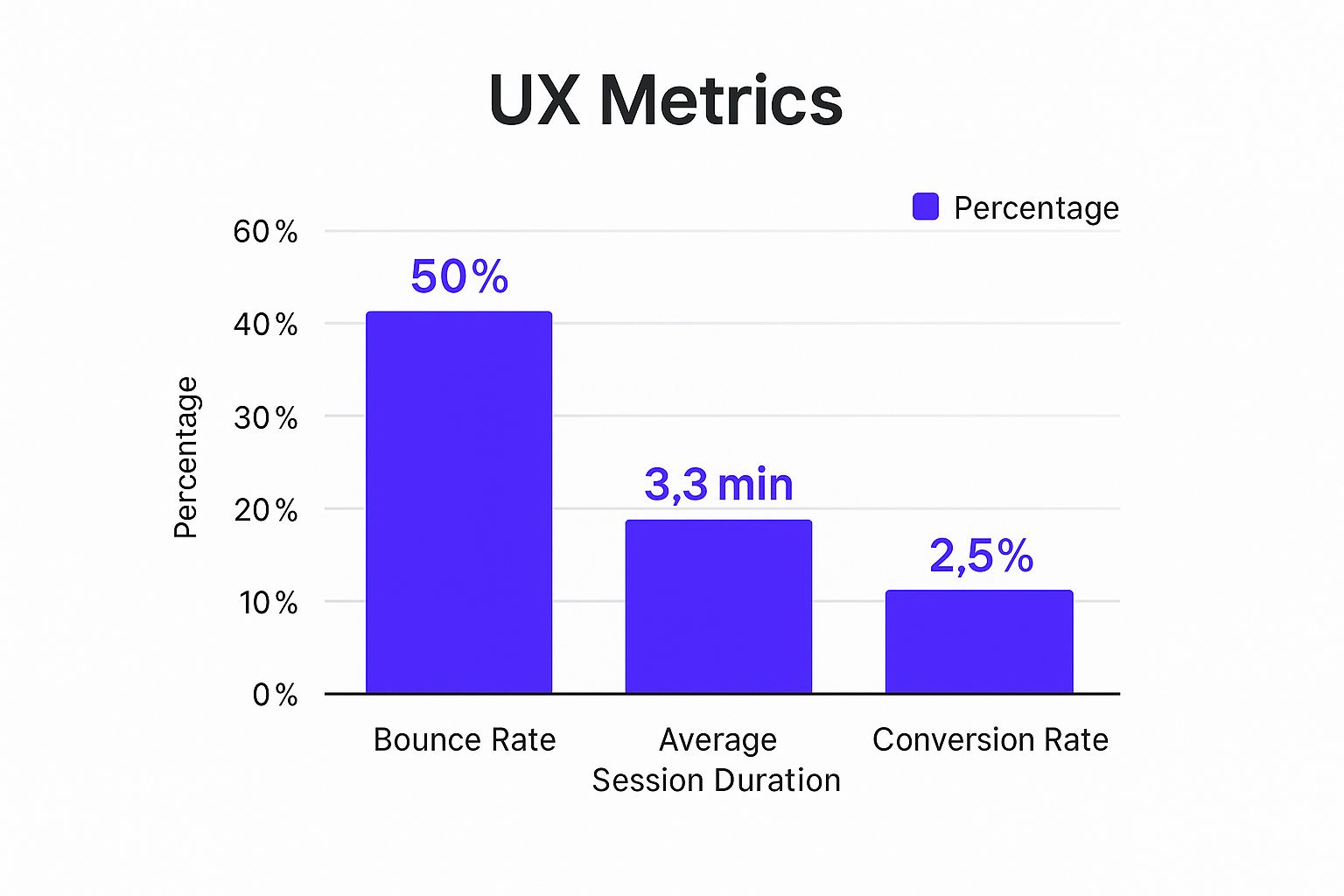
The infographic above illustrates key UX metrics, including Bounce Rate, Average Session Duration, and Conversion Rate. A 50% bounce rate combined with a 2.5% conversion rate and 3.3 minutes average session duration tells us that while users are engaging, there's room to improve. By tweaking the user experience, we can likely reduce bounces and boost conversions. This underscores the importance of analyzing website data and making adjustments to improve results.
To help visualize the performance of different marketing channels, let's take a look at the following comparison:
Marketing Channel Performance Comparison
A comprehensive comparison of different marketing channels showing average conversion rates, cost per acquisition, and ROI to help prioritize marketing spend.
This table highlights how different channels perform. While email marketing offers a good balance of cost and ROI, content marketing shines with the highest ROI, albeit with a lower conversion rate. Paid advertising delivers higher conversions but comes at a greater cost. Influencer marketing, though effective for reach, has the lowest ROI in this comparison.
Tracking, Measuring, and Scaling
With successful campaigns running, it's vital to track customer journeys and measure true attribution. This means understanding where your customers come from and what influences their purchase decisions. This data empowers you to make informed choices about resource allocation and how to scale successful campaigns profitably.
By understanding the complete customer journey, from initial interest to final purchase, you can optimize each stage for maximum impact. This approach fuels sustainable sales growth and sets your ecommerce business up for long-term success.
Product Presentation Strategies That Drive Purchase Decisions
Presenting your products effectively online is key to driving sales. It's about more than just pretty pictures; it's about building customer confidence and encouraging them to click that "Add to Cart" button. Let's explore the strategies successful ecommerce businesses use to turn product pages into sales machines.
High-Quality Photography and Visuals
The old adage "a picture is worth a thousand words" is especially true for online sales. High-quality product photography is essential. Show multiple angles, demonstrate the product in use, and highlight important features. This helps customers imagine owning and using the product, making them more likely to buy. For example, if you sell clothing, show models wearing it in different settings and include close-ups of the fabric.
Compelling Product Descriptions
Product descriptions are your chance to connect with customers. While you should include details like size and materials, focus on the benefits, not just the features. Instead of simply stating "100% cotton," tell the customer how soft and breathable the material is. Explain how your product solves their problems and makes their life better. This resonates much more than a dry list of specifications.
The Power of Social Proof
Social proof is a powerful sales tool. Testimonials, reviews, and user-generated content build trust and credibility. Seeing positive experiences from others can significantly influence a potential buyer. Display reviews prominently and encourage customers to share their thoughts on social media platforms like Facebook or Instagram.
Cross-Selling and Upselling Opportunities
Product presentation also creates chances for cross-selling and upselling. Suggesting related items or premium versions can increase your average order value. If someone adds a camera to their cart, recommend a compatible lens or a tripod. Make these suggestions helpful, not pushy, to enhance the customer experience.
Creating Urgency and Scarcity
A subtle sense of urgency or scarcity can encourage immediate purchases. This doesn't mean using dishonest tactics; rather, highlight limited-time offers or low stock levels. This works particularly well for seasonal items or special deals. A message like "Only 3 left in stock!" can prompt quick action.
Optimizing for Mobile
With so many people shopping on their phones, make sure your product pages are mobile-friendly. Images should load quickly, and the page layout should be easy to navigate on smaller screens. A smooth mobile experience is vital for capturing sales from on-the-go shoppers. This is especially important with the continuing growth of mobile commerce.
By implementing these strategies, you can significantly boost your ecommerce sales. It's all about crafting a positive experience that guides the customer towards a purchase, addresses their needs, and builds their confidence. This leads to higher conversion rates and a more successful business.
Turning One-Time Buyers Into Profitable Repeat Customers
Acquiring new customers is a significant investment for any e-commerce business. But the real payoff comes from turning those first-time shoppers into loyal, repeat customers. This shift from acquisition to customer retention is key for sustainable growth in the competitive online marketplace. Let's explore some proven strategies for building customer relationships that boost your profits.
Building Relationships That Last
One of the best ways to increase e-commerce sales is by focusing on customer retention. This means creating relationships that encourage customers to return to your store time and time again. This can involve various tactics, like personalized email marketing and loyalty programs that reward repeat purchases.
For example, a welcome email series can introduce new customers to your brand story and showcase your most popular products. This helps nurture that initial connection and encourages them to explore what you offer.
The Power of Loyalty Programs
Loyalty programs can dramatically increase customer lifetime value. These programs reward repeat customers with perks like exclusive discounts, early access to new products, or free shipping. This not only encourages them to shop again, but also makes them feel valued and appreciated. As a bonus, these programs provide valuable data on customer preferences and buying habits. You can then use this data to personalize the shopping experience even further.
Winning Back Lost Customers
Sometimes, even with the best retention strategies, customers drift away. But that doesn't mean they're gone for good. By analyzing customer behavior patterns, you can identify at-risk customers and implement win-back strategies. A simple follow-up email with a special discount or highlighting new arrivals can often re-engage a lapsed customer. This proactive approach shows you care about their business and are willing to make an effort to bring them back.
To illustrate the potential ROI of various customer retention methods, let's look at the table below:
Customer Retention Strategy ROI Analysis
As you can see, different strategies have varying costs and timeframes for ROI, but all contribute to increased customer lifetime value.
Personalization: The Key to Customer Loyalty
Today's e-commerce customers expect personalized experiences. They want to feel understood and valued. That's where personalization is essential. By tailoring your marketing messages and product recommendations to individual customer preferences, you can create stronger connections that go beyond just price.
For instance, suggesting products based on past purchases or browsing history shows customers you understand their needs. This personalized approach can significantly boost conversions and foster long-term loyalty, ultimately driving sustainable sales growth.
Scaling Sales Growth With Smart Technology and Automation

As your ecommerce business grows, relying on manual processes can really hold back your sales potential. This makes automation essential for ongoing success. Let's explore how using technology can boost your revenue while keeping operating costs down, letting your team concentrate on important strategies that drive growth.
Automating For Efficiency and Growth
Think of automation as your dedicated virtual assistant, working around the clock to nurture leads, recover those abandoned carts, and provide amazing customer service. Automated email sequences, for example, can welcome new subscribers, offer personalized product recommendations, and remind customers about those items they left behind.
Automating these tasks frees your team to focus on high-impact activities like developing new products and refining your marketing strategies. It's all about working smarter, not harder!
Personalization and Recommendations
Successful online retailers understand that personalization is the key to unlocking higher sales. AI-powered personalization engines analyze customer data to provide individual product recommendations and targeted marketing messages.
This creates a more engaging and enjoyable shopping experience, increasing your average order value and boosting customer satisfaction. It's like having a dedicated personal shopper for every single customer, gently guiding them towards products they’re sure to love.
Inventory Management: Preventing Stockouts
Effective inventory management is crucial for scaling sales growth. Technology solutions such as Zoho Inventory can accurately forecast demand, optimize stock levels, and prevent those costly stockouts.
This makes sure you have the right products available when your customers want them, maximizing sales opportunities and minimizing lost revenue. Remember, a missed sale due to a stockout can also mean losing a customer.
Emerging Tools for Competitive Advantage
The world of ecommerce is constantly changing. New tools are always popping up that can give you a real edge over your competition. These tools, from AI-powered chatbots to powerful analytics platforms, can totally transform your customer experience and make your operations more efficient.
While global ecommerce growth is predicted to slow slightly to 7.8% in 2025, total sales are still expected to hit a massive $6.56 trillion. Discover more insights about global ecommerce growth. This shows the huge potential for businesses that are using the right tools. By embracing innovation, you can stay ahead of the curve and continue to scale your ecommerce business.
Key Takeaways For Sustainable Sales Growth
This practical guide outlines how to achieve sustainable ecommerce sales growth. We'll break down key insights into actionable steps, highlight important performance indicators, and provide frameworks for tracking your progress. This means focusing on building a business for the long haul, not just quick wins.
Prioritizing Key Performance Indicators (KPIs)
While there are many metrics to track, some are more vital for sustainable growth than others. Customer Lifetime Value (CLTV), for example, measures the total revenue you can expect from a single customer throughout their relationship with your business. Focusing on CLTV encourages strategies that build customer loyalty and drive repeat purchases. Average Order Value (AOV) is another critical KPI. Increasing AOV, perhaps through product bundling or upselling, directly boosts revenue without needing to acquire more customers.
- Customer Lifetime Value (CLTV): Build long-term relationships with your customers.
- Average Order Value (AOV): Encourage larger purchases with strategic offers.
- Conversion Rate: Optimize your website and marketing to turn more visitors into paying customers.
These core KPIs provide a solid foundation for data-driven decision-making, allowing you to concentrate on what truly matters for long-term success.
Tracking Progress and Making Data-Driven Improvements
Simply monitoring KPIs isn't enough; you need a system for analyzing the data and using it to make improvements. Implementing robust analytics tools like Google Analytics gives you invaluable insights into customer behavior. For example, tracking your conversion rate can reveal friction points in the customer journey. A low conversion rate might indicate problems with your checkout process or website navigation. By understanding these pain points, you can make targeted improvements that enhance the customer experience and boost sales.
Creating a Culture of Continuous Optimization
Sustainable growth requires a mindset of ongoing improvement. This means regularly reviewing your strategies, testing new approaches, and adapting to market changes. A/B testing different website layouts, marketing messages, or product presentations can uncover what resonates best with your target audience. This commitment to continuous optimization ensures your ecommerce business remains adaptable and competitive, keeping pace with evolving consumer behavior and market trends.
Don't wait to put these key takeaways into action! Start using these tools today and watch your ecommerce business flourish. Ready to take your ecommerce sales to the next level and move beyond platforms like Etsy? Wand Websites is your trusted partner for building high-performing Shopify stores designed for sustainable growth. Visit Wand Websites today to learn more and transform your business.
