
How to Increase Online Sales: Proven Strategies That Work

Why Most Businesses Struggle With Online Sales Today

The internet is awash with advice on boosting online sales. So why are so many businesses still struggling? I've talked to countless shop owners, and there's a recurring theme: they're focused on the wrong things. They're chasing vanity metrics like website traffic, but neglecting the core stuff that actually leads to sales. It's like having a beautiful store packed with people, but nobody's buying.
One big problem is the outdated "build it and they will come" mindset. Just having a website isn't enough anymore. Today's online shopper is smart and has tons of options. They expect a smooth, personalized experience. Think about it: have you ever abandoned an online cart because the checkout was too complicated, or the site took forever to load on your phone? It happens all the time.
The Changing Landscape of Online Sales
Another hurdle is the constantly shifting digital world. Customer behavior changes fast, influenced by new tech, social media trends, and the economy. What worked last year might not work today. Take mobile commerce, for example. It's exploding. If your website isn't mobile-friendly, you're leaving money on the table.
Plus, the competition is fierce. The global e-commerce market has grown massively, creating huge opportunities but also a lot of rivals. In 2022, global retail e-commerce sales hit $5.09 trillion, rising to $5.58 trillion in 2023, and an estimated $6.0 trillion in 2024. Predictions suggest $6.42 trillion in 2025 (a 6.86% year-over-year increase from 2024), and nearly $7.89 trillion by 2028. Discover more insights. This means you need to stand out, not just with your products, but with the entire customer experience.
Focusing on the Right Metrics
Finally, many businesses drown in data but lack the insight to use it. They’re tracking everything but understanding nothing. You need to pinpoint the key performance indicators (KPIs) that truly matter for your business and track them closely. This might include conversion rate, average order value, customer lifetime value, and cart abandonment rate.
By understanding the challenges and focusing on the right strategies, you can set your business up for real growth in the competitive online world. Don't just chase traffic – build relationships, optimize the customer journey, and watch your sales actually take off.
Making Your Mobile Experience Actually Convert Customers
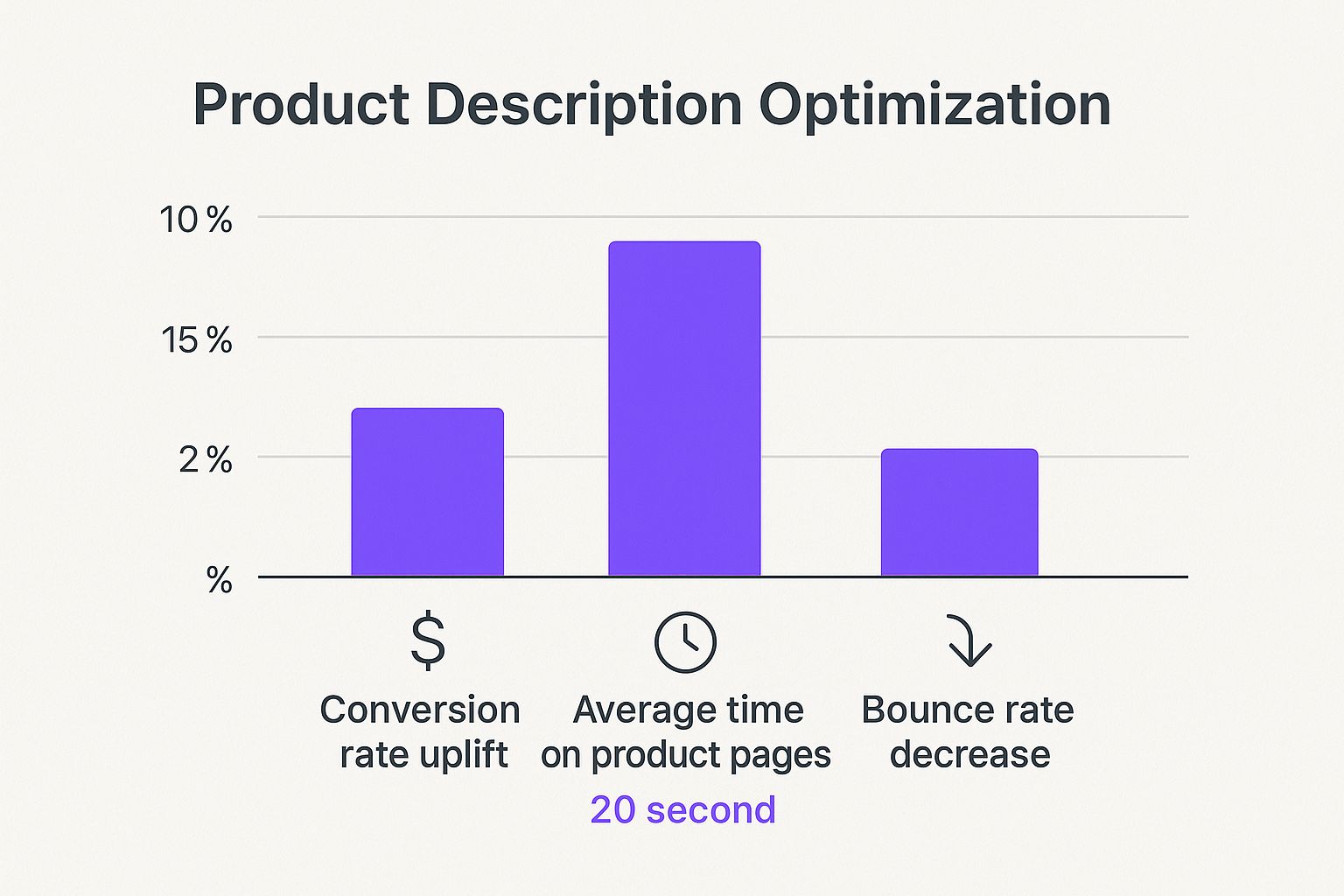
The infographic above shows just how much mobile optimization can impact three key things: conversion rate uplift, average time spent on product pages, and bounce rate decrease. Optimizing for mobile dramatically changes how customers interact with your site—and how much they buy. Seriously, focusing on mobile isn't just a bonus anymore; it's absolutely essential for boosting those online sales.
So, how do you transform your mobile site from a conversion graveyard into a shopper's paradise? "Make it responsive" just doesn't cut it. That's the bare minimum these days. Let's dig into the real, practical stuff. I've personally seen tiny tweaks make huge differences in mobile conversions.
Streamlining Mobile Checkout
Think about your own online shopping experiences. How many times have you abandoned a purchase on your phone because the checkout process was just too complicated? It's infuriating. So, simplify your mobile checkout. Cut down the number of fields customers have to fill in. Offer one-touch purchasing with things like Apple Pay or Google Pay. These small changes make a big difference in reducing frustration and boosting conversions.
Optimizing Loading Speed - What Actually Matters
Page speed is king, especially on mobile. People are less patient when they’re on the go. A few seconds can mean the difference between a sale and a lost customer. Focus on optimizing your images and minimizing unnecessary code. Tools like Google's PageSpeed Insights can help pinpoint bottlenecks. Prioritize above-the-fold content – the stuff users see immediately – for a snappy first impression, even if the whole page takes a second to load completely.
Mobile-Specific Features for a Seamless Experience
Mobile gives you unique chances to improve the customer experience. Think about location-based promotions or mobile-exclusive discounts. Make sure your product filtering and search are easy to use on smaller screens. Mobile users interact differently with their devices. Design an experience that feels intuitive for touchscreens, not just a smaller version of your desktop site.
For example, I worked with a clothing retailer who saw a 20% jump in mobile conversions just by adding a "quick add to cart" button right on the product category pages. This meant customers didn't have to click through to individual product pages just to add something to their cart.
Let's talk about the explosion of mobile commerce and digital wallets. By 2025, mobile is projected to handle over 70% of all digital purchases globally, with digital wallets used in more than half of all online transactions. Discover more insights. Offering a variety of mobile payment options is key to minimizing cart abandonment and maximizing sales.
To illustrate the impact of mobile optimization, let’s look at some real-world data. The table below compares key metrics for mobile-optimized sites versus sites that haven't embraced mobile-first design.
Mobile Optimization Impact Comparison: Performance metrics comparing mobile-optimized vs non-optimized e-commerce sites
As you can see, the differences are substantial. Mobile optimization leads to significant improvements in conversion rates and engagement, while also drastically reducing bounce rates. This data underscores the importance of prioritizing the mobile experience.
Turning Website Visitors Into Actual Paying Customers

This screenshot shows Shopify's homepage. They really get the importance of making it easy for businesses to start, run, and grow online. Look at that clear call to action! They know that turning visitors into paying customers means having a platform that’s powerful and user-friendly.
Getting traffic to your site is fantastic, but it's the revenue that truly matters. How do we bridge that gap? It's a mix of understanding your customer, designing a smart website, and, honestly, a dash of psychology.
Crafting Product Descriptions That Convert
Let's be honest, have you ever bought something online based on a dry list of features? I haven't. People buy stories, not specs. Your product descriptions should speak to your customer’s needs and paint a picture of how much better their life will be with your product.
Instead of "This coffee mug is made of ceramic," how about, "Picture yourself wrapped in a cozy blanket, enjoying your morning coffee in this handcrafted ceramic mug. Its smooth finish feels perfect in your hand, and the unique design adds a pop of personality to your day." Feel the difference?
Optimizing Your Checkout Flow to Reduce Friction
A complicated checkout process is the death of a sale. I once abandoned a shopping cart full of goodies because the site made me create an account before showing shipping costs. Infuriating! Make your checkout smooth and painless. Offer guest checkout, keep form fields to a minimum, and be upfront about those shipping costs.
And don't forget payment options! Integrating things like PayPal, Apple Pay, and Google Pay makes it easy for customers to choose their preferred method. The easier it is to pay, the more likely they are to click that "buy" button.
The Power of Social Proof
We all look to others for guidance. Testimonials, reviews, and social media buzz can significantly impact a customer's decision to buy. But don't just throw up generic quotes. Share real customer stories that resonate with your target audience.
If you sell handmade jewelry, imagine the impact of a photo of a happy customer wearing your necklace, sharing their experience. That's way more powerful than a simple five-star review. Authenticity is key. People see right through fake endorsements. A/B testing different types of social proof can also help you see what works best. Try two different testimonials and track which one leads to more conversions. It's that simple.
Creating Buying Momentum
Think of your website as a physical store. You wouldn't just dump all your products on a table. You'd arrange them strategically to guide customers and encourage sales. Your website should be the same. Structure your product pages, categories, even your blog posts, to create a natural flow toward a purchase.
Highlight related products, showcase bestsellers, or offer personalized recommendations. These small nudges can make all the difference. Increasing online sales is about understanding the customer journey and optimizing every touchpoint to create a smooth, enjoyable experience.
Creating Customer Loyalty That Drives Repeat Business
Acquiring new customers can be a real drain on resources. It's five times more expensive than keeping the ones you already have! Yet, so many businesses are obsessed with chasing new leads that they neglect their most valuable asset: their existing customer base. Think about it – it's much easier to sell to someone who already knows and loves your brand than to win over a stranger, right?
Building Relationships Beyond Transactions
Repeat customers are more than just a source of recurring revenue. They become true brand ambassadors. I've seen it time and time again: loyal customers become your best marketing tool. They tell their friends and family about you, and spread the word on social media. This kind of organic word-of-mouth marketing is invaluable. So how do you cultivate this level of loyalty? It all starts with building genuine relationships.
One highly effective strategy is simply acknowledging your customers as individuals. A personalized thank you note (even if it's just a well-designed template) or a small, unexpected gift tucked into their order can go a long way. These small gestures show you appreciate their business beyond just the transaction itself.
Email Marketing That Doesn’t Feel Like Spam
Email marketing can still be incredibly effective, but let's be honest, most of it ends up in the spam folder (and often for good reason!). Generic promotional emails are a thing of the past. Instead, focus on providing real value to your subscribers. Share exclusive content, give them early access to sales, or send personalized product recommendations based on their purchase history. In my experience, emails that feel like a personal note from a friend perform significantly better than automated marketing blasts.
For example, I worked with a small online bookstore that started sending personalized book recommendations based on past purchases. They saw a 15% boost in repeat purchases within just one month.
Loyalty Programs That Actually Reward Loyalty
Loyalty programs can be fantastic for driving repeat business, but only if they're well-designed. Steer clear of overly complicated point systems or tiered programs that confuse customers. Keep it simple and rewarding. Offer exclusive discounts, early access to new products, or free gifts with purchase. The key is to make it easy for customers to understand the benefits and track their rewards.
Personalization: The Key to Increased Sales
Using customer data to personalize the shopping experience is essential for boosting both order frequency and average order value. Consider recommending related products based on browsing history or offering personalized discounts on frequently purchased items. I've seen firsthand how powerful this can be. An online clothing store I consulted for implemented personalized recommendations and saw a 10% jump in average order value. Personalization makes customers feel seen and valued, encouraging them to return and spend more.
Turning Customer Service Issues into Opportunities
Believe it or not, handling customer service issues effectively can actually strengthen customer loyalty. A fast and empathetic response to a complaint can turn a potentially negative experience into a chance to build a stronger relationship. I remember having a shipping issue with a small online business. Their response was so quick, understanding, and generous that it immediately turned me into a loyal customer. They didn't just resolve my complaint; they exceeded my expectations.
This kind of proactive customer service transforms one-time buyers into lifelong fans. It demonstrates that exceptional customer service isn't just about fixing problems; it's a powerful tool for boosting sales and cultivating loyalty.
Let's take a look at how different customer retention strategies can impact your bottom line. The table below outlines a cost-benefit analysis of various approaches.
Customer Retention Strategy ROI Analysis
As you can see, focusing on personalized communication, rewarding loyalty, and providing outstanding customer service can have a significant impact on your ROI. While the implementation costs can vary, the potential returns are substantial and can lead to long-term growth.
Finding Your Customers Where They Actually Spend Time
Let's be honest, trying to maintain a presence on every social media platform is exhausting and often ineffective. Instead of spreading yourself thin, focus your energy on the platforms that actually bring in sales. Trust me, I've seen firsthand how trying to be everywhere at once can lead to burnout and minimal returns. It's all about working smarter, not harder.
Identifying Your Ideal Customer's Hangouts
Think about your perfect customer. Where do they hang out online? Are they obsessed with Instagram, browsing Pinterest for inspiration, or networking on LinkedIn? Figuring out where your target audience spends their time online is the first step to connecting with them and boosting those online sales.
For example, if you're selling handmade jewelry, visual platforms like Instagram and Pinterest are probably your best bet. But if you're selling software to businesses, LinkedIn is where you'll want to focus your efforts. It’s about being strategic and putting your energy where it will have the biggest impact.
Social Media Strategies That Actually Convert
Just having a social media presence isn’t enough. I once worked with a company that had tons of followers but hardly any sales. They were posting beautiful photos, but they weren't engaging with their audience or directing them to their website. Lots of likes and comments don’t necessarily translate to dollars.
The secret is to create content that not only grabs your audience's attention but also gently guides them towards making a purchase. This might involve running targeted ads, collaborating with influencers, or simply adding clear calls to action in your posts. It’s about turning engagement into conversions.
SEO: Bringing in Ready-to-Buy Customers
SEO isn't just about ranking higher in search results; it's about attracting customers who are actively searching for what you offer. Someone googling "best organic dog food" is much more likely to buy than someone who randomly stumbles upon your site.
This means focusing on keywords that show buyer intent. Instead of broad terms like "dog food," target longer, more specific phrases like "best organic dog food for sensitive stomachs." This way, you're attracting qualified leads who are ready to make a purchase.
Paid Advertising: Getting a Positive Return
Paid advertising can be incredibly effective, but it can also be a money pit if you're not careful. The key is to target the right people on the right platforms. Facebook might be great for reaching a wide audience, while Google Ads might be better for targeting specific keywords. Experiment, track your results, and adjust your strategy to get the most bang for your buck. And speaking of the online world, did you know that e-commerce is booming? Global retail e-commerce sales jumped from 18.5% in 2022 to 19.3% in 2023, and they're projected to reach 22.5% by 2028. Learn more about e-commerce growth here. This growth highlights just how important it is to have a solid online strategy.
Tracking and Measuring for Continuous Improvement
The most crucial part of any marketing strategy is tracking and measuring your results. Set clear goals, monitor key metrics, and let the data guide your decisions. By understanding which channels are driving the most revenue, you can focus on what’s working and ditch what’s not. This allows you to constantly refine your approach and improve your bottom line.
Using Data to Make Decisions That Actually Improve Sales
I know a lot of business owners who are drowning in data but parched for actual insights. It’s like having a million ingredients but no recipe. Let's ditch the data overload and focus on the metrics that really matter for boosting your online sales. Trust me, I've been there, and focusing on the right data can be a game-changer.
Identifying Key Performance Indicators (KPIs)
Forget those vanity metrics that make you feel good but don't tell you much. You need to zero in on the Key Performance Indicators (KPIs) that directly impact your bottom line. What works for one business might not work for another, but some usual suspects include conversion rate (how many visitors actually buy something), average order value (AOV) (how much people spend per order), customer lifetime value (CLV) (how much a customer is worth over their relationship with you), and cart abandonment rate (how many people add items to their cart but then disappear). Understanding these KPIs is like having a superpower.
For example, I once worked with a client who had a sky-high cart abandonment rate. Turns out, their checkout process was a nightmare on mobile. We simplified it, and boom – conversions shot up. Identifying the problem through the right data was the key.
Actionable Insights from Google Analytics
Google Analytics is a goldmine, but it can also be overwhelming. The trick is to focus on the reports that give you actionable insights, not just raw numbers. The Acquisition report, for instance, tells you where your traffic is coming from. If you're getting tons of traffic from Facebook, but no one's buying, it might be time to rethink your Facebook strategy.
This screenshot shows a standard Google Analytics dashboard. You can instantly see crucial metrics like users, sessions, bounce rate, and conversion rate. One quick look can reveal important trends. For example, a high bounce rate combined with a low conversion rate might mean your website isn't engaging visitors or they can't find what they're looking for.
Tracking Customer Behavior Patterns
If you want to boost sales, you need to understand how customers interact with your website. It’s like being a detective. Event tracking in Google Analytics lets you follow specific actions like clicks on add-to-cart buttons, video views, or form submissions. This helps you identify bottlenecks in your sales funnel.
I had a client who was puzzled by low conversions despite decent traffic. Event tracking revealed that people were getting stuck on the product page. We revamped the product descriptions and added better images, and the results were dramatic.
Testing and Optimization: A Continuous Process
Working with data isn't a one-and-done deal; it's an ongoing process. You should always be testing and tweaking based on what the data tells you. A/B testing, where you compare two versions of a webpage or email, is incredibly valuable.
By analyzing the results, you learn what works and what doesn’t. Sometimes, even a small change like a different call-to-action button can significantly boost conversions. Be willing to experiment, and let the data be your guide. It’s a journey of continuous improvement, and data is your compass. Don’t get bogged down in over-analyzing – focus on the metrics that actually matter for your business.
Your Practical Roadmap to Sustainable Sales Growth
Turning knowledge into action is where the magic happens. This isn't some theoretical deep dive; it’s a practical roadmap you can use right now to boost your online sales. Forget the generic stuff, we're focusing on what actually works, no matter your tech skills or budget.
Prioritizing Strategies for Maximum Impact
Not all strategies are created equal. Some are quick wins, others are long-term investments. Think of it like planting a garden. You want a mix of fast-growing radishes and fruit trees that will bear fruit for years to come.
For immediate impact, look at your mobile checkout process. A clunky mobile experience is a guaranteed sales killer. Simplify it. Offer things like Apple Pay or Google Pay. Seriously, I’ve seen this one change make a huge difference in conversions. It's like removing a massive traffic jam on the road to your checkout.
Next up: product descriptions. People buy stories, not just features. Paint a picture of how your product will make their lives better. Instead of “This jacket is waterproof,” try “Picture yourself dry and comfortable on your next hike, no matter the weather, with this durable, waterproof jacket.” See how much more engaging that is?
Creating Accountability and Measuring Progress
Getting excited about new strategies is easy, but following through? That's the real challenge. Set up systems to keep yourself accountable. Set realistic goals, break them into smaller, manageable chunks, and track your progress. Think of it like training for a marathon – you don't start by running 26 miles. You build up gradually.
Data is your friend. Don't just rely on gut feelings. Keep an eye on your conversion rates, average order value, and customer lifetime value. These numbers tell a story. They show you what's working and what's falling flat. It’s like having a GPS for your business, guiding you and helping you avoid wrong turns.
Maintaining Momentum for Long-Term Growth
Growing online sales isn't a sprint; it’s a marathon. Celebrate the early victories, but don’t get complacent. The online world is constantly changing. Stay curious, try new things, and never stop learning.
It’s like tending a garden. You need to water it regularly, prune the dead leaves, and adjust to the changing seasons. Your online business is the same. Continuously optimize, adapt, and refine your approach to achieve sustainable growth that lasts.
Ready to ditch the struggle and take your online store to the next level? Explore Wand Websites and see how we can help you grow.
