
How to Create Affiliate Program: Grow Your Business Fast

So, you're thinking about starting an affiliate program. Smart move. It's about more than just finding the right software; it's a careful mix of setting up the tech, figuring out the financials, and, most importantly, building real relationships with people who genuinely love your brand.
Nail those three things, and you’re not just creating another marketing channel—you're building a powerful engine for growth.
Why an Affiliate Program Is Your Next Big Growth Play
Let's be real: finding new customers is a grind. Pouring money into paid ads can feel like you're on a treadmill, with costs constantly creeping up. An affiliate program flips that script entirely. Instead of paying for clicks that might go nowhere, you only pay when you make an actual sale.
This performance-based model is one of the most financially sound ways to scale your marketing. It's like building a dedicated sales team that you only compensate when they deliver.
Think of it as assembling your own crew of brand champions. These partners—whether they're influential bloggers, YouTubers with a loyal following, or respected experts in your niche—already have the ear of your ideal customer. A recommendation from them feels less like an ad and more like a trusted tip from a friend. That's social proof at its best.
Tapping Into Performance-Based Growth
The real beauty of affiliate marketing is how it directly ties your spending to your revenue. You're not just hoping an ad campaign works out; you're creating a system where every dollar you spend has a guaranteed return. This isn't just some passing trend—it's a smarter way modern businesses are winning over new customers.
The numbers don't lie. The affiliate marketing industry is already a powerhouse, valued at around $18.5 billion in 2025 and on track to hit $31.7 billion by 2031. With over 80% of advertisers already running their own programs, it's clear this is a proven strategy.
An affiliate program transforms your marketing budget from a gamble into a predictable investment. You decide exactly what a new customer is worth, set your commission, and empower your partners to go out and find them.
It's About More Than Just the Sale
While driving sales is the main event, a well-managed affiliate program brings a ton of other perks to the table. Here’s a look at the bigger picture:
- Massive Brand Reach: Your affiliates will introduce your products to highly targeted, untapped audiences that you'd struggle to reach on your own.
- Serious Social Proof: When respected creators vouch for your products, it builds instant credibility and makes your brand more attractive to new buyers.
- A Nice SEO Boost: All that content your affiliates create usually includes backlinks to your store, which can give your search engine rankings a healthy lift over time.
It helps to think of this in terms of classic word-of-mouth marketing, just supercharged. For a deeper dive, exploring different referral marketing strategies can offer some great insights, as the core principles are very similar. You’re effectively turning a one-way marketing message into a vibrant, community-powered conversation about your brand.
Laying the Groundwork for a Killer Affiliate Program
A truly great affiliate program doesn't just materialize out of thin air. It's carefully architected long before you even think about bringing your first partner on board. Nailing this foundational strategy is what separates a predictable growth engine from a costly, time-sucking experiment. This is where you get crystal clear on what winning looks like and draw the map to get there.
It all begins with setting real, tangible goals. Fuzzy ambitions like "get more sales" are a recipe for failure. You need specific, measurable targets that will inform every single decision you make, from the software you pick to the partners you court.
First, What Does Success Actually Look Like?
Before getting bogged down in the how, you have to lock in your why. What, exactly, does your e-commerce store need this program to accomplish? Your goals here shouldn't be arbitrary; they need to be a direct reflection of your bigger business objectives.
Here are a few examples of what solid, actionable goals look like:
- Drive New Customer Growth: Aim to bring in 1,000 brand-new customers through your affiliate channel in the first six months.
- Increase Average Order Value (AOV): Set a target to lift the AOV from affiliate sales by 15% over your other marketing channels.
- Hit a Specific ROAS: Strive for a 5:1 Return on Ad Spend (ROAS). This means for every dollar you pay out in commissions, you're generating five dollars in top-line revenue.
Having these hard numbers from the get-go gives you a north star. They become your benchmarks for success, allowing you to track performance and make smart, data-backed tweaks as you learn what works.
Next, Pinpoint Your Dream Affiliate Partner
With your goals set, it's time to paint a picture of your ideal partner. Not all affiliates are created equal. The perfect partner for a high-end skincare brand is worlds away from the right fit for a B2B software tool. Knowing who you're looking for is the key to avoiding wasted time on outreach that goes nowhere.
Ask yourself: who already has the ear and trust of your ideal customers? Your dream affiliate could be:
- A Niche Blogger: Someone who writes incredibly detailed reviews and how-to guides in your product category.
- A YouTuber with a Loyal Following: A video creator whose audience genuinely trusts their product recommendations.
- An Industry Influencer: A recognized expert on a platform like Instagram or LinkedIn who has built a dedicated community.
The best affiliate partnerships are built on genuine alignment. Look for creators whose content, values, and audience demographics perfectly match your own brand. A partner who truly loves your product will be your most effective salesperson.
Defining this "partner persona" makes your recruitment process so much more efficient. You'll know exactly which online communities to scout, what keywords to search for, and what kind of content screams "perfect fit."
Finally, Craft a Commission Structure They Can't Refuse
This is where the rubber meets the road. A well-designed commission structure is your secret weapon for attracting top-tier talent while ensuring your program stays profitable. It has to be competitive enough to catch their eye but sustainable enough for your bottom line. With U.S. affiliate marketing spend projected to rocket past $12 billion in 2025, you need a compelling offer to grab your slice of the pie. Digging into the latest affiliate marketing industry trends can give you a serious edge here.
Let's break down the most common models I've seen work.
Percentage of Sale
This is the classic for a reason. You pay affiliates a set percentage of the total order value. It's straightforward, easy for everyone to understand, and directly ties their earnings to the revenue they drive for you.
- Best for: Most e-commerce stores with healthy profit margins. For physical goods, a 5-20% cut is pretty standard. For digital products, where margins are higher, you'll often see commissions in the 20-50% range, or even more.
Flat-Fee Commission
With this model, you pay a fixed dollar amount for a specific action—usually a sale. This gives you predictable costs and makes it dead simple for affiliates to calculate their potential earnings.
- Best for: Businesses with a very tight range of product prices or those focused on lead generation (often called Pay-Per-Lead). A common example is offering $50 for every new subscription signup.
Just look at how a major network like Awin pitches its service to brands. They connect merchants with publishers who are actively seeking strong, reliable commission offers.

This entire ecosystem thrives on brands having a solid commission plan that attracts the right partners.
Tiered Commission Rates
If you want to fire up your partners, a tiered structure is a fantastic motivator. You essentially reward your top performers with better commission rates when they hit certain sales goals.
- 1-10 sales/month: 10% commission
- 11-25 sales/month: 15% commission
- 26+ sales/month: 20% commission
This approach turns earning into a bit of a game and gives your best partners a powerful reason to send more traffic your way instead of to a competitor. It’s a brilliant strategy for building loyalty and supercharging growth.
Choosing Your Affiliate Program Technology Stack
Alright, let's talk tech. The success of your entire affiliate program really comes down to the software you use to run it. This is the engine that tracks every click, assigns sales to the right person, handles payouts, and gives your affiliates the tools they need to promote you effectively.
Picking the right tech can feel like a massive decision, but it really boils down to three main paths. Think of it like planning a road trip: are you hopping on an all-inclusive tour bus, grabbing a reliable rental car, or building out your own custom camper van? Your choice depends on your budget, how tech-savvy you are, and how much control you want to have over the journey.
All-in-One Affiliate Networks
Affiliate networks like ShareASale, CJ Affiliate, and Awin are the "tour bus" option. These are massive marketplaces where merchants (that's you!) connect with thousands of seasoned affiliates who are actively looking for new products to promote.
If you want to get up and running fast and need immediate access to a huge pool of potential partners, this is often the quickest route. The biggest draw is the built-in discovery—affiliates can find and apply to your program right on the platform. It takes a lot of the initial recruitment headache off your plate.
But, that convenience comes with a cost. Networks usually charge a setup fee, a monthly platform fee, and they take a percentage of every commission you pay out. You also have a bit less direct control over your affiliate relationships, since all your communication and payments are filtered through the network's system.
My Take: An affiliate network is a solid choice if your top priority is recruiting a lot of partners quickly and you have the budget to cover the fees. It's a powerful way to tap into a ready-made ecosystem of professional affiliates.
Dedicated SaaS Affiliate Platforms
Think of Software-as-a-Service (SaaS) platforms as your "reliable rental car." Tools like Refersion, Tapfiliate, or LeadDyno plug directly into your e-commerce store (like Shopify or BigCommerce) and give you a dedicated dashboard to run everything yourself.
You get powerful tracking, payment processing, and all the affiliate management features you need, but without the headache of a self-hosted solution. The key difference from a network is that you are 100% responsible for recruiting your own affiliates. There's no built-in marketplace to find them.
This approach offers a fantastic middle ground. It gives both you and your partners a professional, easy-to-use experience while leaving you in complete control of your relationships. When you're looking at different options, make sure they have good marketing workflow management software features to help you keep things organized as you grow.
Self-Hosted Affiliate Software
The "custom-built camper van" of the affiliate world is self-hosted software. This means you buy a software license and install it on your own servers, giving you ultimate control and flexibility over every single detail of your program.
Be warned: this is the most technically demanding path by far. You’ll need a developer to install, configure, and maintain the software. The upside? It can be very cost-effective in the long run. You typically pay a one-time fee for the software license and avoid those recurring monthly fees or network overrides.
- Total Control: You can customize the affiliate dashboard, commission rules, and tracking methods to your exact specs.
- Data Ownership: All your program data lives on your servers. It's yours, and it's private.
- Lower Long-Term Costs: You skip the ongoing platform fees, which can really add up as your program gets bigger.
This is a great option for established businesses that have an in-house tech team and want to build a completely unique affiliate system from the ground up.
Affiliate Platform and Software Comparison
So, how do you decide? The right choice really depends on your business stage, budget, and technical resources. For many e-commerce brands, the commission structure is a huge factor, as it directly impacts your profitability and how attractive your program is to affiliates. To help you sort through it, here’s a quick breakdown of the main types of affiliate software.
Ultimately, choosing the right technology is a foundational step. A lean startup might begin with a user-friendly SaaS platform to test the waters, while a larger brand might jump straight to a network for its reach or a self-hosted solution for its control. The best choice is the one that fits your resources, goals, and long-term vision.
Below, you can see the three most common commission models you'll be setting up within your chosen software. Your tech needs to be able to handle the model that makes the most sense for your business.
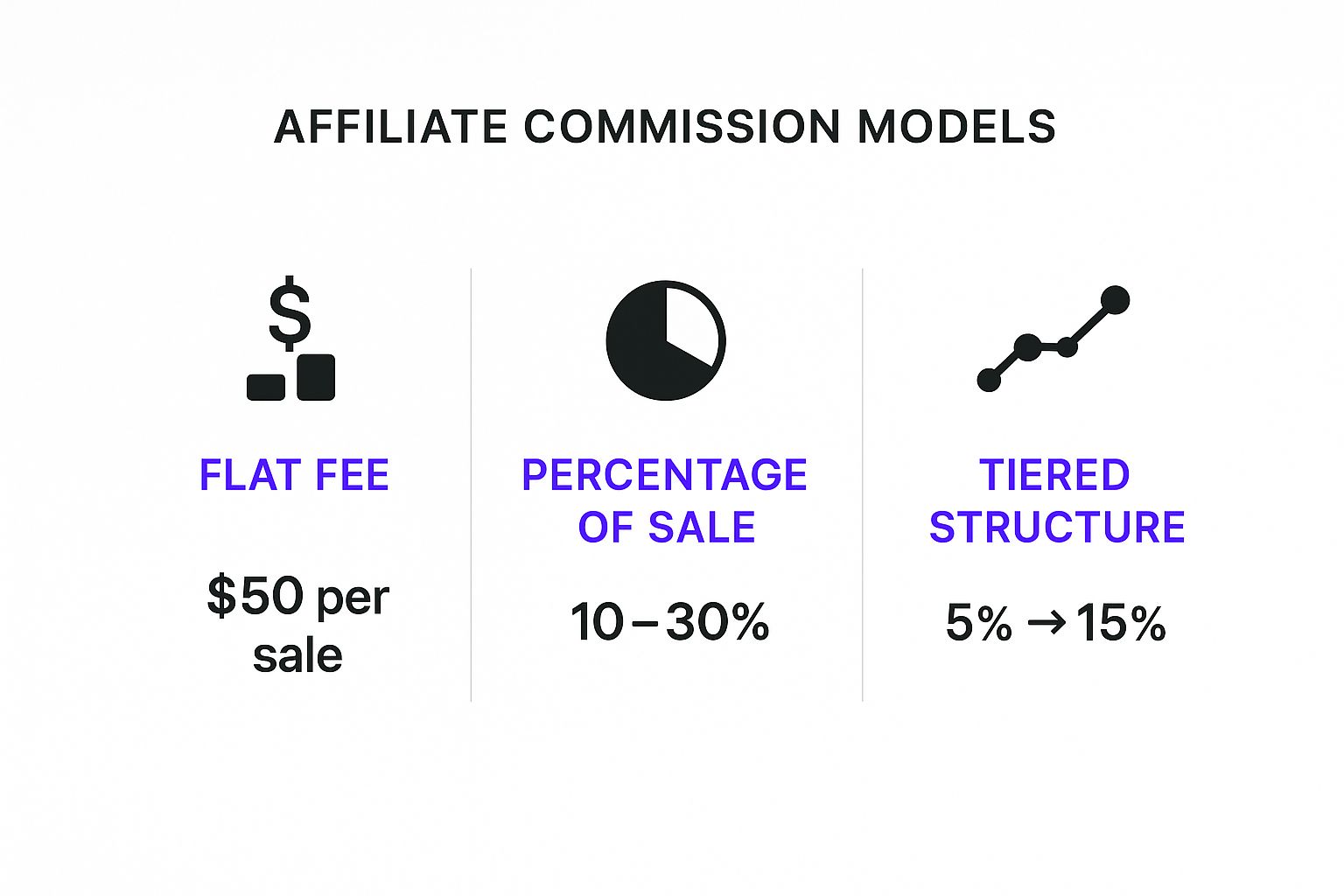
Whether you opt for a flat fee, a percentage of sales, or a tiered structure to reward top performers, make sure your platform can support it effortlessly.
Finding and Welcoming Your First Affiliates

Okay, you’ve built the foundation and have the tech ready to go. Now for the fun part: finding the people who will actually champion your brand. A great affiliate program is powered by great partners, and finding them is a mix of smart strategy and genuine relationship-building. You're not just hunting for anyone with a website; you’re searching for true fans who will represent your products authentically.
The great news is that you're fishing in a well-stocked pond. Over 80% of advertisers and 84% of publishers are already using affiliate marketing, which tells you just how mainstream this channel has become. It’s a massive community looking for the right brand to partner with. You can dig into more stats about the growth of affiliate marketing on optinmonster.com.
With so many brands competing for their attention, your approach needs to be sharp and personal.
Where to Find Your First Brand Champions
Your best future affiliates are probably closer than you realize. Before you start sending cold emails into the void, look at the people who are already in your corner. These are your warmest leads and the easiest place to start building momentum.
Here are the top three places I always tell clients to start their search:
- Your Existing Customers: Who are your ride-or-die customers? The ones who buy from you again and again? Shoot an email to your customer list announcing the new program. These folks already know, love, and trust your stuff, making them the most natural advocates you could ask for.
- A Peek at the Competition: Who’s already promoting your competitors? Fire up an SEO tool like Ahrefs or Semrush and look at who’s linking to them. This instantly reveals bloggers, YouTubers, and review sites in your niche who are already comfortable with affiliate marketing.
- The Right Social Influencers: Forget the mega-stars for now. Zero in on micro-influencers (10k-50k followers) who are creating awesome content in your space. Search relevant hashtags on Instagram, TikTok, or YouTube. A smaller, highly-engaged audience is almost always more valuable than a huge, passive one.
Think of recruitment like casting a play. You don't just want any actor; you want the one who perfectly fits the role. Look for partners whose voice, audience, and values feel like a natural extension of your own brand.
Crafting Outreach That Actually Gets a Response
Once you have a list of potential partners, it's time to reach out. Let me be blunt: generic, copy-paste emails are a one-way ticket to the trash folder. The secret to getting a reply is personalization. You have to show them you’ve actually paid attention to their work and see a real, genuine fit.
A good outreach email isn't just a sales pitch; it's the start of a conversation. Keep it short, make a compelling case, and make it ridiculously easy for them to say "yes."
Here’s a simple formula that just works:
- Lead with a Genuine Compliment: Start by mentioning something specific you liked about their content. "I loved your recent review of [Competitor Product]..." proves you've done your homework.
- Make the Connection: Briefly introduce your brand and explain why you think their audience would genuinely benefit from your products. Connect the dots for them.
- Give a Clear Offer: Don't be vague. State your commission rate and cookie duration right up front. For example, "We offer a competitive 20% commission on all sales with a 60-day cookie."
- End with an Easy Next Step: Finish with a simple, no-friction call to action. A direct link to your affiliate signup page is perfect.
Creating a Flawless Onboarding Experience
Getting an affiliate to sign up is just the beginning. A smooth, welcoming onboarding process is what transforms a new recruit into a motivated, long-term partner. Your job is to give them every single thing they need to start promoting—and earning—as fast as possible.
Those first few days are absolutely critical. A welcome email is nice, but a dedicated affiliate welcome kit or resource hub is even better. This should be their one-stop shop for everything, designed to eliminate guesswork and set them up for a quick win.
Your onboarding toolkit should include:
- A Welcome Guide: A simple PDF or webpage that covers your program rules, payment details, and best practices.
- Ready-to-Use Creatives: A library packed with high-quality product shots, lifestyle photos, logos, and even some pre-written copy they can tweak.
- Your Key Selling Points: Give them the cheat sheet. What makes your products special? What problems do they solve? What are the top features they should highlight?
- A Real Human Contact: Let them know who their affiliate manager is. Giving them a name and an email address for a real person they can reach out to makes all the difference.
Keep Your Program Thriving for the Long Haul

Alright, your affiliate program is officially live. High-five! But the real work starts now. Getting your program off the ground is one thing; keeping it flying high is another. Affiliates, especially the good ones, need to know you're invested in their success just as much as your own.
Think about sending out a weekly newsletter. It's a simple touch, but highlighting performance stats or top-selling products can be a huge motivator. These regular check-ins and personalized messages are what build strong relationships, which ultimately leads to more authentic and effective promotions.
A good newsletter could include:
- Weekly stats on what’s flying off the shelves.
- A spotlight on a high-performing affiliate (people love recognition!).
- Quick tips and tricks for boosting their conversion rates.
Keep Your Partners Engaged and Excited
One of the easiest traps to fall into is letting communication fizzle out after the big launch. Don't do it! Create a steady rhythm of communication that mixes business with a personal touch.
For example, why not send a quick, informal video greeting at the start of each quarter? It might only take you five minutes to record, but it shows a genuine, human connection. I've found these small gestures often spark fantastic new promotional ideas from affiliates themselves.
Consistent, genuine engagement is what turns a one-off promotion into a long-term advocacy powerhouse.
This is also your golden opportunity to gather feedback. Ask your partners what they think about new product ideas or marketing materials. When they feel like part of the team, they take more ownership and bring more creativity to the table.
The Metrics That Actually Matter
Drowning in data is easy. The key is knowing which numbers to watch. Not all metrics are created equal, and focusing on the right ones will show you exactly where your growth opportunities are hiding.
Here are the vital signs I always keep an eye on:
- Conversion Rate (per affiliate)
- Average Order Value (AOV) from affiliate traffic
- Bounce Rate on your key affiliate landing pages
- Effectiveness of your Cookie Duration
This isn't just about tracking for tracking's sake. Each number tells a story and gives you a clear action plan.
By keeping a close watch on these, you can spot underperforming partners early and give them the support they need, whether it's fresh creative assets or a few pointers on their landing page.
Get Creative with Incentives That Actually Motivate
Let's be honest, cash is king, but the same old commission structure can get stale. To keep the energy high, you need to mix it up with incentives that feel fresh and exciting.
I once saw a store run a 30-day sales challenge with extra prizes for the top three affiliates. The response was incredible! Affiliates started creating new video tutorials and sharing exclusive codes like crazy. The result? A 25% jump in affiliate sales that month alone.
Here are a few ideas to get you started:
- Tiered commissions that increase after 10, 25, and 50 sales.
- A limited-time bonus for promoting a new product launch.
- Referral bonuses for affiliates who bring other great partners into the program.
A well-designed rewards structure can lift affiliate engagement by as much as 40% in a single quarter.
Protect Your Brand with Clear Rules and Trust
A great program is built on trust. That means having clear, simple rules of the road that protect both you and your partners. Your affiliate agreement doesn't need to be a 50-page legal document, but it should clearly cover the essentials:
- What promotional channels are (and aren't) allowed.
- How to use your brand assets and trademarks correctly.
- A zero-tolerance policy for shady tactics like spam.
And while you're at it, keep an eye out for fraud. Simple automated checks can help you catch weird spikes in activity before they become a real problem. Transparency is everything here.
// Simple pseudo-code for fraud spikes
if (clicks > 100 && conversionRate < 0.5%) {
flagAffiliate();
reviewTrafficSources();
}
Never Stop Tweaking and Improving
The data never stops, so your strategy shouldn't either. The best affiliate programs are constantly evolving. Think of it as a continuous cycle of testing, learning, and refining.
- A/B test two different email subject lines for your affiliate newsletter.
- Swap out banner designs based on which ones get the most clicks.
- Survey your top partners about their strategies and reward the best suggestions.
I worked with a boutique cosmetics brand that tested two newsletter formats. This simple change improved their affiliate click-through rate by 18%. It's the small, consistent tweaks that add up over time.
Optimization isn't a destination; it's an ongoing journey.
Make a habit of reviewing your results quarterly. What worked? What didn't? Set new goals for the next quarter to keep the momentum going and ensure your affiliates are always aligned with your business. A quick survey of your top 10 affiliates each quarter can uncover some incredibly easy wins you might have otherwise missed.
So, you're thinking about launching an affiliate program? That's a huge step, and naturally, you've probably got a few questions buzzing around. It's smart to get a handle on the details before diving in. Let's tackle some of the most common questions I hear from business owners just like you.
https://www.youtube.com/embed/x0VKAZWUNZg
How Much Does It Cost to Start an Affiliate Program?
There’s no one-size-fits-all answer here—the initial cost really depends on how you decide to set things up. Your expenses will generally fall into three main categories.
- Affiliate Networks: Going with a big, established network usually means an upfront setup fee, which can be $500 or more. On top of that, you'll likely have monthly minimums and they'll take a percentage of the commissions you pay out.
- SaaS Platforms: This is a popular route. You'll pay a monthly subscription for dedicated affiliate software, which can range from $90 to $500 a month. The price usually depends on the features you need and your sales volume.
- Self-Hosted Software: If you have the tech-savvy, you can buy a software license outright. This is a one-time cost, but don't forget you'll be on the hook for setup, maintenance, and any troubleshooting.
Of course, your single biggest ongoing cost will be the commissions themselves. But here's the beauty of it: you only pay when you make a sale. It’s a pure performance-based investment.
What Is a Good Commission Rate to Offer Affiliates?
Figuring out the right commission rate is part art, part science. You need to offer something juicy enough to attract quality partners, but it also has to make sense for your bottom line.
What's "good" really comes down to your product and industry.
For physical products, a commission between 5% and 30% is a pretty standard and effective range. If you're selling digital goods or software with higher margins, the numbers can look a lot different—think anywhere from 20% to 70%.
A great commission structure is about more than just a percentage; it’s about creating a true partnership. My best advice? Dig into your customer lifetime value and do a little snooping to see what your competitors offer. A tiered structure is also a fantastic way to motivate your top performers to keep crushing it.
How Long Does It Take to See Results from an Affiliate Program?
This is where you need to play the long game. Affiliate marketing isn't a get-rich-quick scheme. While you might see a few sales trickle in during the first month, you have to be patient.
Realistically, you should expect it to take about three to six months to see consistent, meaningful revenue. This initial period is all about laying the groundwork. You’ll be focused on recruiting the right partners, giving them time to create high-quality content, and then letting that content find its audience.
Think of those first few months as an investment in relationships and fine-tuning your strategy. Sustainable affiliate growth is a marathon, not a sprint, and the effort you put in early on will pay off for years to come.
Ready to build an e-commerce website that’s perfectly primed for a high-performing affiliate program? At Wand Websites, we create conversion-focused Shopify stores that help businesses like yours grow without limits. Let us build the foundation for your success. Find out more at https://www.wandwebsites.com.
