
How to Build Brand Awareness for Your Creative Business


Building brand awareness isn't just about getting your name out there; it's about creating a feeling. It's about defining who you are so clearly and authentically that you turn one-time buyers into loyal fans.
Build a Brand People Remember
Before anyone can get to know your brand, you need to know it inside and out. This goes way beyond a cool logo or a catchy name. It’s the very foundation for every marketing decision, every product photo, and every customer email you'll ever send.
If you’re a creative entrepreneur—especially if you're making the leap from a marketplace like Etsy to your own website—this core identity is your most valuable asset.
Think of it this way: your brand is the gut feeling someone has about your business. It's what they tell their friends about you when you're not in the room. Nail this, and your brand won't just be seen; it'll be felt and remembered.
Define Your Brand's Heartbeat
First things first, dig deep into the "why" behind your business. What lit the fire in you to start creating your products in the first place? This story is uniquely yours, and it’s the emotional core of your brand. A great origin story gives customers something to connect with that’s bigger than the product itself.
Next, think about your values. Are you all about sustainability? Meticulous craftsmanship? Playful creativity? Whatever they are, these values need to show up everywhere—from your packaging materials to the tone of your Instagram captions. Consistency here is how you build trust, and trust is everything.
A brand is the set of expectations, memories, stories, and relationships that, taken together, account for a consumer’s decision to choose one product or service over another.
Seth Godin hit the nail on the head with that one. Without this solid foundation, you’re just another shop. With it, you're a destination.
What Makes Your Products Unique
Alright, now let's talk about your Unique Selling Proposition (USP). Simply put, what do you offer that nobody else does? Maybe you use a rare material, offer crazy-good customization, or have a design aesthetic that’s instantly recognizable. Your USP is your secret sauce.
To really stick in people's minds, you have to invest in a distinctive visual presentation everywhere. If you do in-person events, you could even check out some creative exhibit booth design ideas to make your brand stand out. It's not just about what you sell, but the entire experience you wrap around it.
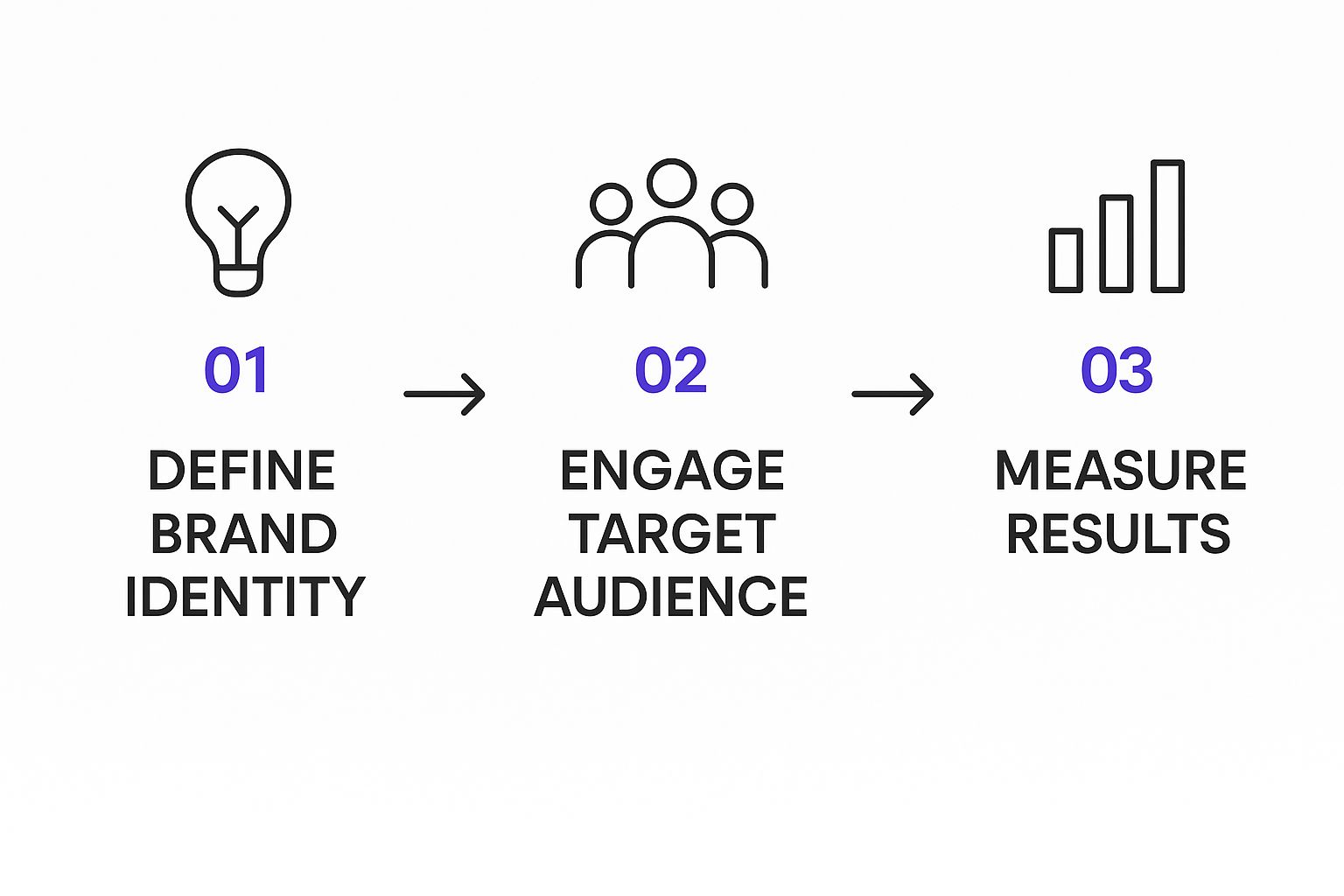
This whole process is a logical flow: you have to build your identity first before you can really connect with an audience and see the results. Each step builds on the last, setting you up for real, sustainable growth.
Bringing Your Brand Personality to Life
With your core mission and USP defined, it's time for the fun part: personality. If your brand walked into a room, who would it be? Witty and a little irreverent? Warm and nurturing? Minimalist and chic?
This personality needs to shine through in a few key areas:
- Your Visuals: The colors, fonts, and photography style you use.
- Your Voice: The actual words you choose for product descriptions, emails, and social media.
- Your Packaging: Don't forget the unboxing experience! It’s a huge branding moment.
For example, imagine a brand that sells handmade ceramic mugs. It might have a warm, earthy personality. Its Instagram feed would be full of cozy lifestyle shots, and the product descriptions would talk about the feeling of wrapping your hands around a warm mug on a chilly morning. That consistent vibe is what creates a powerful, memorable brand.
Your Brand Identity Checklist
Ready to start defining your own brand? Use these prompts to nail down the core elements and build a foundation that sticks.
Taking the time to answer these questions honestly will give you a roadmap for every single piece of content you create.
This consistency is so important. Think about it: research shows that a whopping 81% of consumers say they need to trust a brand before they'll even think about buying from it. And since 55% of first impressions are visual, your logo and packaging are essentially your first handshake. You've got to make it count.
Create Content That Connects and Converts

When it comes to building your brand, content is your voice. It’s how you start conversations, build real trust, and gently guide people from "just browsing" to becoming your biggest supporters.
Forget about hard sales pitches. The real magic happens when you create content that feels like a genuinely helpful, interesting chat with a friend who just happens to be an expert.
Think about it from your customer’s side. They aren’t just looking for a thing; they're looking for a solution, a bit of inspiration, or a story they can connect with. Your content is your opportunity to give them exactly that, positioning your brand as a helpful guide, not just another online shop.
This is a long-game strategy. It builds a foundation of trust that makes the eventual sale feel like a natural next step.
Turn Questions into SEO Gold
So, how do you start? One of the best ways to get on your ideal customer's radar is to answer the questions they're already asking Google. Every single search is a question, and if you have the answer, you can draw in incredibly relevant traffic.
Let’s say you sell handmade, non-toxic candles. Your dream customer might be searching for things like "how to make scented candles last longer" or "are paraffin wax candles safe for pets?"
Writing a detailed, helpful blog post on one of these topics is a double-win:
- You attract organic traffic. Your post can start ranking on search engines for those exact phrases, bringing new, interested people to your site for free.
- You build authority and trust. By providing a genuinely useful answer, you’re not just selling; you’re helping. That person now sees you as a knowledgeable and trustworthy source.
Don't underestimate this strategy. Companies that blog consistently generate a staggering 67% more leads than those that don't. It's solid proof that valuable content is a direct line to building deeper customer relationships. If you want to dive deeper, you can find more branding stats that show the impact.
My Pro Tip: Don't just answer the question—go above and beyond. Weave in your own personal stories, add behind-the-scenes photos of your candle-making process, or even a quick video. Make the content uniquely yours.
Create Scroll-Stopping Visuals
On visual-heavy platforms like Instagram and Pinterest, you have about two seconds to grab someone's attention. That’s it. This is where creating high-quality, compelling visuals isn't just nice to have; it's non-negotiable.
But "high-quality" doesn't have to mean a sterile, professional studio shoot. In fact, for small brands, authenticity often performs way better. People want to see your products in a real-world context. They want to picture how your handmade ceramic mug will feel in their hands on a slow Sunday morning.
Here are a few ideas to get you started:
- Lifestyle Shots: Show your product in its natural habitat. A person wearing your jewelry out with friends, a cozy blanket draped over a well-loved armchair, or your art print hanging on a beautifully curated wall.
- Behind-the-Scenes: People are fascinated by the creative process! Share short videos of you painting, carefully packing an order, or sketching new designs in your notebook. This builds a powerful human connection.
- User-Generated Content (UGC): This is pure gold. When a customer tags you in a photo of them using your product, ask for their permission and reshare it! It’s social proof at its finest and shows other potential buyers that real people already love what you do.
Think of your social media feed as a visual magazine for your brand. Every single image should tell a small piece of your story and vibe with the brand personality you've already defined.
A Real-World Example in Action
Let's put this into practice. Imagine a small business called "Woven Roots" that sells handwoven wall hangings and macrame plant hangers. The owner, Sarah, is moving off Etsy and wants to build a name for her brand.
Here’s a simple content plan she could use to connect with her audience:
By consistently sharing content that is helpful, inspiring, and beautiful, Sarah isn't just selling plant hangers. She’s selling a creative, mindful, and beautiful lifestyle. That's how a small shop grows into a big, memorable brand. Your content is the most powerful tool you have to make that happen.
Grow Your Community on Social Media
Think of social media as less of a billboard and more of a lively town square. It's the place where your brand’s personality gets to come out and play, and for a creative entrepreneur, this is gold. If you've just made the leap from a marketplace like Etsy, this is where you'll build the real relationships that turn casual followers into a die-hard community. It's about starting a conversation, not just shouting into the void.
Don't fall into the trap of trying to be everywhere at once—that's a one-way ticket to burnout. Instead, get strategic. Pick one or two platforms where you know your ideal customers are already hanging out.
Are you a visual-heavy brand selling art prints or handmade jewelry? Then platforms like Instagram and Pinterest are your natural habitat. Is your story more about the process, education, or have a quirky personality? A platform like Facebook or even TikTok might be your perfect match.
The goal is to go deep, not wide. A thriving, engaged community on one platform is infinitely more valuable than a ghost town presence on five.
Focus on Real Conversations
Once you’ve picked your spot, your mission is to spark genuine interaction. This requires a little mindset shift: think less "selling," more "sharing." People connect with other people, so showing the human behind the brand is the quickest way to build trust and make your followers feel like they're part of your story.
Here are a few simple ways to get the ball rolling:
- Pull Back the Curtain: Share a quick video of you sketching a new idea, mixing a new candle scent, or wrapping an order with care. These little behind-the-scenes moments feel exclusive and make your audience feel like they're in on a secret.
- Show Off Your Customers: Did a customer tag you in a post rocking your product? Celebrate it! Ask if you can reshare their photo to your feed or Stories. This is what we call user-generated content (UGC), and it’s some of the most powerful social proof you can get.
- Ask, Don't Just Tell: Never just post a photo and walk away. Ask for their opinion. Something as simple as, "Which of these two colorways should I use for the next collection?" invites them into your creative process and makes them feel invested.
It's this kind of consistent, real engagement that keeps you top of mind. In fact, research shows that 77% of consumers say they make buying decisions based on a brand name they recognize. Engaging on social is how you become that name. You can dig deeper into how branding impacts consumer choices on wisernotify.com.
The Magic of User-Generated Content
Like I mentioned, UGC is one of the best tools in your kit for building trust and awareness. Why? Because it’s an authentic stamp of approval from a real person, which carries so much more weight than anything you could say about yourself.
Encouraging and sharing this content should be a central part of your social strategy. It creates a powerful cycle of engagement.
This simple feedback loop shows how brands and users help each other out, building loyalty and visibility along the way. When you actively feature your customers' content, you're not just getting free marketing—you're building a community that feels seen and appreciated.
Partner with Authentic Creators
You don't have to grow your audience all on your own. Teaming up with other creators or influencers can be a fantastic way to introduce your brand to a whole new group of people who are likely to love what you do.
The key word here is authenticity. Forget about chasing big-name celebrities. For small brands, the real magic is in micro-influencers.
These are creators with smaller but incredibly loyal and engaged followings (usually between 1,000 and 100,000 followers). Their audience trusts their recommendations because they feel like genuine, relatable friends, not paid actors.
Finding the right people takes a little detective work:
- Find Existing Fans: Who is already using and loving products like yours? Search hashtags in your niche and see which creators are posting about them.
- Check Their Vibe (and Engagement): A big follower count means nothing if no one is actually talking in the comments. Look for real, active conversations. Is their community lively?
- Make Sure Your Values Align: Does their aesthetic and what they stand for feel like a good match for your brand? A great partnership feels natural, not forced.
A great collaboration feels less like an ad and more like a friend recommending something they truly love. When you find a micro-influencer who genuinely adores your niche, their endorsement can feel more powerful than a massive ad campaign.
Once you’ve found someone who seems like a great fit, send them a personal message. Suggest a fun, win-win collaboration—maybe a joint giveaway, a co-hosted Instagram Live where you both show off your creative process, or simply gifting them a product for an honest review.
These partnerships can be an amazingly cost-effective way to get your brand in front of fresh eyes. At the end of the day, the point of social media is to be social. Connect, share, and build real relationships, and you’ll find your brand awareness grows right along with them.
Get Discovered with Smart SEO and Partnerships

It’s one thing to have a beautiful brand and fantastic products, but it’s another thing entirely for people to actually find you. If you build it, they won't just come—you have to show them the way. This is where smart discovery tactics come in, helping you show up exactly where your ideal customers are already looking.
For many creators, the term Search Engine Optimization (SEO) sounds technical and intimidating, but I promise it doesn't have to be. At its heart, SEO is just about making it easier for people to find you on Google. It’s about learning the language your customers use and sprinkling it throughout your website.
Think of it like this: on Etsy, you relied on tags to get found. On your own site, you get to build the entire ecosystem of words and phrases that bring the right people to your digital doorstep.
Master the Basics of Keyword Research
Good SEO starts with understanding what your audience is actually typing into that search bar. This isn't about spamming your site with generic terms; it's about getting specific and putting yourself in your customer's shoes.
Let's say you sell handmade linen aprons. A potential customer probably isn't just searching for "apron." They're likely looking for something much more specific, like "durable linen cross-back apron for baking" or maybe "minimalist Japanese style pinafore apron." These longer, super-descriptive phrases are called long-tail keywords, and they are pure gold for small brands.
Why? Because someone searching with that much detail knows exactly what they want and is often ready to buy.
Here's how you can start finding them:
- Just Brainstorm: Grab a notebook and jot down all the ways you’d describe your products. Think about the materials, the style, how someone might use them, and what makes them special.
- Use Google for Free: The search bar is your best friend. Start typing a core term like "linen apron" and watch what Google suggests in the autocomplete. Those are real searches from real people.
- Spy on Your Peers: Take a peek at the product titles and descriptions of similar brands you admire. What kind of language are they using? No need to copy, just get inspired.
Once you have a solid list, weave these keywords naturally into your product titles, descriptions, and any blog posts you write. The key is to write for a human first, search engine second. It should always read smoothly.
Build Your Authority with Strategic Partnerships
Getting discovered isn't just about search engines. Some of the most incredible growth comes from tapping into existing communities and building relationships with other creators. This is where partnerships and collaborations can be a total game-changer.
Think about other brands, bloggers, or influencers who serve the same audience as you but aren't direct competitors. For our apron maker, this could be a food blogger, a local pottery studio, or a shop that sells artisanal bakeware. Teaming up creates a win-win where you both get in front of a new, perfectly aligned audience.
Partnering with a complementary brand is like being introduced to a room full of your ideal customers by a trusted friend. The built-in trust transfers to you, making the introduction incredibly powerful.
This strategy helps you reach people you otherwise couldn't. It builds instant social proof and puts your products in a fresh context, showing potential customers how your brand fits into their broader lifestyle.
Actionable Collaboration Ideas to Try
Getting started with partnerships is way easier than you might think. You don't need a huge budget or a massive following to make a real impact.
Here are a few practical ideas you can put into motion right away:
- Guest Blogging: Find a blog your dream customers love and offer to write a helpful article for them. Our apron maker could pitch "5 Essential Tools for Sourdough Beginners" to a popular baking blog, with a natural mention of their aprons. It's about providing value, not just a sales pitch.
- Product Collabs: Team up with a complementary maker on a special, limited-edition product bundle. Imagine a candlemaker partnering with a ceramicist to create a unique candle in a handmade vessel. They could then cross-promote the launch to both of their audiences.
- Local Events and Markets: Don't underestimate the power of showing up in person. Participating in local markets or pop-ups introduces your brand to your community. If you're attending a larger industry event, having some unforgettable trade show giveaway ideas can make a huge difference in grabbing attention and making you memorable.
These strategies work because they’re built on real relationships and mutual value. They help you build your brand's reputation and reach in a way that feels earned, not bought, creating steady, organic growth over time.
Connect With Customers in Your Community

Even if your brand lives entirely online, some of your best buzz might be waiting right outside your front door. Brand awareness isn’t just a digital game. Building a real-world presence in your local community can create a level of trust and loyalty that online ads just can't replicate.
For anyone coming from a packed marketplace like Etsy, becoming a beloved "local favorite" is a massive advantage. It gives your brand a face, a story, and a real connection to the people most likely to become your biggest advocates.
This is all about turning your online brand into a neighborhood staple. It’s about creating chances for people to meet you, the maker, and build a relationship that feels more personal than a simple click-and-buy.
Show Up Where Your Community Gathers
The most straightforward way to connect with your community? Be there. Local artisan markets, craft fairs, and seasonal festivals are gold mines for getting your work in front of people in a relaxed, discovery-focused setting.
Think of your booth as a mini, real-life version of your online shop. This is where customers can actually touch your products, ask you questions, and hear your story firsthand. That face-to-face interaction is priceless for building brand awareness from the ground up.
These events are also fantastic for networking. You’ll meet other local makers, boutique owners, and potential collaborators who could open up all sorts of new doors for you down the road.
Forge Powerful Local Partnerships
You don't always have to run your own booth to make an impact. Smart partnerships with other local businesses can put your products in front of new eyes with very little overhead.
Here are a few simple ideas that I’ve seen work wonders:
- Consignment Deals: Find a local boutique that matches your vibe and see if they’ll sell a small collection of your items. Suddenly, their built-in foot traffic becomes your new audience.
- Coffee Shop Displays: Many local coffee shops love featuring work from area artists. Offer to hang some art prints or display smaller goods on their walls. A simple sign with your brand name and website is all you need.
- Collaborative Giveaways: Team up with other local businesses for a joint giveaway on social media. A prize package with your products and treats from a local chocolatier or spa can expose you to their followers, and vice versa.
Tapping into the existing customer base of an established local business gives you a warm introduction and an implied endorsement. This builds credibility and trust way faster than trying to go it alone.
And this local-first mindset isn't just a feel-good strategy; it’s a real market driver. A recent McKinsey report on consumer behavior found that 47% of consumers globally consider locally owned companies an important factor in their buying decisions. Here in North America, that preference is growing, with 36% of consumers wanting to support domestic businesses. You can read more about the 2025 State of the Consumer on mckinsey.com to see all the details.
Get Featured by Local Voices
Every community has its tastemakers—local bloggers, journalists, and Instagrammers who share the best of what's happening around town. Getting on their radar can be a huge boost.
Start by making a simple list of local media and influencers who cover lifestyle, shopping, or the arts in your area. Reach out with a friendly, personal email introducing yourself and your brand. Offer to send a sample of your work, and don't forget to mention what makes your story special. Getting featured in a local "Holiday Gift Guide" or a "Meet the Maker" blog post can drive a surprising amount of traffic and build some serious local pride around your brand.
Got Brand Awareness Questions? We've Got Answers
Stepping into the world of brand building can feel like a lot, especially when you're busy turning your creative passion into a real-deal business. Let's tackle some of the most common questions we hear from makers and small shop owners just like you.
How Long Does This Actually Take?
Honestly? Think of it like planting a garden. You won't see a full harvest overnight. While you can definitely get some small wins and see little sprouts of recognition early on, it typically takes a solid 6 to 12 months of consistent work to see a noticeable shift in your traffic and sales.
Consistency is the name of the game here. That means showing up regularly with your social media posts, your email newsletters, and keeping your brand's vibe the same everywhere. People usually need to see your brand a few times in different places before it really clicks. So, patience and a steady, creative hand are your best tools.
Can I Build Brand Awareness with a Tiny Budget?
Yes, you absolutely can. In fact, some of the most powerful brand-building strategies rely more on your creativity and effort than a fat wallet. You don’t need a huge marketing budget to make waves, especially when you're starting out.
Many of the best tactics are free, they just require your time and dedication:
- Write helpful blog posts that solve your ideal customer's problems.
- Genuinely engage with your community on social media. Ask questions, share behind-the-scenes peeks, and just be human.
- Dip your toes into basic SEO for your product pages and website. It's less scary than it sounds!
Focus on providing real value and building authentic connections. Another great, low-cost move is to team up with other small businesses or micro-influencers for cross-promotions. It’s a fantastic way to get in front of a new, like-minded audience without spending a dime.
The secret to brand awareness isn't about outspending your competition; it's about out-caring them. When you truly connect with your audience and help them, they'll become your biggest cheerleaders.
How Do I Know if My Brand Awareness Is Growing?
Okay, so measuring brand awareness isn't as straightforward as looking at your sales numbers, but it's not a total mystery either. There are definitely clear signs you can watch to see if your hard work is paying off. The key is to look at a few different things together to get the full picture.
Pop into your Google Analytics and look for a rise in "Direct Traffic." This is gold. It means people are typing your website URL straight into their browser—a huge sign that your brand name is sticking.
On social media, look past the follower count. Are people actually engaging? Pay attention to comments, shares, and especially saves. Those actions mean your content is resonating enough for people to interact with it or save it for later. You can also set up a free Google Alert for your brand name. Getting a ping every time someone mentions you online is not only a great ego boost but a solid indicator that your footprint is growing.
At Wand Websites, we help ambitious Etsy sellers build professional Shopify stores that turn growing brand awareness into real, measurable sales. If you're ready to move beyond the marketplace and create a powerful online home for your business, we can help. Learn more about how we build websites that grow your brand at Wand Websites.
