
Etsy to Shopify Migration: Your Growth Success Blueprint

Why Smart Sellers Are Making The Etsy To Shopify Jump

Selling on a marketplace like Etsy is convenient, especially when you're just starting out. It’s a great way to get your products in front of a built-in audience. But relying solely on someone else's platform has its drawbacks, and these limitations can really hold you back in the long run. That's why so many smart Etsy sellers are moving their shops over to Shopify. It's more than just switching platforms; it's a strategic decision for taking control and growing your business.
Breaking Free From Marketplace Dependence
One of the biggest reasons sellers make the move is the desire for more control. On Etsy, you play by their rules, pay their fees, and have to adapt to algorithm changes that can impact your sales overnight. This lack of control can be a real headache if you’re trying to build your own brand and connect with customers directly. Shopify, on the other hand, gives you the power to create a unique online store that truly represents your brand.
Think of it this way: imagine building a house on rented land. You can decorate and make improvements, but you’re ultimately limited by the landlord’s rules. With Shopify, it’s like owning your land – you're free to build and customize however you want. This includes everything from the look and feel of your store to the marketing strategies you use.
To help illustrate the key differences between these two popular platforms, let's take a look at a detailed comparison:
Etsy vs Shopify: Platform Comparison
As this table shows, while Etsy offers a ready-made marketplace, Shopify provides the tools and flexibility to build a truly unique and scalable online business.
Owning Your Audience and Your Future
Another huge advantage of Shopify is owning your customer data. On Etsy, you have limited access to customer information, making it tough to build direct relationships and run targeted marketing campaigns. This makes it challenging to grow beyond the Etsy marketplace. With Shopify, you can collect email addresses, build a loyal following, and tailor your marketing to boost sales. This means developing direct relationships with your customers and creating a sustainable business that can thrive in the long term.
Empowering Your Brand With Shopify
Making the switch from Etsy to Shopify is all about taking charge of your brand and shaping your future. By choosing Shopify, you’re investing in a platform that gives you the flexibility, customization, and control you need to grow. This move allows you to build stronger customer relationships, use smarter marketing strategies, and scale your business more effectively. It empowers you to create a brand that truly stands out from the competition and sets you up for long-term success.
Understanding Shopify’s Market Dominance and Your Opportunity
Moving from Etsy to Shopify isn't simply a platform swap; it's about joining a much larger, more vibrant ecosystem. Shopify supports a substantial chunk of the ecommerce world, giving sellers the tools and infrastructure to scale quickly. This market dominance offers exciting possibilities for Etsy sellers looking to grow beyond marketplace limitations.
Why Shopify’s Market Share Matters to You
Shopify’s market leadership translates into real benefits for its users. The platform’s constant investment in innovation, from AI-powered features to strong payment processing, gives sellers a competitive advantage. This constant evolution means Shopify continually adapts to the changing needs of ecommerce, creating opportunities for growth that simply aren't available elsewhere. For instance, Shopify’s advanced analytics give sellers detailed customer behavior insights, empowering data-driven choices for targeted marketing.
Also, Shopify’s size and influence attract a diverse network of partners and app developers. This rich ecosystem offers sellers specialized tools and services to improve operations and boost customer satisfaction. This includes access to automated inventory management and advanced marketing automation platforms. Think of it as moving your business from a small town to a thriving city with better resources and possibilities. This opens new avenues for reaching more customers and maximizing sales.
Leveraging Shopify’s Growth Ecosystem for Your Success
Shopify’s dominance fosters a thriving business environment, allowing expansion beyond marketplace restrictions. When sellers switch from Etsy to Shopify, they often find the platform's flexibility enables strategies they couldn't implement before. They can offer subscriptions, personalize customer experiences, and use powerful marketing tools to cultivate brand loyalty. This means greater control over your brand story and building stronger customer connections.
Regarding gross merchandise value (GMV), Shopify is a major ecommerce force. In the U.S., Shopify holds a 10.3% market share, a considerable portion of the digital commerce landscape. This GMV share is substantial, especially compared to other major platforms like Walmart and eBay, which together hold a slightly smaller share. Etsy’s revenue comes mainly from its marketplace model, which is successful but offers less GMV scalability than Shopify’s broader ecommerce capabilities. Businesses moving from Etsy to Shopify often look to leverage Shopify’s strong infrastructure and tools to increase their GMV and expand their reach. Find more detailed statistics here. Understanding these market dynamics highlights why switching from Etsy to Shopify can be a strategic move for growth-focused businesses.
Your Complete Etsy To Shopify Migration Roadmap
Moving your shop from Etsy to Shopify might seem daunting, but with a well-structured plan, it can be a smooth and even exciting experience. This roadmap breaks down the entire migration into manageable steps, helping you keep your sales going strong while you build a more scalable online business.
Pre-Migration Planning: Laying the Groundwork
Before getting into the technical side of things, strategic planning is key. This means taking stock of your current Etsy shop. Look at your best-selling items, understand your customer base, and get a clear picture of your overall shop performance. It's also important to set realistic goals and create a timeline for your migration, breaking it down into smaller, more manageable milestones. This preparation helps you stay focused and prevents you from feeling overwhelmed.
- Audit Your Etsy Shop: Dive into your sales data, customer reviews, and traffic sources. Figure out what's working well and identify areas you can improve.
- Set Clear Objectives: Define your goals for your Shopify store. Are you hoping to boost sales, improve your branding, or expand your product lines?
- Develop a Timeline: Create a detailed schedule with specific tasks and deadlines. This will keep your migration structured and efficient.
To help you visualize the migration process, take a look at the table below. It provides a week-by-week breakdown of tasks, priorities, and estimated time commitments, making your transition as smooth as possible.
To help you visualize the migration process, the table below offers a practical week-by-week breakdown. It lists key tasks and milestones alongside their priority levels and estimated time commitments. This allows for better organization and helps you stay on track during the migration.
This table gives you a clear overview of the migration journey. Remember, these are estimates, and you can adjust the timeline based on your specific needs. The key is to have a plan and stick to it as much as possible.
Technical Setup: Building Your Shopify Store
This phase is all about setting up your Shopify account, choosing a Shopify theme that reflects your brand, and, most importantly, importing your products. Think of this as building the foundation of your new online shop. Carefully transferring your product descriptions, images, and pricing will ensure a consistent experience for your customers and minimize any disruptions. This careful approach helps maintain your brand identity and makes returning customers feel right at home.
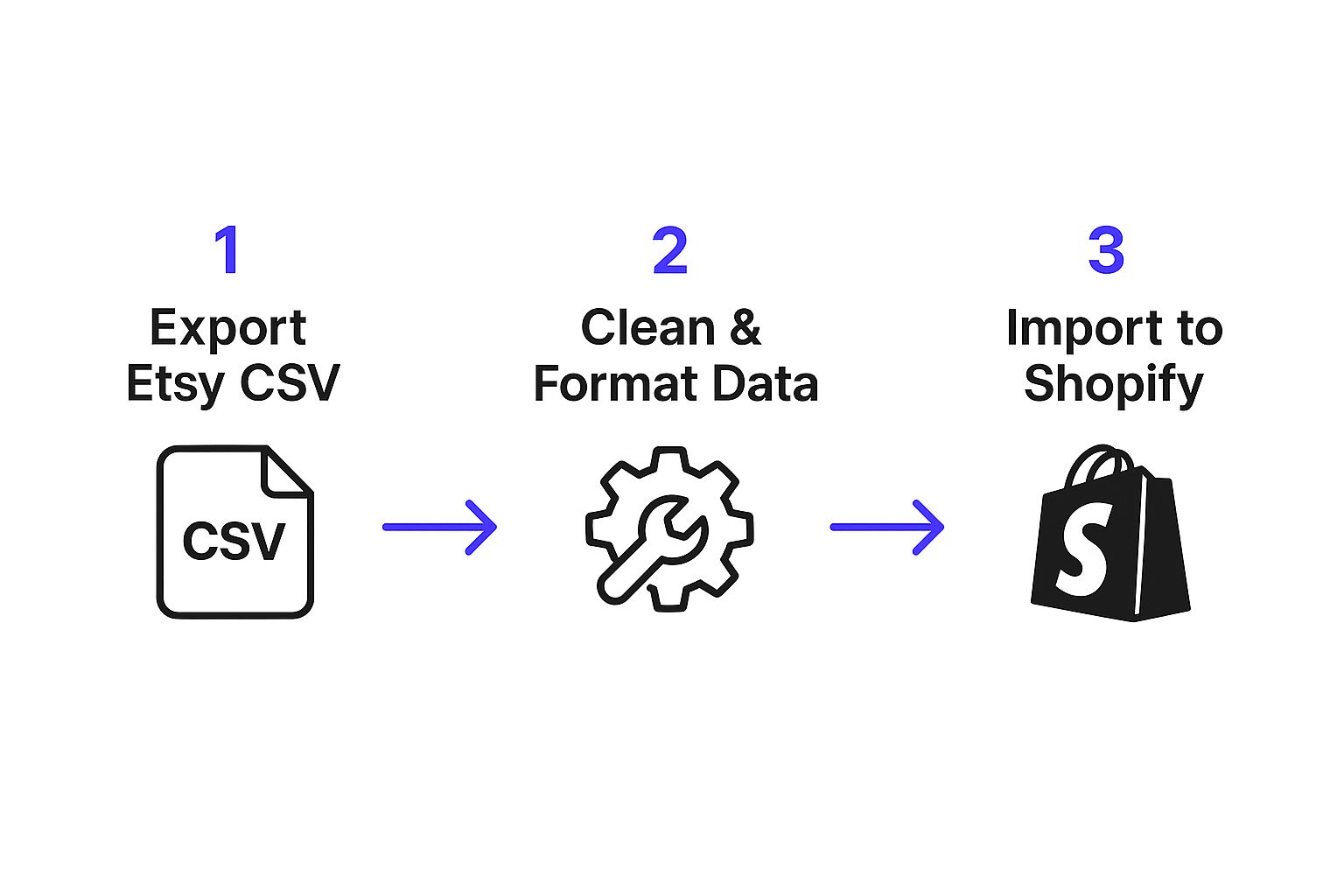
This infographic shows the main process of migrating your product data: export from Etsy, clean and format, then import into Shopify. Each step is essential for a smooth transition, making sure your product catalog is accurate and complete on your new platform.
- Choose a Shopify Theme: Select a theme that’s visually appealing and functional, one that complements your brand and products.
- Import Products: Transfer your entire product catalog from Etsy to Shopify, making sure the data is accurate and the images are high-quality. Services like Wand Websites can help with this process.
- Configure Payment Gateways: Set up secure and easy-to-use payment options for your customers, such as Shopify Payments, PayPal, and Stripe.
Running Both Platforms: A Strategic Approach
Running both your Etsy and Shopify shops at the same time during the transition lets you keep sales coming in while you get familiar with the Shopify platform. This strategy acts as a safety net, maintaining your revenue stream while you learn the ropes of your new store. It also means you'll need to manage your inventory carefully to avoid overselling. This dual-platform approach provides stability and minimizes disruptions to your income.
- Synchronize Inventory: Use inventory management tools to track your stock across both platforms, avoiding overselling and keeping your customers happy.
- Redirect Traffic: Start gradually guiding customers from your Etsy shop to your new Shopify store. You can do this through announcements, email marketing, and social media posts.
- Monitor Performance: Keep an eye on key metrics on both platforms to see how well your migration is going and identify any areas for improvement.
Post-Migration Optimization: Refining Your Shopify Store
Once you’ve fully moved to Shopify, optimization is crucial for maximizing your store’s potential. This means refining your website design, using SEO best practices, and developing targeted marketing campaigns. Look at how customers behave on your Shopify store and use that data to improve your product pages and checkout process. This data-driven approach will lead to continuous improvement and set your brand up for long-term success on your new platform.
- SEO Optimization: Use SEO strategies to improve your store's visibility in search results and attract organic traffic.
- Marketing and Promotion: Create and run targeted marketing campaigns to drive traffic and boost sales on your Shopify store.
- Customer Relationship Management: Build strong relationships with your customers through email marketing, loyalty programs, and personalized communication. This helps you create a loyal customer base outside of the Etsy marketplace.
Unlocking Growth Opportunities Beyond Etsy's Limits

Thinking about migrating from Etsy to Shopify? It's not simply about recreating what you've already built. It's about opening up exciting new possibilities for growth. Shopify offers a powerful set of features and a dynamic environment that helps sellers take their businesses to the next level, far beyond the limitations of a marketplace. This opens doors to fresh strategies and tools that can truly elevate your business.
Expanding Your Reach With Shopify's Tools
One major benefit of Shopify is how adaptable it is for international growth. With Shopify, you can easily manage multiple currencies and languages, adapting your shop to diverse global markets. Plus, built-in shipping solutions streamline international orders, simplifying cross-border selling. This exposes your brand to a much larger audience and boosts your sales potential.
Think about offering subscription boxes or product bundles through your Shopify store. These strategies, tricky to implement on Etsy, can significantly increase your average order value and create recurring revenue. This reliable income stream provides stability and predictability. Shopify's impressive app ecosystem further accelerates growth by automating things like inventory management and customer support. This automation lets you focus on strategic planning and new product development.
Data-Driven Growth and Customer Loyalty
Shopify also gives you detailed analytics to monitor customer behavior, sales trends, and marketing campaign performance. This data-driven approach allows you to make smart decisions about your business strategy, fine-tune your marketing, and enhance the customer experience. This valuable information shows you what's working and where you can make improvements.
This means you can build targeted email marketing campaigns that truly connect with your customers, fostering stronger relationships and encouraging repeat business. You can also create customer loyalty programs to reward your best customers and motivate future purchases. These tactics boost engagement and promote repeat sales, creating a real competitive advantage.
The growth potential for both Etsy and Shopify is huge, especially with the predicted growth of ecommerce. By 2030, the market is projected to hit $21.22 trillion, with a 15.8% compound annual growth rate from 2025 to 2030. Shopify’s growth is driven by its user-friendly tools and AI-powered solutions. For businesses moving from Etsy to Shopify, tapping into this growth potential is essential. They can utilize Shopify’s growing partner network and payment options like Shop Pay to improve the customer experience and drive sales. Learn more about this. Shopify also allows for smooth social commerce integration, linking your store with platforms like Instagram and Facebook. This broadens your reach and creates more opportunities for growth.
Positioning Your Brand for the Future
By using these advanced features, you can not only match your Etsy success but exceed it. Shifting to Shopify is bigger than just changing platforms; it’s about strategically positioning your brand for the future of ecommerce and realizing its full potential. With the right strategies and resources, Shopify helps you create a thriving and sustainable online business.
Building Your Customer Base Without Etsy's Traffic
Moving your shop from the bustling marketplace of Etsy to your own independent Shopify store is a big decision. You're trading the ready-made audience of Etsy for the autonomy and control of your own online space. This naturally brings up a key question: how do you attract customers without Etsy’s built-in crowd?
This section explores some proven ways to build a loyal customer base for your Shopify store, specifically for those transitioning from Etsy. We're not talking about recreating Etsy’s traffic overnight. The goal is to cultivate something even more valuable: a dedicated community around your brand.
Organic Traffic: Building a Long-Term Audience
Organic traffic, the kind you earn through valuable content and search engine optimization (SEO), is the foundation of long-term success. This means creating content that truly resonates with your ideal customer, drawing them to your Shopify store through helpful information and engaging experiences.
Think about it: blog posts about product care, DIY tutorials incorporating your products, or behind-the-scenes peeks into your creative process can all attract potential customers organically.
- Content Marketing: Sharing informative and engaging content on a regular basis attracts potential customers organically through search engines like Google.
- SEO Optimization: Implementing SEO best practices, such as using relevant keywords, helps your Shopify store show up higher in search results.
- Email Marketing: An email list allows you to connect with leads, share new product announcements, and offer special promotions to your subscribers.
For example, if you sell handmade jewelry, you could create blog posts with styling tips or articles discussing the unique materials you use and their origin. This positions you as an expert in your field, building trust and attracting customers who appreciate your brand’s unique qualities.
Paid Advertising: Reaching Your Ideal Customers
While organic growth develops over time, paid advertising can provide a quicker boost. Platforms like Google Ads and social media advertising let you target specific demographics and interests, making sure your message gets in front of the right people. This targeted approach maximizes your budget and connects you with potential customers quickly.
- Google Ads: By targeting relevant keywords, your store can appear prominently in search results when people are actively looking for products like yours.
- Social Media Ads: Platforms like Facebook and Instagram offer detailed targeting options so you can reach specific customer segments interested in your products.
- Retargeting Campaigns: Retargeting helps you reconnect with website visitors who haven't made a purchase yet, keeping your brand in their minds and encouraging them to return. This can significantly boost your conversion rates.
Building a Community Around Your Brand
One of the most effective long-term strategies is building a thriving community around your brand. Engaging with your followers on social media, responding to comments and questions, and fostering a sense of belonging can create deep customer loyalty.
This can involve offering exclusive content, hosting online events, or setting up a dedicated Facebook group where customers can connect and share their experiences with your brand. This connection turns casual shoppers into loyal fans and brand ambassadors.
- Social Media Engagement: Interacting with your followers on platforms like Instagram and Facebook helps build relationships and fosters a strong sense of community.
- Influencer Marketing: Partnering with influencers in your niche can introduce your brand to a wider, engaged audience. For example, teaming up with a craft blogger whose audience aligns with your target market could be a great way to get your products seen.
- Customer Loyalty Programs: Rewarding your repeat customers with special discounts and early access to new products strengthens their connection with your brand.
Moving from Etsy to Shopify gives you the exciting chance to take ownership of your customer relationships and grow a flourishing brand. While it requires effort, building a loyal customer base is a rewarding process that offers long-term benefits beyond the convenience of marketplace traffic. By using these strategies, you can create a sustainable and scalable business on your own terms.
Avoiding Migration Mistakes That Kill Momentum

Moving your shop from Etsy to Shopify is a big step towards taking more control of your business and allowing it to grow. But even the best-laid plans can hit a snag. This section covers some common pitfalls during the Etsy to Shopify migration, and offers some practical advice for keeping things moving smoothly.
Inventory Synchronization: Preventing Oversights
One of the most frequent migration missteps is overlooking inventory synchronization. Imagine selling the same item on both Etsy and your shiny new Shopify store, and then getting two orders at the same time. Yikes! Without proper synchronization, you risk overselling and letting down your customers.
This can really hurt your reputation, especially during a crucial time like a migration. A solid inventory management system is key. Luckily, there are tools and apps within Shopify that can automatically update your stock levels across both platforms. This prevents overselling and ensures you have an accurate picture of your inventory.
Customer Communication: Maintaining Trust
Keeping your customers in the loop is super important during this transition. Not telling your loyal Etsy shoppers about your move can lead to confusion and lost sales. Announce your migration plans clearly on your Etsy shop page, in your email newsletters, and across your social media channels.
Explain how this change benefits them, such as a wider product selection or better customer service. This proactive communication builds excitement and strengthens those valuable customer relationships.
SEO Strategies: Preserving Your Search Visibility
Many sellers worry about keeping their search engine optimization (SEO) humming along during the migration. You’ve worked hard to build a presence on Etsy, and you don't want to lose your search rankings. This means understanding how SEO works on each platform, and creating strategies for a seamless transition.
Carefully match your Etsy product listings to their new homes on Shopify. Make sure you're using the same relevant keywords in your product titles, descriptions, and meta tags. This consistency keeps your search visibility strong and helps maintain a steady flow of organic traffic to your new Shopify store. Google Search Console is a handy tool for monitoring your site's performance and spotting any SEO issues that need attention.
Payment and Shipping: Ensuring Smooth Transactions
Technical hiccups with payments and shipping can lead to abandoned checkouts and frustrated customers. Test your payment gateway integration on Shopify thoroughly before going live. Make sure all your supported payment options are working correctly.
Double-check your shipping settings, including rates, zones, and carrier integrations, to avoid unexpected costs and delivery delays. These seemingly small details have a big impact on customer satisfaction and your bottom line.
Post-Migration Monitoring: Identifying and Addressing Issues
Launching your Shopify store isn’t the end of the migration process. Ongoing monitoring is essential. Track important metrics like website traffic, conversion rates, and sales figures. If you see any unexpected dips in performance, investigate the potential causes.
This vigilance helps you quickly address any arising issues, adapt your strategies, and ensure the long-term success of your move from Etsy to Shopify. Services like Wand Websites can help you navigate this crucial period and make sure everything runs without a hitch. This frees you up to focus on your core business while experts handle the technical side.
Key Takeaways
Migrating your shop from Etsy to Shopify is a big step towards building a scalable and sustainable online business. This move empowers you to take control of your brand, your customer relationships, and how your business grows. Here’s a summary of key takeaways to help guide you through a successful migration and beyond:
Owning Your Brand and Customer Experience
One of the best reasons to migrate is the shift from marketplace dependency to owning your brand. On Shopify, you have total control over your store's design, how it works, and the experience your customers have. This means you can create a unique online presence that truly reflects your brand, building stronger customer connections and loyalty. Unlike Etsy, where you're one of many similar listings, Shopify lets your brand stand out.
Customization: Shopify gives you extensive design control with tons of themes and apps, letting you tailor your store’s look to match your brand aesthetic. This is a huge difference from Etsy's limited customization options, where standing out is tough.
Branding: Shopify empowers you to create a truly distinct brand identity, fostering recognition and customer loyalty. This is key for long-term growth and sets your business apart.
Customer Data: Shopify lets you own and manage your customer data, which is essential for targeted marketing and building lasting relationships. Etsy limits access to customer information, making it harder to nurture leads and encourage repeat business.
Driving Sustainable Growth
Moving to Shopify unlocks growth opportunities you just can't get in a marketplace. You get access to advanced features, powerful marketing tools, and a robust app ecosystem to help you scale strategically.
Scalability: Shopify is built for growth, offering flexible plans and resources to support your business as it expands. This scalability is a must-have if you want to reach a wider audience and maximize your revenue.
Marketing: Shopify’s powerful marketing tools and integrations help you connect with your target audience effectively. You can create targeted email campaigns, track how those campaigns are performing, and refine your marketing strategies for the best results.
Expansion: Shopify offers smooth integration with different sales channels, letting you expand your reach and connect with customers across multiple platforms. This multi-channel approach boosts your brand's visibility and diversifies how you generate revenue.
Navigating the Migration Process
A smooth migration takes planning and careful execution. A clear roadmap ensures a smooth transition and minimizes disruptions to your sales and customer relationships.
Planning: Start by auditing your Etsy shop. Figure out your best-selling products, who your target audience is, and how your shop has performed overall. This information will help you set up your Shopify store and maintain momentum during the move.
Implementation: Follow a step-by-step process to set up your Shopify store, import your products, configure payment gateways, and test your new online shop. This structured approach will minimize technical issues and ensure a seamless transition.
Optimization: After you’ve migrated, continuously monitor and optimize your Shopify store. Focus on SEO best practices, marketing, and customer relationship management. This ongoing work will keep your store performing at its best and drive sustainable growth.
Key Metrics and Milestones
Track key metrics during and after your migration to measure your progress and spot areas for improvement. Celebrate milestones to stay motivated and focused on your long-term goals.
Traffic: Keep an eye on where your website traffic is coming from and analyze user behavior. This helps you understand how customers find and interact with your Shopify store, which you can then use to improve your marketing strategies and website.
Conversions: Track your conversion rate – the percentage of visitors who make a purchase – to identify any roadblocks in your sales funnel. This metric highlights areas where you can improve the customer experience and increase sales.
Customer Acquisition Cost: Measure how much it costs to get a new customer through your various marketing channels. This helps you make smart decisions about where to spend your marketing budget and maximize your ROI.
By focusing on these key takeaways, you can make the most of your move from Etsy to Shopify and build a thriving online business that’s scalable, sustainable, and uniquely yours.
Ready to transform your Etsy shop into a thriving Shopify business? Wand Websites specializes in seamless Etsy to Shopify migrations, offering a stress-free experience and guaranteed results. Learn more about how Wand Websites can help you grow.
