
Etsy Shopify Integration: Double Your Sales With Smart Setup


Why Smart Sellers Are Doubling Down On Dual Platforms
Running a successful online business can feel overwhelming. So, why are savvy sellers adding another platform to their workload by integrating their Etsy shop with Shopify? The answer is simple: strategic reach and sustainable brand building.
One key reason is diversification. Imagine relying solely on one marketplace. What if its policies change or it has technical issues? Using both Etsy and Shopify mitigates this risk and creates multiple revenue streams. It's like a diversified investment portfolio—protection against market fluctuations.
Leveraging the Strengths of Each Platform
Etsy offers instant access to a large audience actively searching for unique, handmade, and vintage items. This boosts visibility and sales, especially for new businesses. Shopify, however, empowers sellers to cultivate their brand identity and control the customer experience.
This dual-platform approach lets sellers use Etsy's built-in customer base while building a loyal following on their Shopify store. Think of it like fishing in two ponds: one teeming with fish (Etsy) and the other a private lake you can cultivate (Shopify).
The Financial Impact of Diversification
Many sellers see a significant revenue increase after integrating platforms. They’re not just splitting existing sales; they’re tapping into new customer segments. Some even report doubling their revenue through strategic platform use.
Etsy Shopify integration also enhances operational efficiency. It enables features like bulk listing, real-time inventory updates, and syncing, reducing manual work. For instance, Marketplace Connect helps sellers import their catalog from Shopify to Etsy, ensuring accurate inventory across all channels. Learn more: Discover more insights about Etsy and Shopify
Mindset Shift: From Struggle to Mastery
The difference between struggling sellers and those thriving on multiple platforms is often a mindset shift. It’s about seeing Etsy and Shopify not as competitors, but as complementary tools. This lets sellers embrace each platform's advantages and create a cohesive, multi-channel strategy.
This involves adapting marketing strategies, optimizing listings for each platform, and streamlining workflows. By focusing on long-term growth and brand building, sellers can transform their businesses from a side hustle into something much bigger. This sets the stage for lasting e-commerce success.
Understanding The Platform Power Dynamic

Many sellers see Etsy and Shopify as competitors. But they're actually a powerful pair, working together as part of a smart business strategy. Let's explore how each platform brings unique strengths to the table and how combining them through Etsy Shopify integration creates a winning formula.
Etsy: The Thriving Marketplace
Etsy offers instant access to millions of eager shoppers. It’s a vibrant online marketplace buzzing with people looking for unique, handcrafted, and vintage items. This built-in audience is a huge plus, especially for new businesses. Etsy handles a lot of the technical side, letting sellers concentrate on what they do best: creating and listing products.
Shopify: Your Brand's Foundation
Shopify, on the other hand, is where you build your own brand identity. You have complete control over your store's look, feel, and the entire customer experience. This customization is key to building brand loyalty and a memorable shopping experience. Shopify provides the tools to connect with your customers, collect valuable data, and grow your business on your own terms.
This dynamic allows for strategic product placement to attract different customer groups. Etsy's engaged community provides immediate access to customers specifically searching for handmade or vintage items, making it perfect for initial product launches and testing market demand. For example, a new jewelry maker can quickly gain visibility and sales on Etsy, validating their designs before investing in a dedicated online store.
Shopify excels at building a lasting brand identity. It's the perfect place to nurture long-term customer relationships, collect data, and scale your business on your own terms. This makes Shopify crucial for established businesses aiming for sustainable growth and more control over their branding. Etsy has a significant market presence, boasting over 95.5 million active buyers and 8.1 million sellers as of 2024. Combining Etsy and Shopify lets sellers tap into Etsy's niche markets while using Shopify’s scalability and customization. Find more detailed stats here.
The Power of Synergy
Savvy sellers are strategically integrating Etsy and Shopify. It's not just about listing products on both; it's about creating a complete brand ecosystem. Using Etsy for initial market entry and Shopify for ongoing brand development helps sellers expand their reach and build a loyal following.
This dual-platform strategy offers a real competitive advantage. Each platform boosts the other’s strengths. The result? Greater brand recognition, stronger customer loyalty, and sustainable growth.
Choosing The Right Integration Tools That Actually Work
Successfully integrating your Etsy and Shopify stores depends on picking the right tools. With so many options, it's important to look beyond the marketing and find solutions that deliver real results. This means understanding setup complexity, reliability, hidden costs, and, most importantly, how these tools perform in practice.
This section simplifies things by outlining the key steps, the estimated time commitment, and the goal of a unified inventory system. The infographic below visually represents this information:
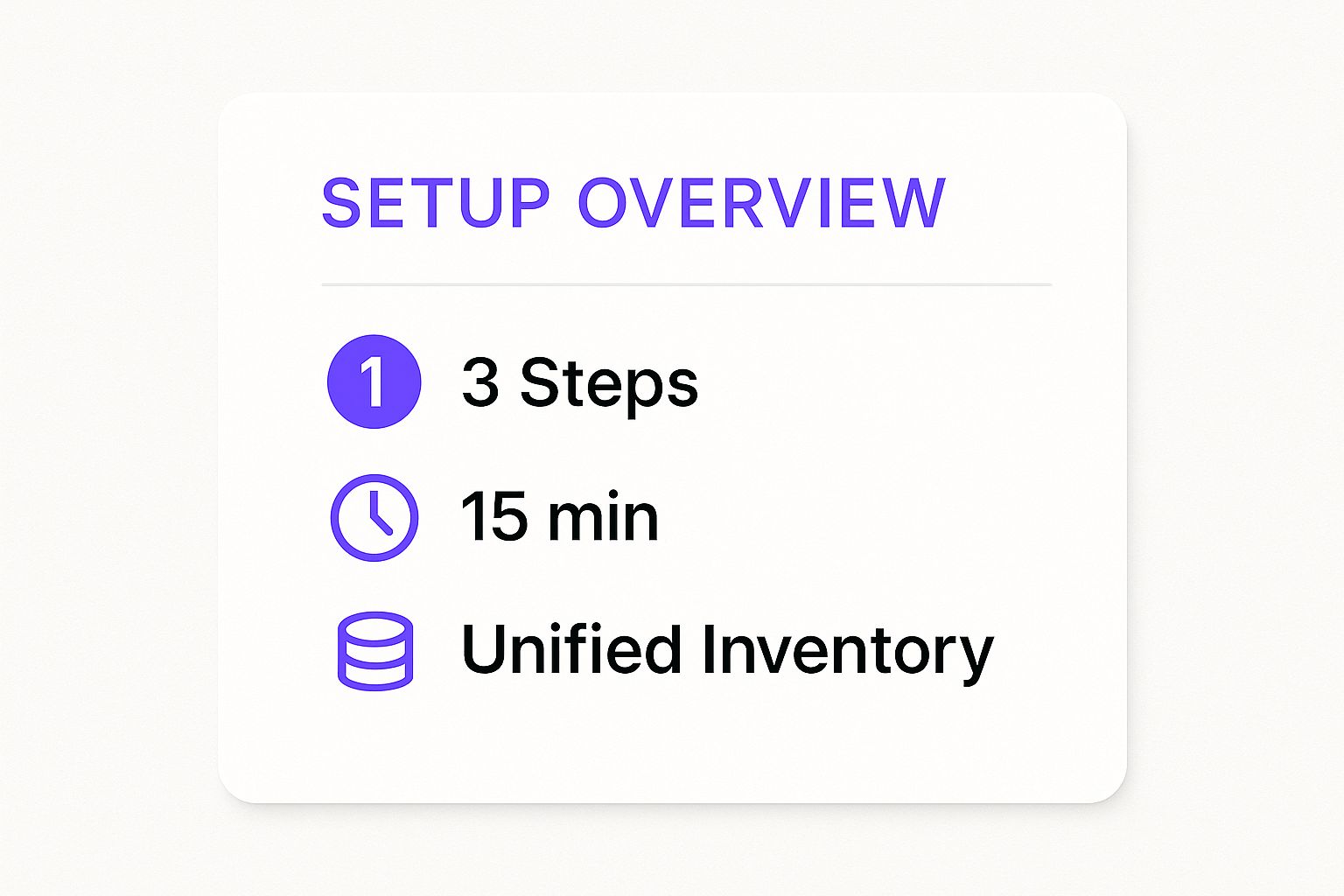
As the infographic shows, achieving a unified inventory involves a simple three-step setup process, estimated to take just 15 minutes. This streamlined approach lets you quickly connect your Etsy and Shopify stores, creating a foundation for efficient inventory management across both platforms.
Evaluating Your Options: Free vs. Paid Integrations
For sellers just starting, free integration tools can be a great way to begin. These options usually offer basic features like product syncing and order management. However, they may have limits on the number of products or orders they can handle. For example, a free tool might only allow syncing up to 100 products. This makes them suitable for smaller shops but less so for rapidly growing businesses.
Paid integration tools, on the other hand, offer more advanced features and greater flexibility. They often include things like automated inventory updates, bulk listing, and advanced reporting. Plus, they usually provide dedicated customer support, which is invaluable when you need help. These tools come with a price, but the investment can be worthwhile for sellers managing larger inventories or needing more powerful features.
Key Features to Look For
When choosing an integration tool, consider these important features:
Real-Time Inventory Syncing: This makes sure your stock levels are accurate across both platforms, preventing overselling and stockouts.
Automated Product Updates: Changes to product details on one platform automatically update on the other, saving you time and effort.
Centralized Order Management: View and manage orders from both Etsy and Shopify in one dashboard, simplifying your workflow.
Robust Reporting and Analytics: Gain insights into sales performance, inventory levels, and other key metrics to help make informed business decisions.
Reliable Customer Support: Access quick and helpful support when you have problems, ensuring a smooth integration experience.
To help you make the best choice, we've compiled a comparison table of popular Etsy Shopify integration tools.
Here’s a quick look at how some popular tools compare:
This table highlights some of the key differences in features and pricing to help you find the best fit for your business. Remember to check each app’s website for the most up-to-date details.
Choosing the right integration tool is essential for optimizing your Etsy Shopify integration. By considering your business needs, evaluating free and paid options, and focusing on key features, you can find the perfect solution to streamline your operations and boost your sales potential across both platforms. This leads to a smoother setup and helps avoid common integration issues.
Setting Up Your Integration Without The Headaches
Ready to connect your Etsy and Shopify stores? This section offers a practical guide to the Etsy Shopify integration, highlighting potential bumps in the road and providing expert tips for a smooth setup. This isn't your average tutorial; we're sharing insider advice to save you hours of troubleshooting and prevent costly synchronization errors.
Account Preparation: Laying The Groundwork
Before you jump into the integration, it's important to prepare your accounts. This means ensuring your product information is consistent on both platforms. For example, use the same product titles, descriptions, and SKUs (Stock Keeping Units). This will avoid confusion when syncing your products.
Also, double-check your pricing and shipping settings. Maintaining consistency across platforms from the outset will significantly simplify the integration process and prevent future issues.
App Configuration: Connecting The Dots
With your accounts prepped, the next step is choosing and configuring your integration app. There are several apps available for Etsy Shopify integration, each with its own pros and cons. The best app for you will depend on your specific needs and budget.
No matter which app you select, closely follow the app's instructions during setup. Pay particular attention to authorization procedures and data mapping options. This ensures proper syncing between your Etsy and Shopify platforms.
Testing and Monitoring: Ensuring Smooth Operation
After setting up the integration, thorough testing is key. Start small, testing the syncing process with a limited number of products. This will help you identify any potential problems early on.
Keep a close eye on your inventory levels on both platforms to ensure they update correctly after test sales. This proactive monitoring helps you catch and fix errors before they affect your live sales. A proactive approach to testing and monitoring will save you from major headaches later. Data-driven decision-making is vital for success. Studies have shown that agencies using data-driven strategies see an average of 312% higher client retention rates and 2.7x more referral business. Find more detailed statistics here.
Troubleshooting Common Challenges
Even with meticulous setup, you might encounter some integration challenges. Here are a few common issues and how to resolve them:
Inventory Discrepancies: Double-check your sync settings and app configuration. If the problem continues, reach out to your app's support team for assistance.
Duplicate Listings: Make sure your SKUs are unique across both platforms. This will prevent duplicate products from being created.
Order Syncing Errors: Verify your order management settings in the integration app and check for conflicts between the platforms' order fulfillment processes.
By addressing these challenges proactively, you'll ensure a smooth and efficient integration. This frees you up to focus on expanding your business across both platforms, maximizing your reach and sales potential.
Want to streamline your Etsy and Shopify integration for faster growth? Visit Wand Websites to discover how we can help optimize your online presence and boost your sales.
Mastering Inventory Sync Without Losing Your Mind
Selling online across multiple platforms can feel like juggling chainsaws sometimes, especially when it comes to inventory. But don't worry, getting your Etsy Shopify integration right can turn this juggling act into a smooth, coordinated dance. Let's break down how successful sellers keep their stock balanced and their sanity intact.
Real-World Challenges of Multi-Platform Inventory
Syncing inventory between Etsy and Shopify has its own set of obstacles. One of the trickiest is dealing with product variations. Think different sizes, colors, or materials – each one needs to be tracked individually. Keeping these variations in sync across platforms requires a well-oiled machine. Another common hurdle? Those pesky seasonal demand spikes. When the holidays roll around, sales can go through the roof, putting immense pressure on your inventory system.
Automating for Success: Preventing Overselling Disasters
Automated systems are your best friend when it comes to preventing overselling, which is every online seller's worst nightmare. These systems work tirelessly in the background, updating inventory levels across both Etsy and Shopify in real-time. This stops you from accidentally selling items you don’t actually have, saving you from disappointed customers and protecting your hard-earned reputation. If you're dealing with a complex product catalog, an automated system is especially valuable. It keeps things accurate and running smoothly, even during peak seasons.
Advanced Techniques: Forecasting and Safety Stock
Once you've nailed the basics of automation, it's time to level up with advanced strategies like inventory forecasting. This helps you anticipate those inevitable demand fluctuations, so you can adjust your stock levels proactively. Forecasting lets you avoid both stockouts and ending up with a warehouse full of unsold items. Then there's safety stock, which is essentially a buffer of extra inventory to cushion against unexpected delays or sudden surges in demand. Figuring out the right amount of safety stock is a balancing act, but it's essential for keeping things running smoothly.
Emergency Procedures: When Systems Fail
Let's face it, even the most reliable systems can have a hiccup now and then. That's why having emergency procedures in place is so crucial. These procedures outline exactly what to do if your sync system goes haywire. You might need to manually update inventory or temporarily disable listings on one platform. Having a plan B is like having an insurance policy – you hope you never need it, but you're sure glad you have it when you do.
Scaling Your Inventory Management: Frameworks for Growth
As your business thrives and expands, your inventory management needs to grow along with it. This might mean upgrading to more robust integration tools or implementing more sophisticated forecasting methods. Having a solid framework for scaling your inventory management ensures that your system can handle the increased complexity as your business reaches new heights.
To help you choose the best approach for your business, take a look at this comparison of different inventory sync methods:
Inventory Sync Methods ComparisonAnalysis of different sync frequencies and their impact on accuracy and performance
Real-time syncing offers the most accurate picture of your inventory, but it also uses the most resources. Daily syncing is easier on your system, but might not be ideal if your inventory changes quickly. The right method depends on your specific business needs and available resources.
By putting these strategies into action, you can conquer the challenge of inventory sync between Etsy and Shopify. This frees you up to focus on what you really love – creating and selling amazing products. Want to take your Etsy and Shopify integration to the next level? Visit Wand Websites to see how we can help you optimize your online presence and skyrocket your sales.
Optimizing Listings For Maximum Visibility and Sales

Many sellers miss out on maximizing their sales potential by treating Etsy and Shopify as the same. While understandable, it's a mistake. Each platform has unique algorithms, customer expectations, and best practices. True Etsy Shopify integration success requires distinct approaches for each. Let's explore how to create listings that resonate with both platforms while keeping your branding consistent.
Platform-Specific SEO Strategies
Search engine optimization (SEO) is essential on both platforms. However, the strategies differ. On Etsy, keyword research should focus on terms relevant to handmade and vintage items. Tools like eRank can help identify popular search terms within Etsy. For instance, if you sell handmade jewelry, consider keywords like "sterling silver earrings," "beaded necklace," or "vintage pendant."
On Shopify, you'll want to target broader keywords and long-tail keywords specific to your niche. Tools like Ahrefs or SEMrush can help you conduct keyword research for your Shopify store. Understanding this difference is key for effective Etsy Shopify integration.
Image Optimization: Showcasing Your Products
High-quality images are crucial for both platforms. Etsy favors lifestyle images that capture the handcrafted feel of your products. Showing someone wearing your handmade jewelry, for example, adds a personal touch.
On Shopify, while lifestyle shots are still valuable, clear product images on a plain background are essential. This allows customers to clearly see details and assess quality. Optimizing images for each platform boosts visibility and encourages sales.
Crafting Compelling Product Descriptions
Product descriptions should also be tailored to each platform. Etsy buyers connect with the maker and appreciate the story behind a product. Sharing your process, materials, and inspiration helps build this connection. You might describe the origin of the stones used in your jewelry or the techniques used in your art.
Shopify, while still valuing storytelling, emphasizes benefits and features. Clearly outlining specifications, dimensions, and care instructions helps customers make informed purchase decisions. Adapting your descriptions this way drives conversions and improves customer engagement.
Cross-Platform Promotion: Bridging the Gap
While separate strategies are key, cross-promotion is vital for successful Etsy Shopify integration. Include your Shopify store link in your Etsy shop announcement and social media profiles. Similarly, promote your Etsy shop on your Shopify blog and in email newsletters.
This cross-promotion drives traffic between both platforms, expands your reach, and strengthens your brand. Consider offering a discount code on your Shopify store for customers who follow your Etsy shop.
Measuring Performance: Continuous Improvement
Tracking your performance is critical. Monitor metrics like conversion rates, click-through rates, and average order value on both platforms. This data helps refine your SEO, optimize your listings, and adjust your cross-promotion efforts. Continuous monitoring and adaptation are crucial for maximizing visibility and driving growth.
Successfully integrating Etsy and Shopify involves recognizing their unique strengths and adjusting your approach accordingly. By understanding their different algorithms, customer preferences, and optimization opportunities, you can create a cohesive, multi-channel strategy to maximize your sales potential. This not only optimizes your listings for visibility and sales but also strengthens your customer connections, builds a stronger brand, and unlocks long-term growth. Want personalized help optimizing your Etsy Shopify integration? Reach out to Wand Websites for expert guidance.
Troubleshooting Integration Challenges Like A Pro
Integrating your Etsy and Shopify stores can be a real boost for your business, but sometimes things don't go as planned. This section offers solutions to common Etsy Shopify integration issues based on real user experiences and support data. With this information, you’ll be able to quickly diagnose and fix problems, keeping your business running smoothly.
Common Integration Headaches and Their Cures
Several issues can pop up during or after integration. Here are some of the most common ones and how to fix them:
Sync Failures: One of the most frequent problems is sync failures, where your inventory numbers don’t match between Etsy and Shopify. This usually happens because of incorrect settings in your integration app. Start by double-checking your app’s configuration, especially how data is mapped between Etsy and Shopify. Consistent SKUs across both platforms are essential.
Duplicate Listings: Finding duplicate product listings is never fun. This often happens when your SKUs aren't unique across both platforms. Carefully check your SKUs and make sure each product has its own special identifier. Your integration app should have a feature to find and remove duplicates.
Payment Processing Conflicts: Sometimes, the way payments are handled on Etsy and Shopify can clash, leading to failed transactions. Take a close look at your payment settings on both platforms and make sure they’re compatible with the integration app you’re using.
Data Discrepancies: You might see issues like incorrect pricing, product descriptions, or shipping information appearing on one platform but not the other. This usually comes down to errors in how data is synced. Check your integration app’s data mapping and synchronization settings.
Preventing Problems Before They Start
A little planning can prevent big headaches later. Here’s how to avoid common integration problems:
Start Small: Don't try to sync everything at once. Begin by syncing a small number of products to test the process. This will limit the impact of any errors.
Regular Monitoring: Keep an eye on your inventory levels on both platforms, especially after making changes or during busy sales periods. Catching problems early is key.
Backup Your Data: Think of this as your safety net. Regularly back up your product data and store settings on both Etsy and Shopify. This way, you can quickly restore your information if something goes wrong.
When to Call in the Experts
Even if you're careful, you might need professional help sometimes. Here are some situations where getting expert help is the best approach:
Persistent Sync Issues: If you’ve tried everything and sync problems keep happening, it’s time to contact your integration app’s support team or an e-commerce consultant.
Complex Integrations: If you have a huge product catalog or complicated integration needs, a professional can make sure everything goes smoothly and works best for your business.
Limited Technical Expertise: If you’re not comfortable dealing with technical details like APIs, getting expert help can prevent bigger issues later on.
Maintaining Your Integration Long-Term
Once your integration is set up, you'll need to maintain it. Like a car, it needs regular attention.
Scheduled Checks: Set up a regular schedule to check how your integration is performing. This includes checking inventory, making sure orders are syncing, and reviewing your app’s settings.
Software Updates: Make sure your integration app and both platforms (Etsy and Shopify) are running the latest versions. Updates often include bug fixes, performance improvements, and new features.
By following these tips, your Etsy Shopify integration can be a huge help to your business. By addressing these common integration challenges proactively, you can focus on what matters most: creating and selling great products. Want to simplify your Etsy and Shopify integration for increased sales and a stronger brand presence? Visit Wand Websites to learn how we can help.
