
Etsy Migration An Ecommerce Platform Comparison


Choosing the right home for your online business is a huge decision, and this guide is here to help you sort through the noise. The "best" platform really depends on what you want to achieve.
Think of it this way: Shopify is your best bet for getting a beautiful store online fast with zero fuss. If you’re a creator who loves to tinker and wants total control, WooCommerce offers a playground of possibilities. And for sellers with big ambitions and plans for rapid growth, BigCommerce is built to scale right alongside you.
Each one gives you a path to building a brand that's truly your own, far beyond the confines of a marketplace.
Why Move Beyond Etsy
Making the leap from Etsy to your own website is a massive milestone. You're shifting from being a vendor in a crowded digital flea market to becoming the architect of your brand's universe.
Etsy is a fantastic launchpad—it gives you a ready-made audience from day one. But eventually, its limitations can start to feel like a cage. The transaction fees add up, the competition is fierce, and your ability to create a unique brand experience is seriously restricted. These are the growing pains that push sellers to look for something more.
Having your own store puts you firmly in the driver's seat. You get to build a memorable brand, create direct relationships with your customers through things like email marketing, and, best of all, keep a larger slice of your revenue. It's the move that says your business is no longer just a side hustle; it's a serious, sustainable brand.
The timing couldn't be better. The global ecommerce market is absolutely exploding. Online sales are projected to hit a staggering $7.5 trillion by 2025, with 85% of consumers now shopping online. That's a clear signal that planting your flag with an independent online store is one of the smartest moves you can make. You can dig into more of these fascinating digital commerce statistics from cimulate.ai.
Key Platforms At A Glance
To keep this comparison focused, we’re going to zero in on the three best contenders for Etsy sellers. Each one is a great fit for different needs, tech comfort levels, and business goals.

- Shopify: This is the all-in-one solution famous for its simplicity. It’s perfect if you just want a professional-looking store up and running yesterday, without having to mess with the technical backend.
- WooCommerce: This is a super-flexible plugin that turns a WordPress site into a powerful online store. It offers complete ownership and is the dream choice for creators who want to control every pixel of their site's design and features.
- BigCommerce: This is a robust platform engineered for growth. It comes loaded with advanced features right out of the box, making it a fantastic option for sellers who have large inventories or are planning to scale up quickly.
The most critical first step is figuring out your own priorities. Are you looking for dead-simple ease of use, total creative freedom, or a platform that can handle massive growth from day one? Your answer will point you straight to the right solution.
To kick things off, here’s a high-level overview of how these platforms stack up for someone coming from Etsy.
Quick Look At Top Platforms For Etsy Sellers
This table gives you a snapshot of the core differences to help you get your bearings before we dive deeper into the nitty-gritty details.
This quick comparison should give you a good starting point. Now, let's explore what each platform can really do for a growing creative business like yours.
Choosing Your Path: Hosted vs. Self-Hosted Platforms
Before we jump into comparing specific platforms, we have to talk about the first major fork in the road you'll face. This is the choice between a hosted or a self-hosted solution, and it’s a decision that will shape pretty much everything about how you run your new online store.
I like to think of it like finding a place to live. A hosted platform is like renting a fully furnished, all-inclusive apartment. The management handles security, repairs, and all the boring stuff. A self-hosted platform, on the other hand, is like buying a plot of land and building your dream house from scratch. Both are great options, but they're for very different people with different needs.
This isn't just a technical choice. It's about matching a platform's entire philosophy with your business goals, your budget, and how much time you want to spend tinkering with tech versus making and selling your amazing products.
The “It Just Works” Appeal of Hosted Platforms
Hosted platforms, also known as "Software as a Service" (SaaS), are the all-in-one packages of the ecommerce world. Think Shopify and BigCommerce. You pay a monthly fee, and in return, they give you the software, hosting, security, and support—all bundled together.
For anyone coming from Etsy, this model feels incredibly familiar and comforting. It gives you that same "it just works" vibe. You're not lying awake at night worrying about server crashes, security vulnerabilities, or software updates. Your job is to pick a theme, upload your products, and start selling.
For instance, if some new security threat pops up online, the platform’s team of experts is already on it, patching things up for every single store. You’ll probably never even know it was an issue. That kind of peace of mind lets you focus on growing your business, not getting bogged down in the technical weeds.
The Bottom Line: Hosted platforms are all about convenience, security, and simplicity. They are, hands down, the fastest way to get a professional, reliable store online without needing a computer science degree.
The Unmatched Freedom of Self-Hosted Platforms
On the other side, you have the self-hosted route, where WooCommerce is the undisputed king. A self-hosted platform is basically a piece of software you install on your own web hosting account. While the software itself (like the WooCommerce plugin for WordPress) is often free, you're the one in charge of everything that makes it run.
This means you’re responsible for:
- Web Hosting: You'll need to research and buy a hosting plan from a company like SiteGround or Bluehost.
- Security: It's on you to set up SSL certificates, firewalls, and other measures to keep your store and customer data safe.
- Maintenance: You'll be the one hitting "update" for WordPress, your theme, and all of your plugins.
- Performance: Making sure your site loads fast and doesn't crash during a holiday rush is your job.
That might sound like a lot, and it can be. But the reward for all that work is total control and true ownership. You can customize every pixel of your store, use any payment gateway you want without facing extra fees, and build an experience that is 100% unique to your brand. For the creator who loves to tinker and wants to build something truly one-of-a-kind, this level of freedom is priceless.
This core difference is precisely why Shopify and WooCommerce are the two titans of ecommerce. As of 2025, Shopify holds a 26.2% market share, with WooCommerce nipping at its heels at 20.1%. Together, they run a massive chunk of the internet's storefronts because their two distinct approaches cover almost every type of business owner out there. You can dig deeper into these numbers with these market share insights on StoreLeads.
Shopify: The All-In-One Solution for a Fast Launch
For Etsy sellers who just want to get up and running fast with a beautiful, professional-looking store, Shopify is almost always the top contender. It’s a fully hosted, all-in-one platform built to remove the technical roadblocks. The entire system is designed to get you from an idea to your first sale with the least amount of friction possible.
If you're coming from Etsy's simple dashboard, Shopify will feel like a natural and empowering next step. Its user interface is famously clean and intuitive. You’re gently guided through setting up your shop, adding products, and managing orders. It's truly built for creators who want to spend their time making and selling products, not wrestling with website code.
The moment you land on Shopify's homepage, its core promise is clear: it’s about giving entrepreneurs the tools they need to start and grow. This focus on ease of use is precisely why it’s such an attractive option for anyone moving on from Etsy.
Key Features That Outshine Etsy
Making the jump to Shopify isn't just about getting a new storefront; it's about unlocking powerful business tools that simply don't exist in a marketplace environment. These features are genuine game-changers for building a real brand.
One of the most valuable tools you get right out of the box is abandoned cart recovery. Shopify can automatically email shoppers who added items to their cart but didn't finish checking out. This single feature can bring back a surprising amount of otherwise lost revenue.
Multi-channel selling is also built right in. You can manage your inventory and sell your products directly on social media platforms like Instagram and Facebook, all from one central dashboard. No more manual syncing or guesswork.
Extending Functionality With The App Store
The Shopify App Store is where the platform really starts to shine. Think of it like the app store on your phone—it’s a massive library of add-ons that let you plug new features directly into your shop with just a few clicks.
Need more sophisticated product options than Etsy ever allowed? There are dozens of apps for that. Want to launch a customer loyalty program or build an email marketing machine? You'll find plenty of choices. This incredible flexibility means your store can adapt and grow as your business needs become more complex, all without hiring a developer.
Shopify's true strength is its perfect balance of simplicity and power. It gives you an incredibly solid and easy-to-use foundation that you can then build on with a nearly endless selection of apps. The platform genuinely grows with you.
Understanding The Full Investment
Shopify works on a subscription model, with plans starting around $29/month for the basic package, which is more than enough for most sellers just starting out. While the monthly fee is straightforward, you also need to account for transaction costs.
If you use their built-in processor, Shopify Payments, you'll pay a standard credit card processing fee. But here's a key detail: if you decide to use an external payment gateway like PayPal, Shopify will charge an additional transaction fee on top of what the processor takes. It’s an important cost to factor into your budget.
Getting your shipping strategy right is also vital for a smooth launch. For anyone used to Etsy's streamlined system, it’s worth taking time to learn about the best shipping methods for Shopify stores to ensure your fulfillment is both efficient and cost-effective from day one.
The platform's dominance also means you're joining a huge community. In the United States, Shopify is the undisputed leader with a 27% market share. While the market is more competitive in the UK, Shopify still holds a strong 22%. This widespread adoption translates into a massive ecosystem of support, tutorials, and experts ready to help you succeed.
WooCommerce: The Path To Ultimate Control And Customization
For the Etsy seller who’s always dreamed of building a truly unique online brand from the ground up, WooCommerce is a whole different ball game. It’s not an all-in-one platform like the others we've discussed. Instead, WooCommerce is a free, open-source plugin that turns a WordPress website into a powerful, completely customizable online store.
This is what’s known as a “self-hosted” approach, and it means you have total ownership and control. Think of it like owning your retail building instead of just renting a spot in a mall. You pick the location (your hosting provider), design the entire layout (your theme), and install all the features you want (your plugins). It’s definitely more hands-on, but the payoff is absolute creative freedom to build a store that is 100% yours.
The homepage for WooCommerce really gets to the heart of what it’s all about for entrepreneurs.
The image drives home the ideas of flexibility and community, showing you that WooCommerce isn't just a piece of software—it's the foundation of a massive ecosystem designed to help independent business owners build whatever they can imagine.
Your Blueprint For Total Creative Freedom
The biggest reason people choose WooCommerce is its limitless customization. Since it’s built on top of WordPress, you’re plugging into a giant, decades-old world of themes and plugins. This is where your brand vision can really take flight, far beyond what any pre-packaged platform can offer.
Seriously, you can tweak every single pixel of your website's design. If you can dream up a feature—from a custom product builder for personalized jewelry to a slick booking system for your workshops—there’s almost certainly a plugin for it. This makes it an absolute standout in any ecommerce platform comparison for sellers with unique or niche requirements.
- Themes: Pick from thousands of free and premium themes to nail your brand’s aesthetic.
- Plugins: You get access to over 60,000 WordPress plugins to add just about any functionality you could ever need.
- Code Access: If you’re tech-savvy (or hire someone who is), you have complete access to the code to modify anything.
WooCommerce is the ultimate creative canvas. It lets you build an online shopping experience that's as unique and handcrafted as the products you sell. You own the data, you own the design, and you own your destiny.
A Realistic Look At The Costs And Responsibilities
While the WooCommerce software itself is free, running a store this way has a few required costs. Think of them as the utilities for your digital property. Instead of one single subscription fee, you're piecing together the services you need to run your shop.
Here's what a typical budget looks like:
- Domain Name: This is your website address (like yourbrand.com) and usually runs about $10-20 per year.
- Web Hosting: This is the server where your website actually lives online. Good hosting is non-negotiable for speed and security, with reliable plans starting around $10-30 per month for a new store.
- SSL Certificate: This secures your site for taking payments. The good news is most quality hosting providers include this for free now.
- Premium Extensions: While thousands of plugins are free, you might want to buy premium ones for advanced features like memberships or subscriptions. These can range from $50-200 per year for each one.
The real trade-off here is that you're in charge of your own security and maintenance. This means you’ll need to stay on top of updating WordPress, your theme, and all your plugins. It might sound a bit intimidating, but many hosting companies now offer "managed WordPress hosting" plans that take care of a lot of this for you. It's a great middle-ground for sellers who crave control but don't want to get bogged down in all the technical details.
BigCommerce: The Platform Built For Serious Growth
If you're an Etsy seller with big dreams—not just for your next order, but for your next five product lines—then BigCommerce is a platform you need to get to know. In any e-commerce platform comparison, it stands out as the choice for sellers who are planning for major, rapid growth. It's a powerhouse built for handmade ventures ready to become full-fledged brands.
The most compelling reason to consider BigCommerce is its pricing model. Unlike almost everyone else, BigCommerce charges zero transaction fees on all of its plans. It doesn’t matter which payment gateway you use. This is a huge deal for a growing business because your costs stay predictable; you don't get penalized for selling more.
Just one look at the BigCommerce homepage tells you they're focused on growth and enterprise-level tools.
The message is clear: this platform is confident it can handle complex operations and is engineered from the ground up to help established brands scale.
More Power Straight Out Of The Box
While many platforms depend on third-party apps to add important features, BigCommerce packs an incredible amount of advanced functionality right into its core product. For an Etsy seller accustomed to a simpler interface, this might mean a bit of a learning curve, but the payoff is enormous. You get access to sophisticated tools without having to research, install, and pay for a bunch of separate add-ons.
This built-in approach is a game-changer for managing a growing product catalog. BigCommerce has the most robust product options system of any hosted platform I've seen, allowing up to 250 option values for a single product.
Let's say you sell custom-printed tote bags. You could easily set up options for:
- Size: Small, Medium, Large
- Color: 15 different fabric colors
- Handle Style: Short, Long, Rope
- Personalization: A text field for a custom monogram
Trying to manage that level of complexity on other platforms would likely require a costly app, but on BigCommerce, it’s just part of the package.
BigCommerce's philosophy is to give you a comprehensive, all-in-one growth engine. It's built for merchants who'd rather have powerful tools included from day one than piece them together with apps over time.
Built-in Tools To Fuel Your Expansion
Beyond just managing products, BigCommerce excels with native features that are crucial for scaling your business. Its SEO tools are widely considered some of the best in the industry, giving you fine-tuned control over URLs, metadata, and more to help your products climb the search rankings.
Its native multi-channel integrations are also incredibly powerful. You can manage listings and sync inventory to sell on major marketplaces like Amazon, eBay, and Walmart, all from your BigCommerce dashboard. This creates a central command center for your entire operation, saving you from the chaos that can erupt when you start selling everywhere.
Who Is BigCommerce Best For?
So, who is the ideal BigCommerce user? It’s the perfect fit for a certain type of ambitious Etsy seller.
At the end of the day, while Shopify might offer a faster initial setup, BigCommerce provides a more powerful and scalable foundation from the start. It’s the forward-thinking choice for the creator who is already planning their transition from solo artisan to a major online brand.
How To Choose The Right Platform For Your Business
So, after all that, how do you actually make a choice? It really comes down to matching your specific needs and goals with what each platform does best. This isn't about finding the one "perfect" platform—it's about finding the perfect platform for you. Your decision should hinge on your comfort level with tech, how much you want to spend, and where you see your business going.
Are you a solo maker who just wants a beautiful shop up and running, like, yesterday? Shopify was practically made for you. Its guided setup and massive app store mean you can skip the technical headaches and get right back to creating and marketing your products.
But what if you're on a tighter budget and have a strong vision for a totally unique brand experience? That’s where WooCommerce shines. If you enjoy tinkering and want complete ownership over every pixel of your online store, this is your playground.
Matching Platform To Ambition
Maybe your ambitions are a bit bigger. If you’re managing a large, complex inventory and have your sights set on serious growth, BigCommerce is built to keep up. Its biggest draw is the zero transaction fee policy on all plans, which means your costs stay predictable even when your sales numbers go through the roof. For any business planning to scale aggressively, that's a game-changer.
To cut through the noise, ask yourself one simple question: What’s my biggest priority right now? Is it launch speed (Shopify), total creative control (WooCommerce), or powerful, fee-free growth (BigCommerce)? Your answer will point you straight to your best match.
This decision tree lays it all out visually, helping you see how your priorities around budget and growth lead to different platform choices.
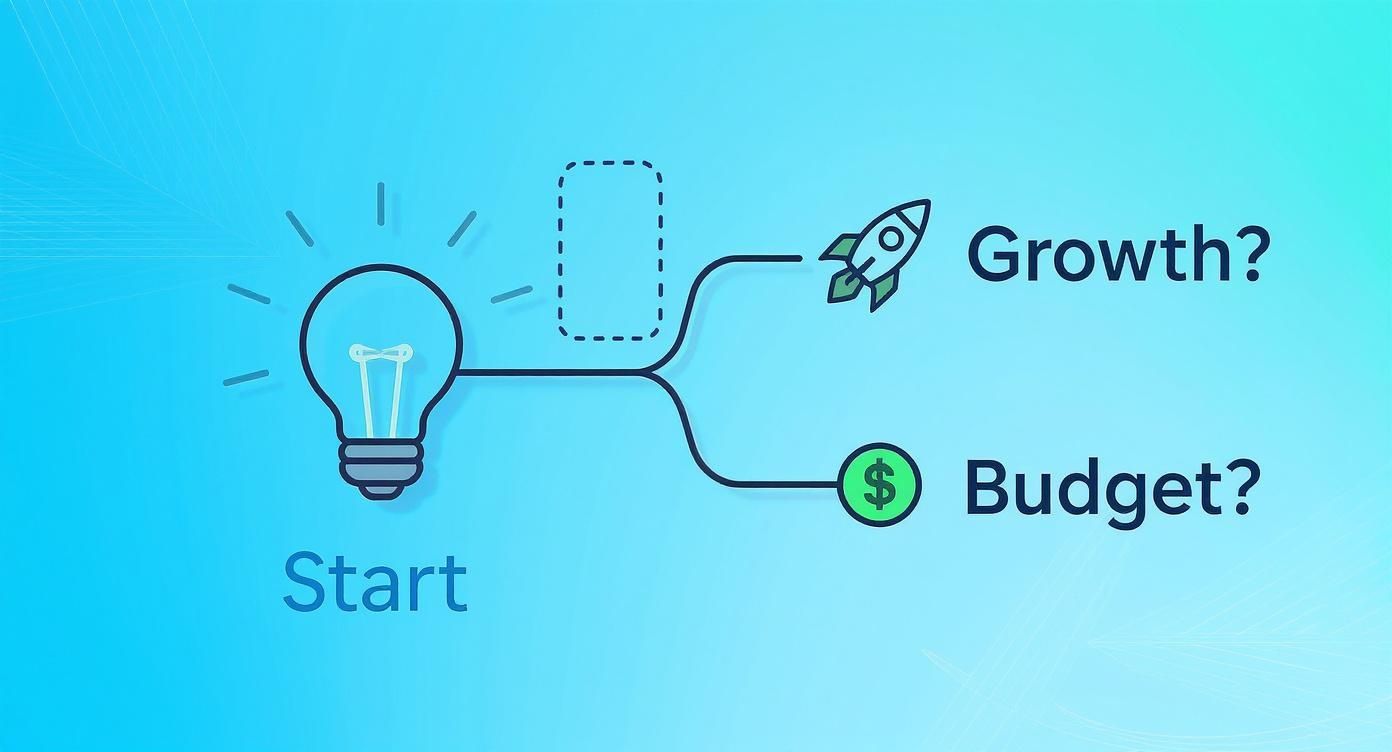
As you can see, whether you prioritize a lean budget or aggressive expansion, there's a clear path forward.
Platform Scorecard For Etsy Migrators
To give you an even clearer at-a-glance comparison, I’ve put together a scorecard. I’ve rated each platform based on the things that matter most when you're making the leap from Etsy to your own website. Think of it as a final cheat sheet for your decision.
For an even deeper dive into the two big hosted players, this Shopify vs. BigCommerce comparison is a great resource.
Ultimately, each platform offers a path to independence from Etsy. The key is picking the one that clears the most obstacles from your specific path to success.
Got Questions About Leaving Etsy? Let's Talk.
Moving off of Etsy feels like a huge step, and it's totally normal to have a million questions swirling around. Let's tackle some of the biggest ones I hear from creators who are right where you are now, so you can feel good about your next move.
Can I Bring My Etsy Reviews With Me?
Yes, you absolutely can! While there's no magic "transfer" button, you don't have to leave that hard-earned social proof behind.
Most of the big platforms, like Shopify and BigCommerce, have apps built specifically for this. They pull your reviews right from your Etsy shop and display them on your new site. It's one of the most important first steps to building trust from the moment a new customer lands on your page. These apps usually have a small fee, but they are worth every penny.
How Much Does It Really Cost To Leave Etsy?
This is a big one, and the answer really depends on which road you take. You could get a WooCommerce site up and running for as little as $15-30 per month by paying for your own hosting and domain. On the other hand, all-in-one platforms like Shopify have plans that start at around $29 per month.
But don't forget to factor in a few other things:
- A professional theme: These can be free, but a premium theme often runs about $200 as a one-time cost. It's a worthy investment for a polished look.
- Essential apps: I'd budget an extra $20-50 per month for the tools that make life easier, like a review importer or apps for more complex product options.
Think of it less as a cost and more as an investment. Etsy’s fees grow right alongside your sales, forever. Your own site has more predictable costs that go toward building a real asset—your asset. This mindset shift is a core part of any serious ecommerce platform comparison.
Will I Lose All My Customers If I Leave?
This is the number one fear I hear, but you have more control than you think. You’re not starting from scratch; you’re inviting your loyal fans to a new home.
Start now by planting the seeds. Put your new website URL everywhere: your Etsy shop banner, your product descriptions, and in a little note you tuck into every package you ship. Do this for a few months before you fully make the switch.
Even more important? Start building an email list today. Offer your Etsy buyers a little discount code for your new site if they sign up. That list is gold—it’s a direct line to your best customers that no platform or algorithm can ever take away from you.
Ready to make the move from Etsy but want an expert to handle the heavy lifting? Wand Websites crafts high-performing Shopify stores designed to turn your creative passion into a scalable brand. We handle the entire process, so you can focus on your products. Learn more and get started at https://www.wandwebsites.com.
