
Ecommerce Email Marketing Strategy That Actually Converts

Why Email Still Rules The Ecommerce World

While social media grabs everyone's attention, email remains essential for any successful ecommerce email marketing strategy. It’s not about spamming promotions; it’s about building real relationships. Your email list is your VIP club. These are people who want to hear from you. They're interested in your brand and your products.
Unlike the fast-paced world of social media, email offers a direct line to your customers. You own that connection – and that’s powerful.
The Power of Direct Communication and Personalization
Brands like Beardbrand and MVMT figured this out early, prioritizing email. Why? Because email allows for personalization that social media just can’t match. Think about it. With email, you’re talking to individuals, tailoring the message to what they like.
This creates a stronger connection and builds trust, leading to better customer relationships and more sales. This isn't just a feeling; it’s true. Think about your own inbox. Do you click on a random ad or an email from a brand you know, offering something you’re actually interested in?
In a world increasingly focused on privacy, email also offers a secure way to communicate, unlike the constantly changing algorithms and data sharing on social media.
Email's ROI: A Game-Changer For Ecommerce
The return on investment (ROI) from email marketing is consistently impressive. It's often considered the best in the industry, with some analyses showing an overall ROI as high as 4,200%. This means businesses can see an average return of $36 for every $1 spent. Discover more insights about email marketing ROI.
Few other channels can compete with that. While social media can be great for brand awareness, email is where the real sales happen. It's the connection between interest and purchase, the engine driving your business forward.
Let's look at how email stacks up against other digital channels:
To illustrate this point, let's look at a comparison of average ROI and performance metrics across different digital channels:
As this table demonstrates, email marketing typically boasts the highest ROI, a respectable conversion rate, and a relatively low customer acquisition cost, making it a highly effective channel for ecommerce businesses.
Why Savvy Entrepreneurs Choose Email
While the newest, shiniest marketing tactics come and go, email keeps delivering. It’s dependable, powerful, and lets you connect with your customers on a personal level, generating a great ROI. That's why smart entrepreneurs aren't giving up on email; they're prioritizing it.
Building a strong email list is like building a strong foundation for your business. It supports stable growth and long-term success. It's the bedrock of your ecommerce email marketing strategy.
Customer Segmentation That Feels Like Mind Reading
Let's be honest, sending out generic email blasts is like throwing darts in the dark. You might hit something, but it's mostly a waste of effort. Think about it: your email list is full of unique individuals, each with their own reasons for signing up. The brands that truly excel with email marketing treat their subscribers like people, not just addresses. They're segmenting their audience and crafting messages that truly resonate. This personalized approach is what makes their ecommerce email marketing strategy so successful.
Forget basic demographics. Truly effective segmentation dives deep into behavioral data: what customers browse, their purchase history, how much they spend, and even when they might be thinking of leaving. This is the key to making customers feel like you're reading their minds (in a good way, of course).
Segmentation Strategies Beyond the Basics
I remember working with a skincare brand that saw a 340% increase in email revenue just by segmenting their list based on skin concerns (dry skin, acne, anti-aging) and purchase timing. They stopped sending generic product blasts and started offering targeted solutions at precisely the right moment. For example, a customer who bought acne treatment received emails about complementary cleansers and moisturizers a few weeks later, right when they were likely running low.
That’s the beauty of behavioral segmentation. You anticipate customer needs and provide relevant solutions before they even realize they want them. Imagine a jewelry store segmenting their list based on past purchases. Someone who bought an engagement ring might receive emails about wedding bands or anniversary gifts—creating a personalized experience that feels intuitive and helpful.
Data Collection Without the Creep Factor
Now, you might be thinking, "How do I get all this data without being intrusive?" You don't have to be creepy to be effective. Start with basic information at signup (like birthday or product preferences). Then, layer in website activity: what categories they browse, products they view, and how often they visit.
This screenshot from Mailchimp demonstrates how you can segment based on various factors, including purchase history, campaign engagement, and even predicted demographics. Platforms like this automatically group customers based on their behavior, creating dynamic segments that get smarter over time.
Building Self-Updating Segments
One of the best things about today's email marketing platforms is the automation. You can create dynamic segments that update in real time based on customer behavior. This means your segments are always current, and your messages are always relevant. For example, someone browsing your sale section repeatedly gets added to a "price-sensitive" segment, allowing you to tailor your promotions accordingly. And with email users expected to reach 4.6 billion by 2025, the potential reach is enormous. Learn more about this growth here.
Predictive Behavioral Triggers
Finally, learn to recognize behavioral triggers that indicate buying intent. Someone adding an item to their cart but not purchasing? Prime candidate for an abandoned cart email. Someone repeatedly viewing a specific product? They're likely interested and might respond well to a personalized email with customer reviews or a small discount. By understanding these subtle cues, you can nudge customers towards a purchase without being pushy. These techniques transform your email marketing from a generic broadcast into a targeted, personalized conversation. This builds stronger connections with your audience and drives significant results for your business.
Email Automation That Doesn't Feel Robotic
The infographic below shows how personalized emails work in ecommerce. Imagine a designer carefully arranging different email previews on a desk. That’s the level of thought you want to put into your email content. Creating these individual experiences is key for ecommerce success.
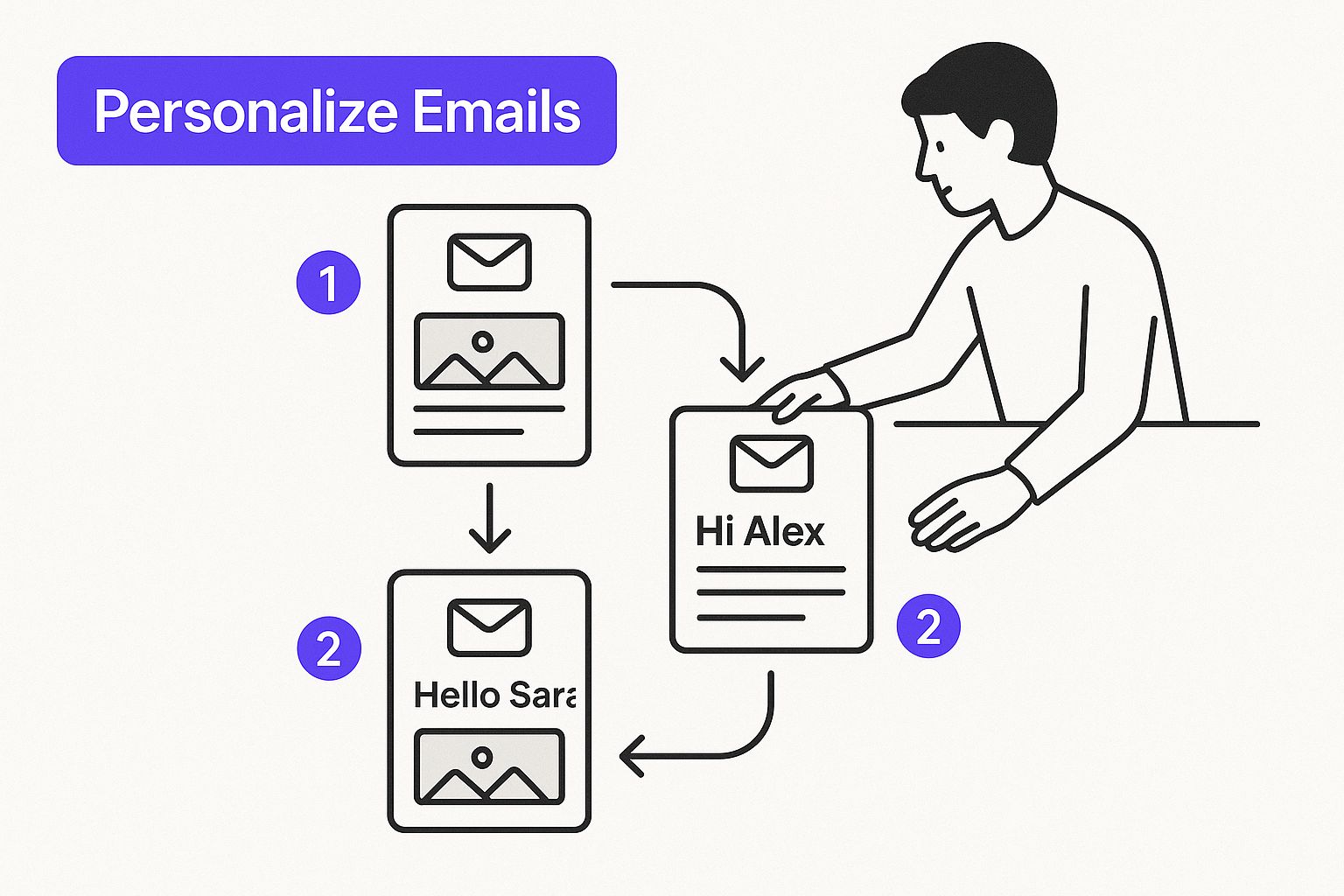
Those varied email previews represent all your different customer segments. Each segment needs its own tailored message. Generic, one-size-fits-all emails just won’t get you the results you’re after.
Essential Automated Flows for Ecommerce
Think of email automation as your always-on sales assistant, subtly guiding customers along. It’s not about spamming them with promotions; it's about showing up at the right time with valuable info. Here are the foundational automated flows for a solid ecommerce email marketing strategy:
The Welcome Series: Someone joins your email list? Awesome! They’re clearly interested. Build on that initial enthusiasm with a welcome series that shares your brand story, spotlights your best-selling products, and maybe even throws in an exclusive discount. Don't just say “Welcome”—show them what makes your brand special.
Abandoned Cart Reminders: We've all been there. You add something to your cart, and then life happens. A well-crafted abandoned cart email can bring those almost-lost sales back to life. Address any potential concerns head-on. Think free shipping, glowing customer reviews, or a limited-time discount to add a little urgency.
Post-Purchase Engagement: The magic of ecommerce? Turning one-time buyers into loyal fans. Post-purchase emails are your chance to build on that initial sale. Suggest related products, offer helpful tips related to their purchase, and ask for feedback to show you care.
Browse Abandonment Flows: Ever notice someone browsing specific products but not adding them to their cart? They're intrigued, but something’s holding them back. A browse abandonment email can gently nudge them forward by showcasing similar items, offering personalized recommendations, or providing additional product details.
This screenshot from Klaviyo shows how easy it is to visually build these automated flows. You can trigger emails based on specific customer actions, creating a truly tailored ecommerce email marketing strategy. By mapping out a sequence of events and matching them with emails, you're creating personalized journeys for each customer.
Let's talk numbers. The table below outlines some average benchmarks and setup complexity for these core automated flows. Keep in mind, these are averages. Your results may vary depending on your industry, audience, and overall strategy.
Essential Ecommerce Email Automation Flows
As you can see, abandoned cart emails usually have the biggest impact on revenue. Welcome series tend to have the highest open rates, which makes sense. People are most engaged right after they sign up.
Advanced Automation: Taking It to the Next Level
Once you’ve nailed the basics, it’s time to get creative with some advanced automation techniques that really personalize the experience:
Dynamic Product Recommendations: Skip the generic product suggestions. Tap into data from past purchases and browsing history to recommend items your customers really want. It's all about relevance and boosting those conversions.
Weather-Triggered Campaigns: Picture this: A clothing store sends out promotions for rain jackets right as it starts pouring in a customer's city. That's the power of weather-based campaigns. They take advantage of real-time context to create hyper-relevant offers.
Replenishment Reminders: For those regularly purchased items—think pet food, vitamins, or coffee—automated replenishment emails can make repeat purchases a breeze. By anticipating customer needs, you offer a valuable service and boost customer lifetime value.
From welcome emails to win-back campaigns, the goal is to make each interaction feel personal and helpful, just like advice from a trusted friend. I once worked with a home goods store that automated 60% of their customer communications using these methods. They saw a huge jump in customer satisfaction. They proved that automation, when done right, doesn't have to feel robotic. It can actually improve that genuine connection.
Campaign Planning That Drives Predictable Sales
Sending out random promotional emails is a surefire way to annoy your customers and damage your sender reputation. Instead, think of your email marketing like a well-composed symphony. Each email plays a specific part in creating a harmonious customer journey that ultimately leads to predictable sales.
Creating an Email Rhythm That Converts
Effective email marketing isn't about constantly bombarding your customers; it's about finding a predictable rhythm that keeps them engaged without being overwhelming. Think of it like your favorite radio station – you tune in because you know what to expect and appreciate the consistent mix of content.
Map out your key promotional periods like sales, new product launches, and seasonal events. Then, build your email calendar around these moments. Don't forget to balance those promotional emails with valuable content that builds trust and reinforces your brand. This could be a weekly newsletter with tips relevant to your industry, or a monthly behind-the-scenes look at your company. The key is to offer something beyond just a sales pitch.
For example, I worked with a clothing boutique that sent weekly style guides featuring new arrivals. They interspersed these with monthly emails highlighting customer stories and showcasing their design process. This rhythm kept their audience engaged and reinforced the brand’s unique personality.
Coordinating Email With Your Broader Marketing Strategy
Your email campaigns shouldn't exist in isolation. They need to work together with your other marketing efforts to create a unified and impactful message. Think of it like the different sections of an orchestra, each contributing to the overall melody.
Imagine launching a new product line. Your social media posts build excitement and anticipation, your website showcases the products in stunning detail, and your email campaign drives pre-orders with an exclusive early bird discount. This coordinated approach creates a powerful, multi-channel experience that grabs attention and turns interest into sales.
Mastering the Art of Compelling Email Content
The psychology behind email marketing is pretty straightforward: grab attention, build desire, and inspire action. Your subject lines are your first impression – and often your only chance – to stand out in a crowded inbox. Keep them short, intriguing, and personalized whenever possible.
Think about the difference between a generic "New Arrivals" subject line and something like "Just In: The Cozy Sweaters You've Been Waiting For." The latter speaks directly to what the customer wants and creates a sense of urgency. Inside the email, focus on benefits, not just features. How will your product actually improve the customer's life? Show, don't just tell.
Use high-quality images and videos that showcase your brand and products. Remember, more than half of all emails are opened on mobile devices, so optimization is essential. Make sure your emails look great and function perfectly on any screen size. This means using large, tappable buttons, clear calls to action, and a responsive design.
Finally, the key to writing great promotional copy is to sound helpful, not pushy. Focus on addressing customer needs and offering solutions, rather than just trying to make a sale. A home goods store could send an email about creating a cozy winter living room, featuring their latest throws, candles, and decor. This feels helpful and natural, rather than a blatant sales pitch. This subtle approach builds trust and encourages customers to browse your products without feeling pressured. That's the hallmark of a truly successful ecommerce email marketing strategy.
Tracking The Metrics That Actually Grow Your Business
Open rates and click-through rates are fun to watch climb, sure. But let's be honest, those numbers don't keep the lights on. A truly effective ecommerce email marketing strategy focuses on metrics directly tied to revenue and customer lifetime value. Think of it like fishing: you don't measure a successful trip by how many times you cast your line, but by how many fish you bring home.
Beyond Vanity Metrics: KPIs That Predict Success
So, what should you be obsessing over? Email attribution revenue is a major one. This tells you exactly how much money your email campaigns are bringing in – a direct line to your email ROI. Customer lifetime value (CLTV) by segment is another critical metric. Understanding which customer groups are your biggest spenders long-term lets you tailor your strategy accordingly. And finally, consider predictive engagement scoring. This can help you spot customers who are about to go inactive, so you can re-engage them before they churn.
Setting Up Proper Tracking: Measuring Real Impact
To see your email's true impact on sales, basic tracking won't cut it. You need to link your email platform with your ecommerce store's analytics. This closes the loop, letting you follow the customer journey from email click to purchase. For example, integrating Klaviyo with Shopify shows you the revenue generated by each email campaign, not just clicks. This detail showcases the real value of your email efforts.
Cohort Analysis: Understanding Long-Term Value
Cohort analysis is a powerful tool – like having a time machine for your customer data. Group customers based on when they signed up or made their first purchase, then track their behavior over time. This is invaluable for understanding which email strategies build loyalty versus one-time buys. Maybe you'll find that customers who engage with your welcome series have a much higher CLTV. That insight helps optimize your onboarding and maximize long-term value.
Early Warning Signs: Protecting Your List Health
Like a doctor monitoring vital signs, you need to keep an eye on your email list health. Dropping open rates, rising unsubscribes, and low click-throughs are warning signs. Catching these early lets you fix them before they hurt your bottom line. For example, a spike in unsubscribes might mean you're sending too many emails, or your content isn't hitting the mark.
Building Dashboards That Tell the Real Story
Effective reporting is about storytelling, not just numbers. Create dashboards that visualize email performance in clear, actionable ways. Concentrate on metrics tied to business goals: revenue, CLTV, and customer retention. Think about your audience. What data do they need to see to grasp the value of your email marketing? By presenting your ROI clearly and concisely, you'll gain stakeholder buy-in and prove your impact.
Let's talk about how to present that data effectively. A good KPI dashboard takes your email marketing from "nice to have" to "essential for growth." It shows how email contributes to the overall business strategy, moving the conversation beyond opens and clicks to revenue and long-term growth.
To help you track the right metrics, I've put together this table:
Email Marketing KPIs by Business Goal
Essential metrics to track based on different ecommerce business objectives and growth stages
This table provides a starting point. You'll want to adjust these KPIs based on your specific business goals and stage of growth. Remember, focusing on the right metrics will transform your email program into a revenue-generating machine.
Choosing Email Tools That Actually Work For Your Business
Let's be real, the "best" email platform doesn't exist. What's perfect for a huge company might be way too much (and way too expensive) for a smaller ecommerce business. Forget chasing the latest bells and whistles. Instead, find tools that fit your actual needs and your overall ecommerce email marketing strategy.
Evaluating Email Marketing Tools Based on Your Needs
Consider where your business is right now. Are you a startup still building your list? Or are you pulling in millions and scaling fast? These stages have dramatically different needs. A startup might prioritize a low price and ease of use, while a larger company might need powerful segmentation and automation.
I've personally seen businesses blow thousands on platforms loaded with features they never touch. So, before you get wowed by a fancy sales pitch, ask yourself these important questions:
- List Size and Growth Projections: What's your current list size? And how quickly do you think it'll grow? Some platforms charge based on subscriber count, so think about the future cost.
- Integration Needs: Will the platform play nice with your ecommerce platform (like Shopify)? A smooth data flow between your systems is key for personalized automation.
- Automation Capabilities: Which automated sequences are essential for your business? Abandoned cart reminders? Post-purchase follow-ups? Ensure the platform can handle what you absolutely need.
- Segmentation and Personalization: How specific do you need your segments to be? Some platforms offer basic options, while others allow for really targeted, behavior-based segments.
- Reporting and Analytics: What metrics matter most to your business? Make sure the platform gives you the data you need to track your progress and show the value you're getting.
Comparing Popular Platforms and Hidden Costs
Now, let's chat about some popular platforms. Klaviyo is a beast for ecommerce, known for its powerful segmentation and automation. Mailchimp is user-friendly for beginners, but its ecommerce features can become limiting as you grow. ConvertKit shines for creator-focused marketing, but it might not be ideal for product-heavy businesses.
This Klaviyo screenshot shows their automation setup. You can visually create sequences triggered by customer actions. It's all about using data to personalize each step of the customer journey.
Keep in mind, switching platforms is a headache. There are hidden costs like moving your list, rebuilding your automations, and getting used to a new system. Don't switch unless the benefits truly outweigh the hassle.
Lesser-Known Tools and Negotiating Better Rates
Beyond the big names, there are some excellent lesser-known email tools that offer great value. Look into options like Omnisend and Drip, both specializing in ecommerce. They often provide advanced features at more competitive prices.
And don't be afraid to negotiate! Many providers offer discounts for annual contracts or if you have a larger list. Before upgrading to a pricier plan, squeeze the most out of what you're already paying for. A bit of creativity can sometimes unlock hidden potential in your current platform. Choosing the right email tool is crucial for your ecommerce email marketing strategy. It's an investment in your growth, so take your time, do your research, and choose the platform that sets your business up for success.
Your 90-Day Email Marketing Implementation Plan
Alright, let's get down to brass tacks. You’ve got your strategy, now it’s time to make it rain sales. This 90-day plan gives you a realistic roadmap to get your email marketing off the ground without pulling your hair out. We'll tackle the usual suspects: list building, making sure your emails actually land in inboxes, and crafting content that people want to read, even when you're juggling a million things.
Month 1: Laying the Groundwork
The first 30 days are all about setting up shop. Think of it like prepping for a killer party. Focus on the essentials and some quick wins to get the ball rolling:
- Integrate Your Email Platform: Hook up your email platform (like Klaviyo) with your ecommerce store (like Shopify). This is mission-critical, the foundation upon which everything else is built. Seriously, it’s like plumbing – gotta connect the pipes before anything flows.
- Craft a Warm Welcome: Put together a 3-4 email welcome series for new subscribers. Offer a little something special (a discount, maybe?), share your brand's story, and show off your bestsellers. Remember, first impressions are everything.
- Create a Lead Magnet: Offer something irresistible in exchange for email signups. A free guide, a discount code, something valuable. Think about what your ideal customer really wants. What problem are you solving for them?
- Strategic Signup Placement: Don't hide those signup forms! Use pop-ups (tastefully, of course) and embed them directly on your website. High-traffic pages like your homepage and product pages are goldmines.
Goal: Grow that email list by 10-15% and aim for a 50-60% open rate on your welcome series.
Month 2: Automation and Optimization
Month two is all about working smarter, not harder. We're talking automation and using data to improve everything:
- Abandoned Cart Rescue Mission: Set up an abandoned cart flow. A gentle reminder email and a small discount can work wonders. Think of it as a little nudge to bring those almost-lost sales back home.
- Post-Purchase Love: Create a post-purchase series. Thank your customers, suggest products they might like, and ask for feedback. This builds loyalty and gets people coming back for more.
- Segmentation Smarts: Divide your audience based on what they've bought or what they've looked at on your site. Treat your customers like individuals, not just a faceless crowd.
- Data Deep Dive: Keep an eye on your open rates, click-through rates, and conversion rates. Figure out what’s working and what needs a little TLC. Data is your secret weapon.
Goal: Shoot for a 5-10% conversion rate on abandoned cart emails and boost your average order value by 5% with those post-purchase upsells.
Month 3: Scaling and Refining
Now that you've got things humming, month three is about scaling what's working and fine-tuning your overall approach:
- Targeted Campaigns: Send promotional emails to specific segments based on their interests and what they’ve bought in the past. The more relevant your emails, the better they'll perform.
- Content Variety: Mix it up! Experiment with different email formats. Showcase your products, share customer stories, or create helpful how-to guides. See what your audience responds to best.
- Cadence Check-In: Adjust how often you send emails based on your engagement data. Find that sweet spot – keeping customers interested without bombarding their inbox.
- Testing, Testing, 1, 2, 3: A/B test everything! Subject lines, email content, send times. Small tweaks can lead to big gains over time.
Goal: Increase your overall email revenue by 15-20% and hit a 2-3% conversion rate on your targeted campaigns.
This 90-day plan sets you up for the long haul. Remember, email marketing is a marathon, not a sprint. Results take time, so be patient, stay consistent, and keep experimenting!
Ready to take your ecommerce store to the next level and break free from the limitations of Etsy? Wand Websites specializes in building high-converting Shopify stores designed for growth. We’ll handle the technical stuff so you can focus on what you do best – creating amazing products. Let's turn your side hustle into something bigger.
