
7 Customer Persona Examples for Etsy Sellers (2025 Guide)

You’ve mastered the Etsy marketplace, turning your creative passion into a thriving business. Now, you’re ready for the next level: building a powerful, independent brand on Shopify. This transition offers incredible freedom but also a significant challenge. You're no longer relying on Etsy's built-in traffic; you need to attract, engage, and convert your own audience. The key to unlocking this growth is getting laser-focused on who you're selling to.
This is where creating sharp, insightful customer personas becomes your most valuable tool. Forget generic templates or abstract theories. This guide provides seven detailed customer persona examples specifically tailored for e-commerce, showing you how to translate your Etsy success into a Shopify powerhouse. We'll dive deep into each profile, breaking down their motivations, pain points, and goals.
You'll get actionable strategies for using these personas to guide everything from your ad targeting and email marketing to your product photography and website copy. We're here to give you the exact framework needed to understand your ideal buyers on a profound level, turning your hard-earned customer knowledge into a scalable, profitable Shopify store. Let's start building.
1. B2B Technology Decision Maker
Kicking off our list of crucial customer persona examples is the B2B Technology Decision Maker. While you might be focused on individual shoppers, many Etsy sellers find huge success with corporate or B2B clients, especially for items like custom gifts, branded merchandise, or office decor. This persona represents the professional, like an IT Director or a Head of Marketing, who makes purchasing decisions for their company.
These individuals aren't spending their own money. They operate within a budget and must justify every purchase based on its value to the business. Their key concerns are Return on Investment (ROI), security, scalability, and how well a product or service integrates with their existing operations. They have deep industry experience but are ultimately focused on strategic business outcomes, not just the features of a product.
Strategic Analysis: Why This Persona Matters
Think of a company like Salesforce targeting a Chief Information Officer (CIO) or HubSpot focusing on Marketing Directors. They don’t lead with flashy, emotional ads; they lead with logic, data, and proof. They understand their buyer needs to build a business case to get a purchase approved. This is a powerful lesson for e-commerce stores looking to land larger, recurring corporate accounts.
Key Insight: To win over a B2B Decision Maker, you must shift your messaging from "what it is" to "what it does for their business." Frame your handmade products as solutions, for example, "unique corporate gifts that boost employee morale and client retention."
Actionable Takeaways for Your Store
Here’s how to adapt this strategy for your e-commerce business:
- Create "Business Case" Product Descriptions: Instead of just describing the materials of your custom-branded notebooks, explain how they make a memorable impression at a trade show, leading to better lead quality.
- Offer Tiered/Bulk Pricing: Develop clear pricing tiers for bulk orders that show the per-unit savings. This directly addresses their ROI-focused mindset.
- Leverage Social Proof: Feature testimonials from other business clients. A quote from a local small business owner on your product page is incredibly powerful for another business owner considering a purchase.
To help you visualize this persona's key attributes, here's a quick reference summary.
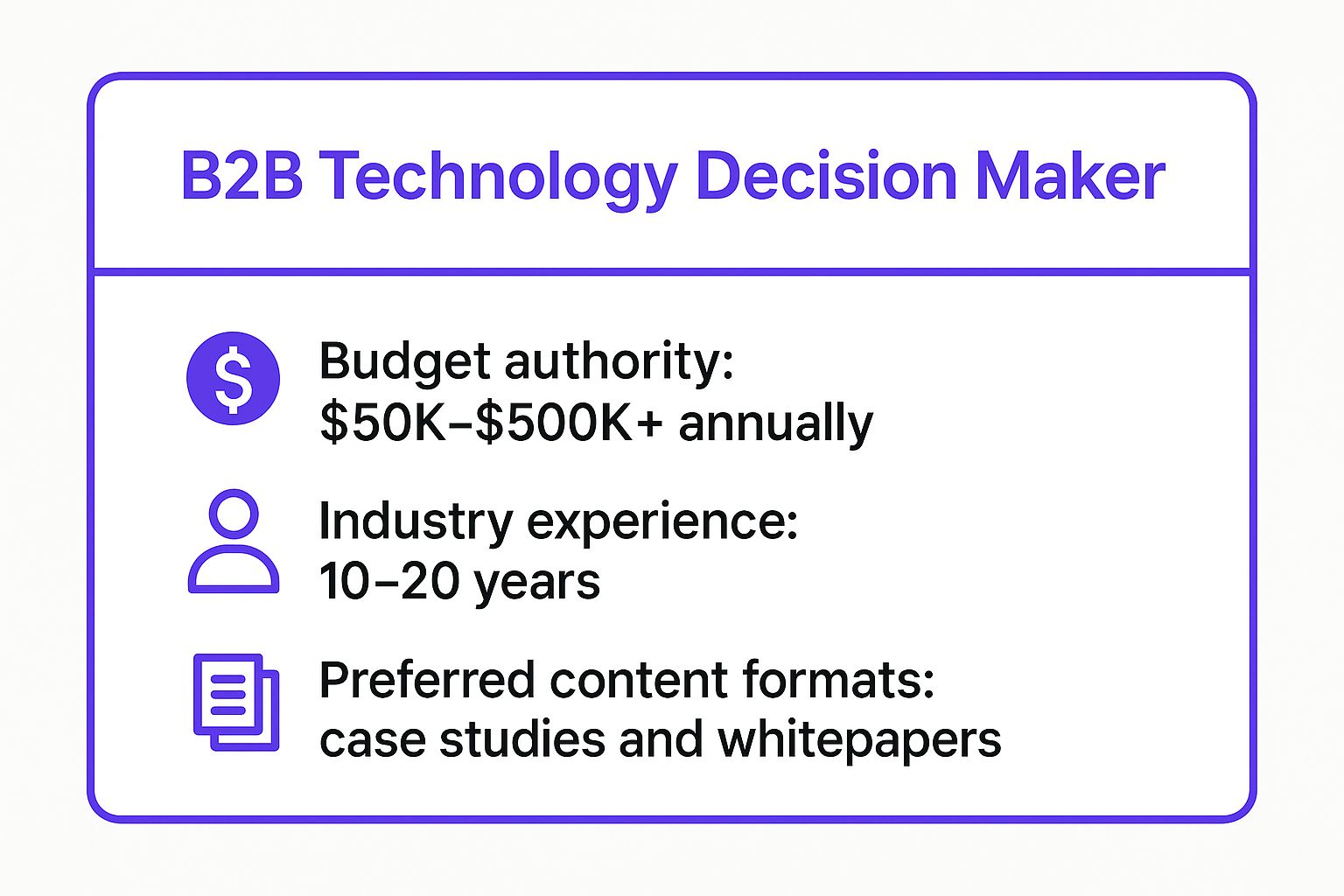
The data highlights that these decision-makers control significant budgets and trust in-depth content like case studies, signaling a need for more than just a pretty product photo.
2. Millennial Parents (25-40)
Next up in our list of essential customer persona examples is the Millennial Parent. This demographic represents a powerful and highly influential consumer group for e-commerce stores. These parents, aged roughly 25 to 40, are digital natives who seamlessly blend their busy family lives with constant online connectivity. They are not just buying products; they are seeking solutions that offer convenience, align with their values like sustainability, and provide genuine value for their families.
Unlike previous generations, Millennial Parents conduct extensive online research before making a purchase. They rely heavily on social media, peer reviews, and influencer recommendations to inform their decisions. They balance demanding careers with child-rearing, making their time a precious commodity. This means they gravitate toward brands that make their lives easier, whether through fast shipping, easy returns, or subscription models.
Strategic Analysis: Why This Persona Matters
Think about how major brands like Target and The Honest Company have built empires by catering to this exact persona. Target’s app, Drive Up service, and curated kids' collections are all designed to save time for busy parents. The Honest Company built its brand on transparency and eco-friendly values, directly appealing to the health-conscious Millennial Parent who wants the best for their children and the planet. This focus on values and convenience is a playbook for any e-commerce store.
Key Insight: To connect with Millennial Parents, your brand story must be as compelling as your product. They buy into brands that reflect their identity, so your messaging should emphasize shared values, authenticity, and how your products simplify their complex lives.
Actionable Takeaways for Your Store
Here’s how you can effectively target this lucrative customer persona:
- Highlight Convenience and Time-Saving Benefits: Frame your product descriptions around solving problems. Instead of saying "handmade wooden toy," say "a durable, non-toxic wooden toy that encourages independent play, giving you a much-needed moment of peace."
- Leverage User-Generated Content (UGC): Actively encourage and feature photos from your customers on your social media and product pages. A real mom showing how your personalized backpack is perfect for daycare is more powerful than any professional product shot.
- Offer Subscription and "Bundle & Save" Options: If you sell consumables like organic baby clothes, kids' art supplies, or bath products, create a subscription service. This appeals directly to their need for convenience and helps you secure recurring revenue.
3. Small Business Owner/Entrepreneur
Next in our lineup of essential customer persona examples is the Small Business Owner. This persona represents the scrappy, resourceful entrepreneur who manages a small team, often wearing multiple hats from CEO to janitor. They are the lifeblood of the economy and a powerful customer base for any e-commerce store offering practical, value-driven products.
These individuals are extremely time-pressed and operate on tight budgets. Unlike the corporate decision-maker, they are often spending their own hard-earned money. Their primary concerns are efficiency, affordability, and simplicity. They need solutions that solve immediate problems without a steep learning curve or a hefty price tag. They're looking for tools and products that help them compete against bigger players and grow their business sustainably.
Strategic Analysis: Why This Persona Matters
Think about how companies like Mailchimp or Square built their empires. They didn't initially target large enterprises; they focused on the small cafe owner, the local boutique, and the budding online retailer. They won by making powerful tools accessible and easy to use. This same principle applies to e-commerce sellers. If your products can save a small business owner time or money, you have a winning proposition.
Key Insight: To connect with a Small Business Owner, your messaging must emphasize immediate value and ease of use. Frame your products as simple, affordable solutions that directly address their pain points of being overworked and under-resourced.
Actionable Takeaways for Your Store
Here’s how you can tailor your e-commerce strategy to attract this valuable persona:
- Highlight Time and Cost Savings: Your product descriptions should lead with benefits like "Set up your pop-up shop in minutes" or "Save hours on packaging with our efficient mailers." Be direct about how your product helps their bottom line.
- Offer Flexible, Entry-Level Options: Provide clear, affordable pricing tiers or starter packs. A small business owner is more likely to try a product with a low-risk entry point before committing to a larger purchase.
- Create Self-Service Resources: Develop simple video tutorials, PDF guides, or blog posts showing your product in action. Since they are often too busy for a sales call, providing easy-to-digest information empowers them to make a quick purchasing decision.
4. Gen Z Digital Native (18-26)
Next on our list of essential customer persona examples is the Gen Z Digital Native. This persona represents the first generation to have grown up entirely online. They’ve never known a world without instant access to information, social media, and e-commerce, which profoundly shapes their expectations as consumers.

These buyers are highly visual, value authenticity and social transparency, and expect nothing less than a seamless digital experience. They discover brands through TikTok and Instagram, trust peer reviews and micro-influencers over celebrity endorsements, and actively support companies whose values align with their own, particularly regarding social and environmental issues.
Strategic Analysis: Why This Persona Matters
Brands like Glossier and Patagonia have captured the Gen Z market not just with great products, but by building communities and taking genuine stands. Glossier built its empire on user-generated content and a feeling of belonging, while Patagonia’s environmental activism resonates deeply with this values-driven generation. They don’t just buy a product; they buy into a movement or an identity. For an Etsy seller moving to Shopify, this means your brand story and values are as important as your craft.
Key Insight: To connect with the Gen Z Digital Native, your brand must be more than a store. It needs to be a platform for expression, community, and shared values. Authenticity isn't a buzzword; it's a requirement.
Actionable Takeaways for Your Store
Here’s how to tailor your e-commerce strategy to this influential demographic:
- Prioritize Visual, Short-Form Video: Focus your content creation on TikTok and Instagram Reels. Showcase your creative process, pack orders, or start a trend related to your niche. It’s less about polished ads and more about raw, engaging content.
- Show, Don’t Just Tell, Your Values: If you use sustainable materials, create content explaining why you chose them and what the impact is. A portion of profits going to a cause? Be transparent and show the results.
- Leverage User-Generated Content (UGC): Encourage customers to share photos with your products using a specific hashtag. Feature their content prominently on your product pages and social feeds to build trust and community.
5. Healthcare Professional
Next on our list of powerful customer persona examples is the Healthcare Professional. While you might associate this persona strictly with medical device companies, an e-commerce store can effectively target doctors, nurses, and medical administrators for items like personalized office decor, comfortable work apparel, or unique wellness-related gifts. This persona represents a highly educated, time-poor professional who makes decisions based on evidence and efficacy.
These individuals are driven by a deep commitment to patient care and clinical outcomes. They operate in a high-stakes, heavily regulated environment, so their purchases must be practical, reliable, and often, compliant with specific standards. Their time is their most valuable asset, meaning they value efficiency above all else. They are skeptical of marketing fluff and respond to data, peer validation, and professional credibility.
Strategic Analysis: Why This Persona Matters
Think of how major medical brands like Medtronic or Johnson & Johnson market to surgeons. Their campaigns are built on clinical trial data, peer-reviewed studies, and endorsements from respected medical leaders. They don’t sell a scalpel; they sell a proven instrument that improves surgical precision and patient recovery times. This logic-first approach is key for any e-commerce brand looking to earn the trust of this discerning audience.
Key Insight: To connect with a Healthcare Professional, you must frame your products in the context of their demanding work lives. Your messaging should highlight how your product improves efficiency, reduces stress, or provides a moment of well-deserved comfort during a long shift.
Actionable Takeaways for Your Store
Here’s how to adapt this strategy for your e-commerce business:
- Build Credibility with Evidence: If you sell ergonomic seating, cite studies on posture and back pain for those who spend hours on their feet. For a wellness product, highlight ingredients with known benefits supported by research.
- Create Time-Saving Content: Healthcare professionals have no time for long, rambling product pages. Use concise bullet points, clear technical specifications, and easy-to-digest graphics to convey information quickly and effectively.
- Leverage Peer Testimonials: A review from a registered nurse about how your compression socks helped them through a 12-hour shift is more powerful than any marketing copy you could write. Actively seek out and feature reviews from customers in the medical field.
6. Senior/Boomer Consumer (55+)
A common mistake among e-commerce brands is overlooking the immense buying power of the Senior or Boomer Consumer. This persona represents adults aged 55 and older who often have significant disposable income and are more digitally savvy than stereotypes suggest. They are not chasing fleeting trends; instead, they prioritize quality, longevity, and exceptional customer service.
These shoppers grew up in an era where trust was paramount. They value clear, honest communication and are fiercely loyal to brands that treat them with respect. Their key concerns revolve around security, trustworthiness, and receiving tangible value for their money. While they may take more time to make a purchase decision, they are less price-sensitive than younger demographics when they believe a product is worth it.
Strategic Analysis: Why This Persona Matters
Think about how companies like Carnival Cruise Line or Charles Schwab market to this demographic. They don’t use confusing slang or fast-paced, flashy ads. Their marketing is clear, benefit-driven, and reassuring. It focuses on creating experiences, ensuring security, and promising reliability. For an e-commerce store, this means building a foundation of trust is your most important marketing activity.
Key Insight: To connect with the Senior/Boomer Consumer, your messaging must shift from "new and trendy" to "trusted and true." Frame your products as reliable, high-quality investments that will enhance their life, backed by a guarantee and accessible customer support.
Actionable Takeaways for Your Store
Here’s how to adapt this strategy for your e-commerce business:
- Offer Robust Customer Support: Make your phone number and email address highly visible. This persona values the ability to speak to a real person. Offering support through these traditional channels builds immense trust.
- Write Crystal-Clear Product Descriptions: Avoid jargon, acronyms, and overly clever marketing speak. Use a larger font size and provide detailed specifications, including dimensions, materials, and care instructions. Emphasize guarantees and your return policy.
- Highlight Trust Signals Prominently: Feature security badges (like SSL certificates), customer testimonials with photos, and money-back guarantees on your product and checkout pages. Reassuring them that their data is safe is crucial to overcoming purchase hesitation.
7. Fitness Enthusiast/Wellness Seeker
Next in our lineup of powerful customer persona examples is the Fitness Enthusiast. This individual is dedicated to maintaining a healthy lifestyle, viewing wellness not just as a hobby but as a core part of their identity. They actively seek products that enhance their physical performance, support their nutritional goals, and contribute to their overall well-being.
This persona is highly informed and motivated. They invest in quality gear, track their progress meticulously, and are deeply embedded in communities that share their passion. Their purchase decisions are driven by performance, authenticity, and community validation. They are less concerned with the lowest price and more focused on how a product will help them achieve a specific fitness goal, whether that's running a faster marathon or perfecting a yoga pose.
Strategic Analysis: Why This Persona Matters
Consider how brands like Peloton and Nike have built empires around this persona. They don't just sell equipment or apparel; they sell access to a community, a lifestyle, and a system for self-improvement. Nike's Run Club app fosters a global community of runners, while Peloton's live classes create a powerful sense of shared experience. They understand that for this persona, fitness is a journey best shared with others.
Key Insight: To connect with the Fitness Enthusiast, your brand must become part of their journey. Your product isn't just an item; it’s a tool for transformation, and your brand is the supportive community that cheers them on.
Actionable Takeaways for Your Store
Here’s how you can target this valuable persona for your e-commerce business:
- Build a Community Hub: Create a private Facebook group or an exclusive section on your Shopify store for customers to share their progress, ask questions, and participate in challenges. This fosters loyalty far beyond a single transaction.
- Show, Don't Just Tell, Performance: Instead of simply listing the features of your custom yoga mats, create video content showing an instructor using them and explaining how the non-slip grip improves stability in advanced poses.
- Partner with Micro-Influencers: Collaborate with local fitness trainers or wellness advocates who have a genuine, engaged following. An authentic endorsement from a trusted source is more valuable than a generic ad.
To see how one of the biggest names in fitness speaks to this persona, check out this classic ad from Nike.
Notice how the message focuses on the internal drive and personal greatness, a core motivator for the Fitness Enthusiast persona. It's about empowering the individual, a powerful lesson for any brand in this space.
7 Customer Persona Profiles Comparison
Putting Your Personas to Work: From Insight to Income
We’ve journeyed through a diverse gallery of customer persona examples, from the meticulous Gifting Grace to the community-driven Cameron the Creative. Each profile isn't just a character sketch; it's a strategic blueprint designed to help you transition from a successful Etsy seller to a dominant Shopify brand.
Remember, the goal isn't to be everything to everyone. The true power of these personas lies in their ability to force focus. When you deeply understand who you're selling to, every decision, from your website’s navigation to your email subject lines, becomes clearer, easier, and more effective.
From Examples to Actionable Strategy
The difference between a thriving e-commerce store and one that struggles to gain traction often comes down to this single concept: customer-centricity. Simply listing products isn't enough on a platform like Shopify, where you are responsible for generating every single click. You need to build a destination.
- Audit Your Experience: Take your primary persona, whether it's 'Eco-Conscious Sam' or 'Loyal Logan', and walk through your Shopify store as if you were them. Where do you succeed? Where does the experience feel generic or confusing?
- Refine Your Messaging: Review your product descriptions, your 'About Us' page, and your social media captions. Are you speaking their language? Are you addressing their specific pain points and highlighting the solutions your products offer?
- Guide Your Marketing: Use your persona’s preferred channels and motivations to guide your ad spend. A campaign for 'Gifting Grace' will look very different from content designed to attract a 'Gen Z Trendsetter'.
The Ultimate Goal: Building Your Brand's Universe
Creating detailed customer persona examples is the first step toward building an ecosystem around your brand. It’s how you move from one-off sales to fostering a loyal community that returns again and again. These aren't just theoretical exercises; they are the foundational tools for increasing conversion rates, boosting average order value, and building the direct customer relationships that define long-term success.
The insights you've gained from these personas are your competitive advantage. While others guess at what their customers want, you will know. You can now build a shopping experience so perfectly tailored to your ideal customer that they feel like it was made just for them. Because, in a way, it was.
Your journey from Etsy artisan to Shopify powerhouse starts with this focused, empathetic approach. Choose your core persona, commit to understanding their world, and start building the brand you've always envisioned.
Feeling overwhelmed by the technical side of implementing these persona-driven strategies on your Shopify store? Wand Websites specializes in transforming successful Etsy shops into high-converting Shopify sites built with your ideal customer in mind. Let us handle the design and development so you can focus on what you do best: creating. Learn more at Wand Websites.
