
Top Best Shopify Themes for Conversion | Boost Your Sales

Picking the right Shopify theme isn't just about making your store look good—it's one of the most important business decisions you'll make. Themes like Empire, Impulse, and Trademark consistently come out on top because they're built from the ground up to boost conversions, blending speed, slick navigation, and trust-building design right out of the box.
Why Your Shopify Theme Is Your Most Important Salesperson
Think of your Shopify theme as the very foundation of your customer's shopping journey. It’s your digital storefront, shaping their first impression, how easily they can browse, and whether they ultimately click that "buy" button. A clunky, slow, or confusing theme creates friction and will cost you sales, no matter how amazing your products are.
Understanding The Conversion Landscape
To really get why a great theme matters, it helps to look at the numbers. The average Shopify store converts at about 1.4%. But the real potential lies in the top tier—the top 10% of stores see conversion rates over 4.7%. That massive gap is where a conversion-focused theme makes all the difference.
This screenshot from the Shopify Theme Store shows just how many options are out there, from clean, free designs to premium themes packed with features.

The big takeaway here is that every theme is designed for a specific kind of business. The key is finding the one that perfectly matches your industry, brand, and catalog size.
A high-converting theme doesn’t just look good; it functions as a silent guide, effortlessly moving customers from browsing to checkout by removing obstacles and building confidence at every step.
To help you get started, I’ve put together a quick overview of some of the top themes and what they do best. Think of this as your cheat sheet for finding a theme built to drive sales.
Top Conversion-Focused Shopify Themes at a Glance
This table gives you a snapshot of which theme might be right for you, but we'll dive deeper into what makes each one tick in the sections ahead.
What Really Makes a Shopify Theme High-Converting?
Before we jump into a side-by-side comparison, let’s get on the same page about what makes a theme actually work. It's easy to get distracted by a slick design, but a theme that drives sales is built on something much deeper: a solid foundation of speed, clarity, and trust. Looking past the visuals to this core architecture is the first real step in picking a theme that will move the needle for your business.
A truly high-converting theme isn't just a grab-bag of features. It's a thoughtfully crafted user experience, designed to smoothly guide a visitor from the moment they land on your site all the way to checkout. It's about anticipating what a customer needs and getting rid of friction before they even notice it.
Mobile-First Isn't a Buzzword, It's a Requirement
Let's be clear: a "mobile-responsive" theme isn't good enough anymore. Your theme has to be mobile-first. This means it was designed from the ground up for a small screen and then scaled up for desktops, not the other way around. With mobile commerce now making up over 70% of all e-commerce sales, you simply can't afford to treat it as an afterthought.
A genuinely mobile-first theme ensures that the most important things—your navigation, product images, and call-to-action buttons—are obvious and easy to tap on a phone. It prioritizes the experience for the vast majority of your traffic, which directly impacts your ability to turn those visitors into customers.
Page Speed Is Money
This one is simple. A slow website costs you sales. It’s one of the fastest ways to lose a potential customer before they’ve even had a chance to see your products.
We see it in the data time and time again: a mere one-second delay in page load time can slash conversions by up to 7%. For an online store, that’s not just a vanity metric—it’s real money walking out the door.
A theme’s code is a massive factor in your site’s speed. Well-built themes are lightweight and clean, which gives you a head start on performance metrics like Google’s Core Web Vitals. These vitals are all about user experience—loading speed, interactivity, and visual stability—and your theme plays a huge role in all of them.
Make It Easy for People to Find and Buy Things
If shoppers can't find what they're looking for, they can't buy it. It sounds obvious, but you'd be surprised how many themes get this wrong. A high-converting theme makes product discovery feel effortless.
Here’s what that looks like in practice:
- A Clear Mega Menu: If you have a large catalog, a well-organized mega menu is a must. It lets people see your categories and subcategories at a glance without having to click around endlessly.
- Smart Product Filtering: Letting customers sort products by price, size, color, or other key attributes is non-negotiable. It helps them drill down to exactly what they want, fast.
- Predictive Search: A search bar that starts suggesting products as someone types can dramatically shorten the path to purchase.
Just as critical are your calls-to-action (CTAs). Buttons like "Add to Cart" or "Buy Now" need to pop. They should use a contrasting color and have clear, direct text. Their placement needs to be consistent and predictable, so the next step is always obvious.
Building Trust with Design and Social Proof
Finally, a theme has to start building trust the second a visitor arrives. A professional, clean design is the baseline, but it's more than that.
- Showcase Your Products Well: Your theme needs to support big, beautiful, high-resolution images and videos. Let customers zoom in and see every detail.
- Weave in Social Proof: Features that pull in customer reviews and star ratings right onto the product page are incredibly powerful. They offer unbiased validation that you can't create yourself.
- Display Trust Signals: A great theme will have dedicated spots for trust badges (like secure payment icons) and make it easy for shoppers to find important info like your shipping and return policies.
Of course, the theme is just one piece of the puzzle. A truly high-converting store also relies on a solid foundation of marketing principles. To get a better handle on the bigger picture, you should explore these proven strategies to improve conversion rates. When you nail both your theme's architecture and your overall conversion tactics, you build a powerful engine for growth.
Comparing The Top Shopify Themes For Driving Sales
Choosing the right Shopify theme isn't just about picking a nice design; it's like choosing a strategic business partner. The theme's layout, features, and performance are what shape your customer's journey from the moment they land on your site. It’s what turns a casual browser into a loyal fan.
To help you make a smart decision, we’re putting three of the best Shopify themes for conversion under the microscope: Trademark, Empire, and Impulse.
We're going to skip the generic feature lists and jump right into a detailed, scenario-based analysis. This head-to-head comparison will show you how each theme actually performs in the real world, helping you match its strengths to what your business truly needs. Whether you’re managing a massive product catalog or a tightly curated collection, the right theme architecture is out there waiting to boost your sales.
Trademark: The Powerhouse For Visual Storytelling
Trademark is built for brands that sell an experience, not just a product. Its entire design philosophy is built around huge, immersive visuals. This makes it the perfect canvas for premium goods, high-end apparel, or artisanal crafts where the story behind the brand is everything.
Imagine you're selling handcrafted leather bags. With Trademark, your homepage can lead with a full-width video showing the artisan at work, creating an instant emotional connection. This visual-first approach builds perceived value before a visitor even thinks about clicking on a product.
The theme’s conversion magic lies in its ability to weave storytelling directly into the shopping experience. Its features are all designed to support this narrative:
- Full-width image and video sections that create a cinematic, high-end feel.
- Elegant typography options to reinforce a premium brand identity.
- Age verifier functionality, which is a must-have for certain industries.
- Quick buy options seamlessly integrated so they don't disrupt the visual flow.
For brands where the "why" is as important as the "what," Trademark is a clear winner. It turns a standard e-commerce site into a compelling brand narrative, guiding customers through a story that naturally ends with a purchase.
And Trademark isn’t just about looking good. Its clean code ensures that all those high-impact visuals don’t cripple your site's performance. It manages to strike that tricky balance between a rich, media-heavy experience and the fast load times you need to keep conversion rates high.
Empire: The Ultimate Solution For Large Catalogs
Now, let's flip the script. Imagine you’re running a store with thousands of SKUs—think an electronics retailer or an auto parts supplier. For you, the main conversion driver isn't a sweeping brand story; it's helping customers find exactly what they need, fast. This is where Empire completely dominates.
Inspired by the marketplace efficiency of giants like Amazon, Empire is engineered for high-volume stores with massive inventories. Its core strength is its powerful, best-in-class product filtering. Customers can drill down through huge collections using multiple tags, specs, and categories, which helps prevent the frustration that so often leads to abandoned carts on large-catalog sites.
This level of granular control is a total game-changer for conversions. Instead of overwhelming shoppers with too many choices, Empire empowers them to become their own personal shoppers. Themes like Empire, Warehouse, and Impulse are often called 'conversion-ready' because they offer features like fast loading times, responsive mobile design, clear product layouts, and customizable promotional banners that boost user engagement and purchases. The Empire theme, specifically, is tailored for large catalogs with dedicated filtering that helps shoppers find products quickly, directly and positively influencing conversion rates. You can explore a deeper dive into how theme features impact sales and learn more about Shopify conversion rate statistics at popupsmart.com.
Key conversion-focused features in Empire include:
- Advanced product filtering on collection pages, just like the major online retailers.
- Predictive search that suggests products as users start typing.
- Quick buy functionality that lets customers add items to their cart right from collection pages.
- Built-in support for multiple currencies, making it easy to cater to an international audience.
Empire’s design is clean, functional, and unapologetically focused on commerce. It prioritizes clarity and speed over artistic flair, making it one of the absolute best Shopify themes for conversion when you're dealing with inventory at scale.
Impulse: Driving Urgency For Fashion And Lifestyle Brands
Impulse carves out its own unique space by blending the visual appeal of Trademark with features designed to create a sense of urgency. It’s a perfect fit for fashion boutiques, beauty brands, and lifestyle stores that thrive on promotions, new arrivals, and trending collections. The design feels energetic and modern, encouraging shoppers to explore and make quick purchasing decisions.
If you’re launching a new seasonal clothing line, Impulse gives you all the tools to turn it into a major event. You can create stunning collection pages with custom promotions, highlight a flash sale with a countdown timer, and use eye-catching promotional tiles to guide shoppers toward your most profitable items.
This theme is a master at creating excitement and scarcity—two powerful psychological triggers for conversion. Impulse is designed to make shoppers feel like they might miss out if they don't act now.
Impulse isn't just about showing off products; it's about selling them with momentum. Its features are crafted to turn casual browsing into an active, time-sensitive shopping experience, which is incredibly effective for trend-driven markets.
The chart below shows just how much a well-chosen theme can directly impact conversion rates by comparing the performance of three hypothetical Shopify themes.
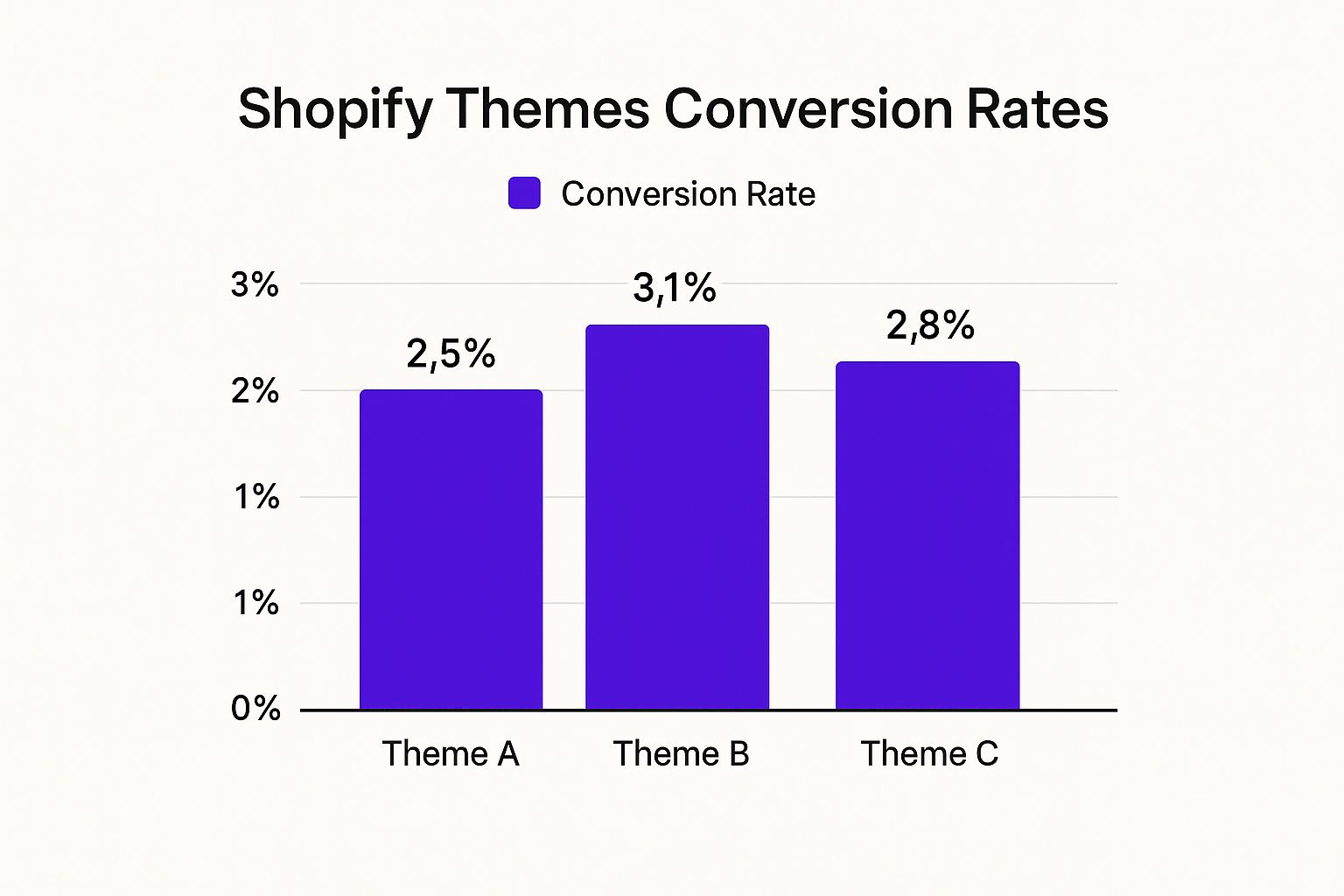
This visual makes it clear that even small differences in a theme's architecture and user experience—like those seen in Theme B—can lead to a significant lift in sales performance.
In-Depth Feature Comparison Of Leading Themes
To make the choice even clearer, let's break down how these three top-tier themes stack up on specific, conversion-critical features. This isn't about finding the "best" theme overall, but rather the best one for your specific business goals.
As you can see, there's a clear divergence in strategy here. If your primary mission is to build an aspirational brand, Trademark is your best ally. If efficiency and scale are your top priorities, Empire is the undisputed champion. And if your business thrives on trends and promotions, Impulse provides the perfect toolkit. Ultimately, choosing the best Shopify theme for conversion means aligning its core strategy with your own.
Don't think for a second that you need to spend big on a premium theme to see big results. Seriously, some of the most successful stores out there got their start—and even scaled—using Shopify's own free themes. A hefty price tag doesn't guarantee a high conversion rate, but a smart, clean design sure helps.
These free themes aren't just "good enough." They are genuinely solid, performance-driven platforms that can absolutely drive sales. They give you a fast, reliable foundation so you can pour your energy into what really moves the needle: your products and your brand. Let's look at two of the best free options available.
Dawn: The Modern Foundation for Growth
Dawn is Shopify's flagship free theme for a reason. As the first "Online Store 2.0" theme, it was built from the ground up with speed, flexibility, and mobile users in mind. It’s a clean, minimalist canvas that lets your brand photography and products shine, which is exactly what a conversion-focused design should do.
Older themes often felt rigid and locked down, but Dawn changes the game with sections and blocks available on every single page. This gives you an incredible amount of control to customize your store’s layout without ever having to write a line of code. You can drag, drop, and rearrange content to build a user experience that naturally guides customers toward checkout.
What makes Dawn so great for conversions?
- Wicked Fast Performance: Dawn is exceptionally lightweight, which means faster load times. That directly translates to a better user experience and fewer people bouncing from your site.
- Built for Visual Storytelling: It’s designed to support big, beautiful images and video. This lets you create an immersive brand experience that builds the trust you need to make a sale.
- Mobile-First, Not Mobile-Friendly: Dawn was designed for the small screen first, ensuring the majority of your visitors—who are likely on their phones—get a smooth, intuitive shopping journey.
The real magic of Dawn is its adaptability. It’s a blank slate that doesn’t force a heavy-handed design style on you, making it a perfect starting point for almost any brand, from high-end fashion to quirky handmade crafts.
Debut: The Classic Choice for Product Focus
Before Dawn came along, Debut was the go-to free theme for hundreds of thousands of merchants. While it's an older theme now, its lasting popularity is a testament to its simple, product-first approach. Debut is all about clarity—it strips away distractions to put your products squarely in the spotlight.
This theme is especially effective if you have a smaller catalog or are built around a single "hero" product. The layout is clean and logical, so even first-time visitors can find their way around effortlessly. The philosophy is simple: show the product, give the essential details, and make that "Add to Cart" button impossible to miss.
Even with a massive theme market, these free options are still powerhouses. While the premium 'Trademark' theme holds the top spot, Shopify's own Dawn and Debut are the second and third most-used themes worldwide. Their adoption by over 370,000 stores combined proves just how powerful their blend of simplicity and conversion-friendly design really is. You can dig into more data and find additional Shopify statistics at uptek.com.
Maximizing Conversions on a Free Theme
Going with a free theme doesn't mean you have to accept a lower conversion rate. The secret is to use Shopify's built-in customization tools to their full potential and then strategically add a few high-quality apps to fill any gaps.
Here are a few practical ways to get more out of a free theme:
- Beef Up Your Product Pages: Use the theme editor to add trust badges, customer reviews, and clear shipping information right where people are making their decision.
- Streamline Your Navigation: Keep your main menu clean. A simple, logical menu with well-organized dropdowns helps customers find what they need without feeling overwhelmed.
- Add a Few Key Apps: Don't go crazy and bloat your site, but a few smart apps can add powerful features. Think product reviews, a well-timed exit-intent pop-up, or a simple announcement bar for your latest sale.
At the end of the day, the best Shopify themes for conversion—free or paid—are the ones that create a clear, fast, and trustworthy path to purchase. Starting with a solid foundation like Dawn or Debut lets you build a powerful sales engine without that initial financial hurdle.
So, How Do You Make the Final Call?
Alright, we've walked through the top contenders and broken down what really makes a theme work. Now for the hard part: taking all that info and actually picking one for your business. The truth is, the "best" Shopify theme for conversions doesn't exist in a vacuum. It's the one that feels like a natural fit for your products, your brand, and the way you sell.
This is where you stop looking at feature lists and start thinking about your own context. A fancy feature is just noise if it doesn't solve a real problem for your customers or make it easier for them to click "buy." It's time to connect the dots between what a theme can do and what your store needs.
Match the Theme's Strengths to Your Business
At the end of the day, your decision boils down to one simple question: "What's the most important moment in my customer's shopping journey?" The answer will point you straight to the right theme. A theme that’s brilliant at telling a visual story might be a total disaster for a store juggling thousands of products, and the other way around.
Let's break it down with a few scenarios:
- Got a massive catalog? (Think auto parts or electronics): Your number one goal is discoverability. You need to help people find exactly what they’re looking for, fast. The clear winner here is Empire. Its Amazon-style filtering and predictive search are built for this.
- Selling brand-driven products? (Like luxury goods or artisanal crafts): It’s all about perceived value and brand story. You need to wrap your customers in an immersive, high-end experience. Trademark was designed from the ground up to do just that, using gorgeous visuals to build desire.
- In a trend-focused niche? (Fashion or beauty, for example): You live and die by urgency and promotion. Highlighting new arrivals, running flash sales, and driving quick purchases is key. Impulse is a powerhouse here, with all the promotional tools and dynamic layouts you need baked right in.
Choosing a theme isn't about collecting the most features. It's about getting the right features. You're looking for a foundation that plays to your business's strengths, not one you have to constantly fight against.
Your Final Gut-Check Checklist
Before you hit that purchase button, run through these last few questions. Answering them honestly will give you the clarity you need to pick a theme that will actually move the needle on your conversion rates. Think of this as your final filter to make sure nothing important gets missed.
1. What’s my real budget?
Don't just look at the one-time theme cost. You have to factor in any apps you'll need to add later. Sometimes, spending more on a premium theme with built-in features saves you a fortune compared to a free theme that needs a bunch of paid app subscriptions to work.
2. How big is my product catalog today vs. in a year?
Be brutally honest about your growth plans. If you have 50 products now but are aiming for 500, you need a theme like Empire that can handle that scale. Don't solve today's problem by creating a bigger one for yourself tomorrow.
3. What are my three non-negotiable features?
What are the absolute must-haves? A slick mega menu? Advanced collection filtering? A countdown timer for sales? Figure out what you can't live without and immediately cross off any themes that don't have them ready to go.
4. How much do I actually want to customize?
A theme like Dawn gives you a blank canvas, which is amazing if you want to build a truly unique layout. But if you’d rather have a more guided setup to get you launched faster, a theme with a more defined structure might be a much better fit.
By thinking through your business model and working through this checklist, you can move forward with confidence. You’ll be ready to choose a theme that doesn’t just look good, but acts as a powerful sales engine, helping you turn more of those visitors into loyal customers.
Frequently Asked Questions About Shopify Themes
Choosing a Shopify theme can feel like a huge decision, and it’s natural to have a few questions pop up. Getting the right answers is key to picking a theme that not only looks great but actually helps you grow your business. Let's tackle some of the most common questions I hear from store owners.
We'll dive into everything from pricing to the nitty-gritty of what happens when you decide to switch things up. My goal is to give you clear, straightforward advice to help guide your e-commerce journey.
How Much Does a High-Converting Shopify Theme Cost?
For a top-notch premium Shopify theme, you're typically looking at a one-time fee somewhere between $180 and $350. I know that can feel like a big chunk of change upfront, but it's really an investment in your store's future.
A theme designed for conversions can easily pay for itself by boosting your sales. While free themes like Dawn are a solid place to start, premium themes often include advanced features that you’d otherwise have to pay for with monthly app subscriptions.
Think about it this way: a $300 theme that includes a built-in mega menu and advanced product filtering could save you $30 a month on apps. Over a year, the theme has more than paid for itself.
Can I Switch My Shopify Theme Later Without Losing Data?
Yes, absolutely! You can change your Shopify theme whenever you want, and your crucial business data is completely safe. All your products, collections, customer info, and order history are tied to your Shopify account, not the theme.
When you install a new theme, you can customize it behind the scenes while your current store keeps running. Once you’ve got the new design just right, you just hit "publish." The only things that won’t carry over are theme-specific settings—think homepage layout, fonts, colors, and any custom code you’ve added directly to the old theme.
How Important Is Page Speed for Conversions?
It’s everything. Seriously. Page speed is one of the most critical factors impacting your conversion rate. Study after study has shown that even a one-second delay in load time can cause a major drop in sales.
Slow pages are frustrating for shoppers, leading to higher bounce rates and even hurting your SEO rankings. Nobody likes to wait.
When you’re looking at themes, prioritize ones built for performance with clean, lightweight code. A great tip is to run the theme’s demo store through a free tool like Google PageSpeed Insights before you buy. A fast, snappy site creates a smooth experience that builds trust and gets customers to the checkout.
Ready to stop fighting with a theme that isn't built for growth? The team at Wand Websites specializes in creating high-performing, conversion-focused Shopify stores that turn your hard work into more traffic and loyal customers. Let us handle the technical details so you can focus on what you do best. Discover how we can transform your business today.
