
The Best Shopify Apps to Increase Sales and Scale Your Brand

When you're trying to figure out which Shopify apps will actually make a difference to your bottom line, it's easy to get overwhelmed. The secret is to focus on apps that build trust, encourage customers to spend more, and automate your marketing. It really boils down to three key areas: social proof and reviews, email and SMS marketing, and smart upsells. Get these right, and you’ll have a solid foundation for real growth.
Why Your Shopify Store Needs the Right Apps
So, you’ve made the leap to Shopify! It's an exciting move. Owning your own platform gives you a ton of freedom, especially if you're coming from a marketplace like Etsy. But a beautiful website is just the starting line. To really get moving and start growing, you need to add the right tools to your toolkit.
Think of your basic Shopify store as a brand-new car—it's got a great engine, but it's the apps that are the high-performance upgrades. They're the turbochargers, the premium sound system, and the GPS that turn a standard ride into an incredible driving experience.
This guide is designed to cut through the clutter. Instead of just listing a bunch of popular apps, we’re going to look at the types of apps that are proven to boost your revenue. For a deeper dive, you can also check out these 10 essential Shopify apps for higher conversion rates.
We're focusing on tools that achieve three specific, crucial goals for any ambitious seller:
- Build Instant Trust: Turn skeptical visitors into confident buyers using powerful social proof.
- Increase What Every Customer Spends: Nudge shoppers to add more to their cart with clever upsells and bundles.
- Create a Loyal Following: Bring customers back again and again with automated email and SMS marketing.
By the time you're done here, you’ll have a clear, actionable plan for choosing the best Shopify apps to increase sales and turn your new store into a serious growth machine.
Key App Categories for Immediate Sales Growth
To get you started, here's a quick look at the app categories that pack the biggest punch. This table highlights the essential types of Shopify apps that directly impact your sales and help build a loyal customer base, giving you a clear roadmap for what to install first.
These three categories are your launchpad. By strategically adding apps from each, you're not just adding features—you're building a smarter, more profitable business from day one.
1. Build Unshakeable Trust with Social Proof
Let's face it: on Etsy, trust is practically baked in. Shoppers land there already knowing it's a legitimate marketplace full of real sellers. But when you launch your own Shopify store? That built-in credibility disappears overnight. Suddenly, you're starting from zero, and you have to earn every single ounce of trust.
This is where social proof becomes your secret weapon.
Think about walking down a new street, trying to pick a place for dinner. One restaurant is totally empty, and the other is buzzing with happy customers. Which one do you choose? The busy one, of course. The crowd is a signal—it tells you the food is good and the place is trustworthy. Social proof apps do the exact same thing for your online store.
These tools create that essential "busy restaurant" vibe. They are easily some of the best Shopify apps to increase sales because they get right to the heart of a new visitor's biggest question: "Can I actually trust this brand?" By showing off real activity from real people, you make it easy for them to say "yes."
Turning Skepticism into Confidence
The whole game is about showing, not just telling. You need to prove that other people are buying from you and, more importantly, are absolutely loving what they bought. This kind of validation is gold for converting first-time visitors who have never heard of you.
Here are a few powerful ways to build this proof:
- Product Reviews and Star Ratings: This is non-negotiable. You need to display customer reviews, and ones with photos or videos are even better. Star ratings give shoppers an instant snapshot of a product's quality right on your collection and product pages.
- Recent Purchase Pop-Ups: Those little notifications that pop up saying, "Someone in New York just bought the Artisan Clay Mug," create a subtle sense of urgency and show that your store is active.
- Visitor and Sales Counters: Showing how many people have viewed a product today or how many units have been sold in total adds another compelling layer of proof.
All these elements work together to create an environment where a new shopper feels safe, confident, and ready to pull out their wallet.
By using customer-generated content like reviews and photos, you stop selling just a product. Instead, you're selling a proven, positive experience that new customers can see for themselves and trust.
When you consider that Shopify's Q1 gross merchandise volume hit $74.75 billion and its global economic impact tops $444 billion, you realize that apps building trust are the quiet engines behind this massive growth. Some tools even let you import your hard-earned star ratings and photo reviews directly from Etsy or Amazon, giving migrating sellers an instant credibility boost. This is a huge advantage when you’re building a new brand from the ground up with partners like Wand Websites.
In a market where 18% of all global ecommerce sales happen on Shopify, social proof gives you a serious competitive edge. You can dig into more of these numbers and see just how big the platform is in these comprehensive Shopify statistics.
At the end of the day, these apps aren't just fancy decorations. They are core conversion tools that directly solve the trust problem, turning hesitant browsers into happy customers much, much faster.
Boosting Average Order Value with Smart Upsells
One of the fastest ways to grow your revenue doesn’t involve chasing down a single new customer. It’s all about encouraging the people already buying from you to add just one more thing to their cart. This is your Average Order Value (AOV), and it’s one of the most powerful levers you can pull for immediate growth.
The right Shopify apps make this feel less like a sales pitch and more like a helpful suggestion. They’re designed to intelligently offer upsells, cross-sells, and product bundles at the perfect moment.
Picture this: someone adds a beautiful leather-bound notebook to their cart. A smart app could instantly pop up a suggestion to add a matching fountain pen or offer a "Writer's Bundle" with the notebook, pen, and ink at a slight discount. It works because the offer is genuinely useful and enhances the original purchase.
Key Upsell and Cross-Sell Strategies
Timing is everything. A great offer at the wrong time can feel pushy, but the same offer at the right moment feels like you’re reading the customer's mind. The best Shopify apps to increase sales give you the tools to test different approaches and see what clicks with your audience.
Here are a few of the most effective ways to nudge that AOV upward:
- Product Page Add-Ons: Think small, impulse-buy items that complement the main product. A classic example is suggesting batteries for an electronic toy.
- "Frequently Bought Together" Bundles: Amazon perfected this. You show a group of products that naturally go together and let customers add them all to the cart in one click.
- In-Cart Cross-Sells: Just as someone is reviewing their cart, you can present a last-minute, relevant item before they head to checkout.
- Post-Purchase One-Click Upsells: This is my personal favorite and often the most powerful. After the customer has already paid, you present them with a special offer they can add to their order with a single click—no need to enter their card info again.
By presenting an upsell after the initial sale is confirmed, you completely remove the risk of distracting the customer and causing them to abandon their original cart. It's a risk-free way to boost AOV.
This post-purchase window is gold. The customer has already committed and trusts you, so they’re far more open to an extra-special deal. An app like ReConvert, for instance, is built around transforming the simple "thank you" page into a powerful, revenue-generating asset.
When you start implementing these strategies, you’re not just trying to make more money. You're actually improving the shopping experience by making smart, helpful recommendations. The end result is a win-win: your customer gets more value, and you see a healthy lift in your average order value.
Driving Repeat Purchases with Email and SMS Marketing
Your email and SMS lists are pure gold. Seriously. Think about it—unlike social media, where you're at the mercy of ever-changing algorithms, these are channels you actually own. This direct line to your customers is your single best tool for turning one-time buyers into lifelong fans.
The right apps can transform that list from a simple contact database into an automated revenue engine. We're talking way beyond just sending out a monthly newsletter. This is about setting up smart, triggered campaigns that run in the background, making you money while you sleep. They aren't just messages; they're personalized conversations that get people to act.
Building Automated Revenue Streams
The real goal here is to create automated sequences, or "flows," that kick in at just the right moment in a customer's journey. These flows are the absolute backbone of a solid customer retention strategy, and frankly, they’re some of the best Shopify apps to increase sales because they work for you 24/7.
Every single store, no matter the size, should have these three automated campaigns running from day one:
- Welcome Series: This is so much more than a simple "thanks for signing up!" It’s a series of emails that tells your brand story, highlights your best-selling products, and maybe dangles a little incentive to nudge them toward that first purchase.
- Abandoned Cart Recovery: We've all done it—added something to a cart and gotten distracted. An app can automatically send a perfectly timed email or text to remind them what they left behind. Adding a small discount can be the final push they need. This one flow alone can claw back up to 15% of what would have been lost sales.
- Win-Back Campaigns: Got customers who haven't bought in a while? A win-back flow automatically pings them with a special "we miss you" offer, reminding them why they fell in love with your brand in the first place.
These automations stop you from shouting into the void with generic marketing blasts and start creating relevant, timely conversations that are incredibly profitable.
An email list is more than a collection of contacts; it's a direct relationship with every customer. Nurturing it with personalized, automated communication is the most reliable way to build long-term value and predictable revenue for your store.
The Power of Smart Segmentation
Now, if you want to see where the real magic happens, it's with segmentation. This just means slicing your big list into smaller, more focused groups based on what they've done (or haven't done). This is how you send offers that feel like they were made just for them.
Instead of sending a generic "20% Off Everything!" email to your entire list, you can get way smarter.
Imagine sending a special promo for your new art prints, but only to customers who have bought wall decor from you before. Or what about giving your VIP customers—the ones who buy from you all the time—an exclusive first look at a new jewelry collection?
That’s the kind of personalization that makes customers feel seen and valued, which sends your engagement and conversion rates through the roof. It goes beyond just sending messages; it's about mastering effective text campaigns to connect with people where they are. Tools like Klaviyo or Omnisend are fantastic at this, pulling in all your Shopify data to make this kind of sophisticated targeting surprisingly easy to pull off.
Creating Predictable Revenue with Subscriptions
What’s better than making a sale? Making a sale that happens again next month, and the month after that, like clockwork. That's the power of subscriptions, and it’s one of the best ways to build a stable, recurring revenue stream you can actually build a business on. It irons out those stressful peaks and valleys in your sales chart.
If you sell anything people use up and need to replenish—think coffee, skincare, pet food, or even art supplies—subscriptions are a no-brainer. They're also perfect for curated boxes, where you get to surprise and delight your customers with new goodies on a regular schedule. You’re essentially shifting from a one-time transaction to a long-term relationship.
Popular Subscription Models That Work
The trick is to find a model that makes sense for what you sell and who you sell to. The best Shopify apps to increase sales in this category take all the complicated backend work off your plate. They handle the recurring billing, give customers a portal to manage their own orders, and just make the whole thing run smoothly.
Here are the three models I see work time and time again:
- Subscribe & Save: This is the bread and butter for any consumable product. A customer subscribes to get your product delivered on a schedule and, in return, you give them a small discount—usually around 10-15%. It's a win-win: they never have to worry about running out, and you get a guaranteed future sale.
- Curated Boxes: This model is all about the experience. It’s perfect if you want to build a real community around your brand. Every month, you ship out a hand-picked collection of items. The anticipation and surprise factor here are huge for building loyalty and getting people talking.
- Exclusive Memberships: Instead of just products, you're selling access. Members might pay a monthly or annual fee for perks like free shipping on everything, first dibs on new product drops, or members-only content. This is how you build a tribe of true brand evangelists.
When you offer a subscription, you’re selling more than just a product. You’re selling convenience, consistency, and a great experience. That shift is what turns a one-time buyer into a loyal customer for life.
Of course, you can't just set it and forget it. You have to sell your subscription program! Make it visible on your homepage and product pages. Talk about it in your emails. Spell out the benefits loud and clear, whether it’s saving money, the convenience of never running out, or the simple joy of getting a fun package every month.
For any brand serious about long-term, sustainable growth, adding a subscription option is a game-changer. It’s the kind of predictable revenue that gives you the confidence to invest back into your business—whether that’s on new products, bigger marketing campaigns, or growing your team.
Your App Prioritization Plan for Maximum Growth
Knowing which app categories actually drive sales is one thing, but figuring out where to start? That's a whole different ball game. The temptation is to install a dozen cool-looking apps right away, but that's a fast track to a slow, confusing website and a lot of headaches.
Instead, let's think like a seasoned pro. You need a strategic plan that builds momentum, starting with the highest-impact tools first.
Think of it like building a house. You wouldn't hang pictures on the walls before the foundation is poured and the framing is up. For a new Shopify store, your foundation is all about building trust and plugging the most obvious sales leaks. Once that’s solid, you can start adding the extra floors and features that really boost your revenue.
This phased approach helps you invest in the right apps at the right time, creating a powerful, streamlined setup without all the overwhelm.
Phase 1: Build Your Foundation
For any new store, your first two priorities are non-negotiable. Before you even think about fancy bells and whistles, you have to solve the initial trust deficit and stop bleeding sales.
- Establish Credibility with Reviews: The very first thing you should do is install a product review app. Start collecting and showcasing reviews—especially those with photos and star ratings—to prove your brand is legit and that real customers love what you're selling.
- Recover Lost Sales with Automation: Next, set up an abandoned cart recovery flow using an email or SMS marketing app. Think of this as your 24/7 safety net, automatically working to bring back shoppers who got distracted. It's one of the quickest ways to instantly boost your revenue.
Phase 2: Increase Your Average Order Value
With a solid foundation in place, it’s time to focus on getting each customer to spend just a little bit more. This is where you bring in apps that make smart, helpful suggestions to shoppers who are already in the buying mindset.
This isn't just a small tweak; it's a massive growth lever. During a recent Black Friday Cyber Monday, Shopify merchants pulled in a staggering $14.6 billion—a 27% jump from the year before—with sales peaking at $5.1 million per minute. A huge driver of that growth came from post-purchase upsell apps that seized on that high-intent moment, helping stores hit an average cart value of $114.70. You can dig into more of these exciting Shopify statistics to see the full picture.
Phase 3: Create Long-Term Value
Okay, so now your store is converting visitors and maximizing what they spend. The final phase is all about building predictable, recurring revenue. This is where you introduce tools that turn one-time buyers into loyal, repeat customers.
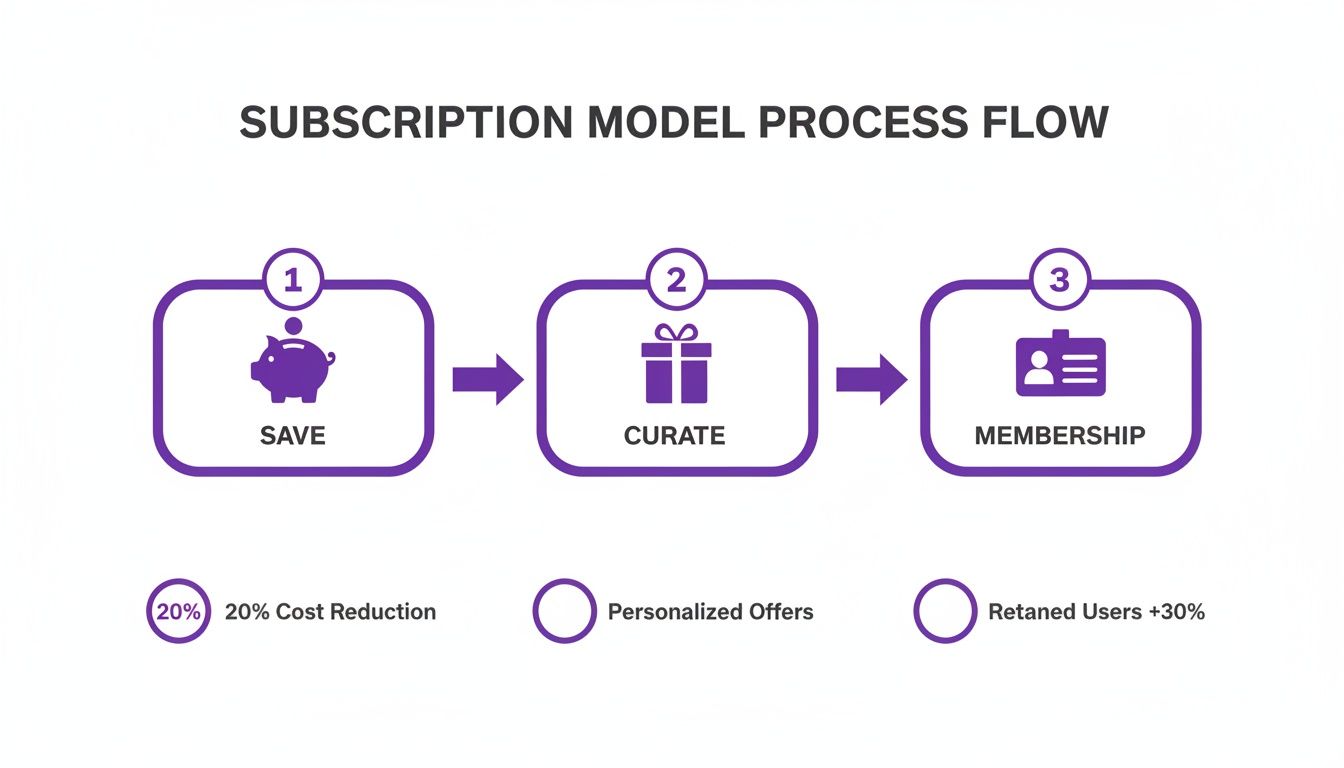
The image above breaks down how popular subscription models work, from simple "subscribe and save" options to exclusive memberships. By adding a subscription service, you’re not just making another sale; you're creating a stable, predictable income stream that turns casual shoppers into genuine fans of your brand.
Your Top Questions About Shopify Sales Apps, Answered
Jumping into the Shopify App Store can feel like drinking from a firehose. There are thousands of options, all promising the moon. Let's cut through the noise and answer the questions I hear most often from store owners trying to pick apps that actually make a difference.
How Many Apps Are Too Many?
This is a classic "how long is a piece of string?" question. There's no perfect number, but I've found that a lean, powerful stack of 5 to 10 apps almost always outperforms a bloated list of 20+. More apps often mean more code, which can slow your site down to a crawl.
Think of it this way: your goal isn't to collect apps, it's to solve problems. Focus on the core challenges first—building trust, recovering lost carts, and boosting your average order value. Be ruthless about auditing your apps every few months. If you're not using it or it's not delivering real value, get rid of it. A snappy, fast-loading site will protect your conversion rate far more than a flashy, non-essential feature.
Can You Really Increase Sales With Free Apps?
You absolutely can. Some of the most powerful apps on the market have fantastic free plans that are more than enough for a store that's just getting its footing. The big players in email marketing and customer reviews, for example, usually offer a free tier that lets you operate until you hit a certain number of subscribers or monthly orders.
You can get a seriously effective sales engine running without spending a dime on app subscriptions. The smart play is to start with these free plans. Only upgrade when your growth and revenue make the paid features a no-brainer investment.
What's the Very First App I Should Add to My New Store?
Trust. It all comes down to trust. When you sold on Etsy, trust was baked into the platform. On your own Shopify store, you have to build it from the ground up, with every single visitor.
Your first install, without a doubt, should be a great product review app. It's non-negotiable. This allows you to start collecting and showcasing photo reviews and star ratings right away. For a brand new visitor, seeing that real people have bought and loved your products is the single most powerful signal that you're the real deal.
How Do I Know if an App Is Actually Working?
The best apps don't make you guess—they show you the money. Any app worth its salt will have a built-in analytics dashboard. Your upsell app should tell you precisely how much extra revenue it's generated. Your email marketing tool should track every dollar made from your abandoned cart emails.
Before you install anything new, take a quick snapshot of your key metrics. What's your current conversion rate? What’s your Average Order Value (AOV)? Let the app run for a month, then compare the numbers. This simple "before and after" test is the best way to ensure you're only keeping tools that give you a clear, positive return.
Ready to build a high-performing Shopify store that turns your hard work into more sales? Wand Websites crafts conversion-focused websites that handle the heavy lifting, so you can focus on your amazing products. Let's turn your side hustle into something bigger at https://www.wandwebsites.com.
